In this guide (6)
- The clearance rule versus intentional overlap
- Matching shaft heights to mini, midi, and maxi hemlines
- Toe shapes and heel balance across dress weights
- The walk test for catching fabrics and static friction
- Adjusting for cold weather, tights, and climate shifts
- When to break the clearance rule intentionally
Pairing boots with dresses succeeds or fails on one specific spatial relationship: either commit to visible leg clearance or commit to complete overlap. When a dress hem hovers within a finger-width or two of a boot collar, it cuts across the lower leg, breaks the vertical line, and causes lightweight fabrics to catch against the leather rim with every step. Resolving this tension requires choosing one of two clear configurations. Either leave several finger-widths of open space between the hem and the top of the boot, or let the hem fall cleanly past the boot shaft so the top edge remains hidden throughout motion.
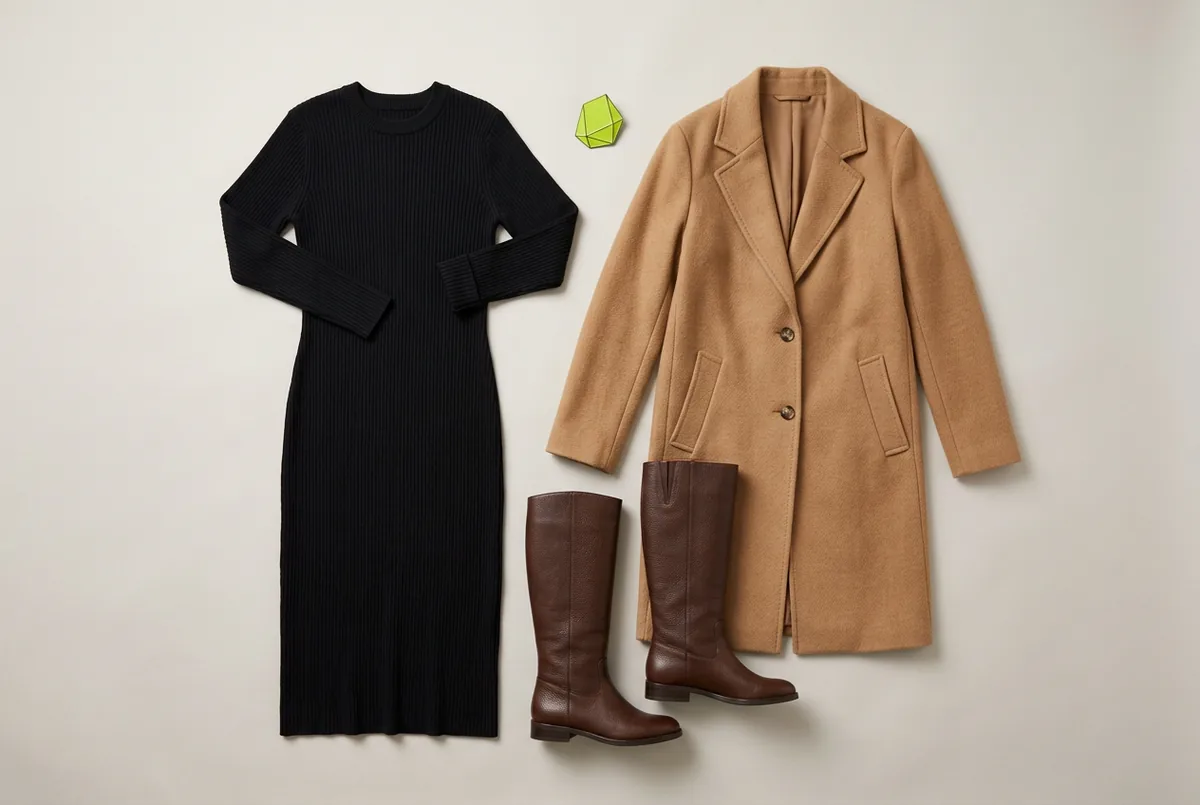
The clearance rule versus intentional overlap
The human eye reads an outfit as a continuous vertical column. When fabric stops right at the top of a stiff boot shaft, the eye registers an unintended visual seam. This narrow band of skin or hosiery chops the leg into disconnected blocks, especially when the transition lands across the widest curve of the calf.
To maintain proportion, follow the clearance rule:
- Clearance mode: Keep at least four to five finger-widths of space between the lower hem of the dress and the upper rim of the boot. This visible separation establishes the lower leg as an intentional design element rather than an accidental gap.
- Overlap mode: Ensure the skirt hem drops past the boot collar so the leather disappears under the cloth. As you sit, walk, or climb stairs, the boot shaft stays hidden inside the circumference of the skirt, preserving a long unbroken line.
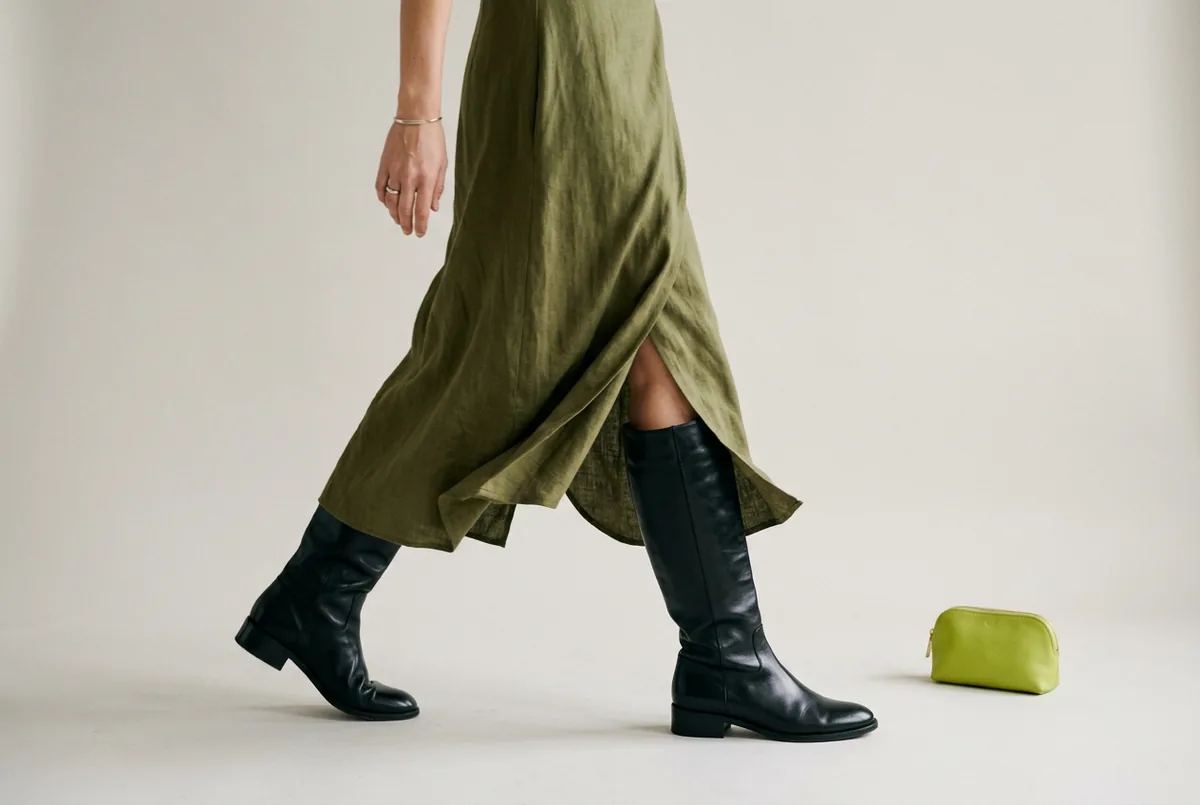
When you violate both options by stopping the hem right against the boot rim, the fabric hits the rigid leather edge with every stride. Light rayon or silk catches on the rim and bunches upward. Stiff wool catches and tents outward. Committing fully to either clear space or deep overlap eliminates both problems immediately.
Matching shaft heights to mini, midi, and maxi hemlines
Every hemline length creates a specific mechanical relationship with boot height. A mini dress ends above the knee, exposing substantial leg. Knee-high or over-the-knee boots balance the high hemline by covering the calf completely, while ankle boots lengthen the visual line provided the ankle shaft hugs the joint closely without gaping.
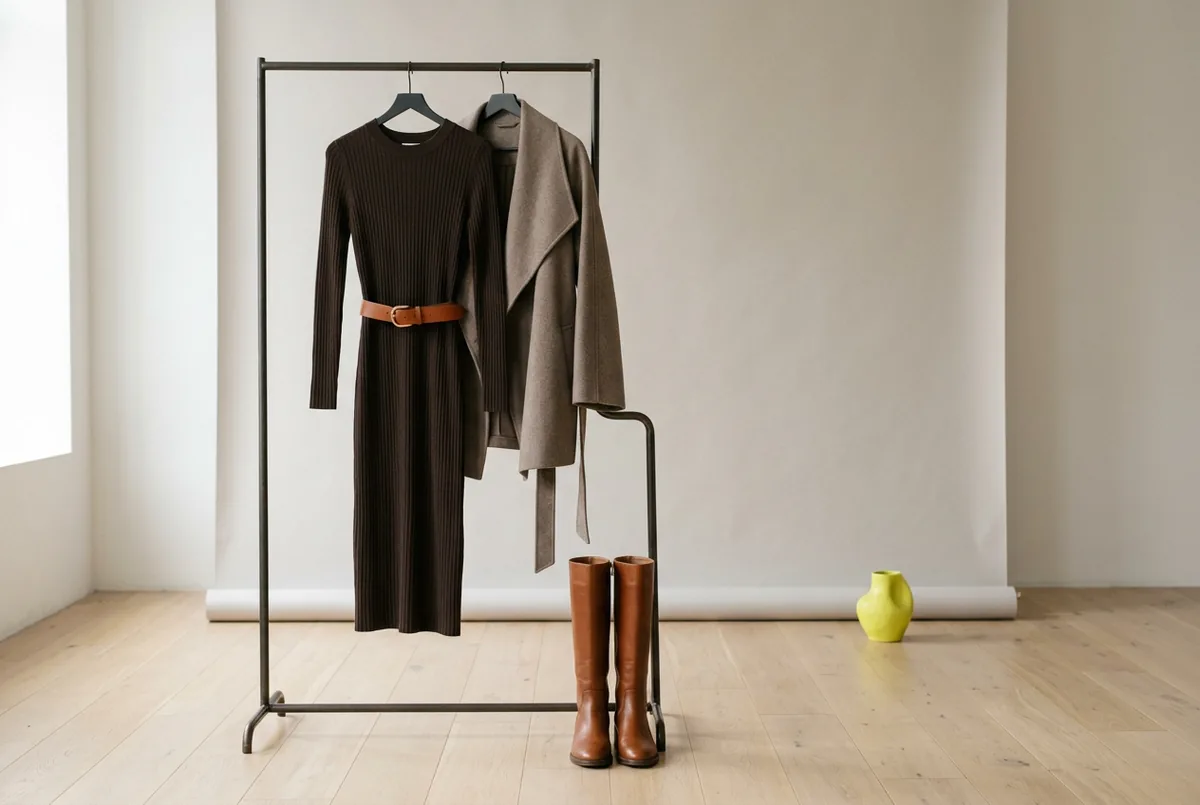
Midi dresses, which fall midway between the knee and ankle, demand deliberate shaft selection. Pairing a midi dress with an ankle boot that cuts off exactly where the dress ends produces the awkward gap that chops the leg line. Instead, pair a midi dress with a tall boot whose shaft extends well under the skirt, or select a low-profile ankle boot that leaves the calf bare above the ankle bone. For heavier knits, you can explore how to balance drape and structure by checking our guide on how to style a sweater dress without losing shape.
Maxi dresses sweep down toward the ankle or top of the foot. With floor-grazing skirts, tall boot shafts add unseen warmth in freezing weather, but the ankle boot does the visual work. Choose an ankle boot with a close-fitting shaft so the skirt drapes smoothly over the ankle instead of snagging against wide leather buckles or bulky pull tabs.
Toe shapes and heel balance across dress weights
The weight and drape of your dress dictate boot toe shape and heel architecture. A fluid silk or lightweight viscose dress looks grounded when anchored by a sleek, pointed or almond toe with a moderate block heel. Heavy fabrics like corduroy, wool twill, or thick cotton denim require a boot with visual substance, such as a sturdy lug sole or a square toe.
When pairing wide, sweeping hemlines with footwear, toe shape becomes the forward anchor of the silhouette. A blunt round toe under an expansive A-line skirt can look abruptly truncated. An elongated pointed toe or tapered almond toe extends the line outward, echoing the same visual balance explored in how to wear boots with wide-leg jeans. Heel height also governs how the skirt moves. A low, stable block heel maintains comfortable weight distribution for walking while keeping the dress hem off damp sidewalks.
Do
- Overlap a midi dress hem several finger-widths over a tall boot shaft
- Choose close-fitting boot collars under flowing skirts to prevent snagging
- Balance chunky knit dresses with solid leather soles or block heels
Avoid
- Leaving a narrow strip of skin right at the boot rim
- Pairing fragile silk dresses with heavy treaded work boots unless intentional contrast is desired
- Allowing dress linings to catch and bunch over textured suede shafts
The walk test for catching fabrics and static friction
Standing still in front of a mirror tells only half the story. The true test of a boot-and-dress pairing happens when you are in motion. Fabrics behave dynamically: soft knits sway, silk clings, and structured twill swings forward with every stride.
Static friction between synthetic dress linings and leather boot shafts creates bunching. When polyester linings rub against textured leather, the dress rides upward and bunches awkwardly above the boot collar. A simple walking test identifies whether you need an undergarment adjustment, such as a slip or anti-static spray, before leaving home.
Adjusting for cold weather, tights, and climate shifts
Regional climate changes the function of the boot-and-dress pairing. In mild coastal California or early Southern autumn, bare legs between a midi hem and a low boot shaft provide necessary ventilation during warm afternoons. In contrast, Northeast and Midwest winters require thermal layers that integrate cleanly with footwear.
When introducing tights into the formula, tonal continuity determines the visual impact. Opaque black tights paired with black leather boots extend the vertical line of the dress downward without creating color breaks. Sheer hosiery creates a soft contrast, ideal for lighter wool dresses and deep burgundy boots. When wearing textured knit tights, select boots with smooth calfskin rather than rough suede to prevent the fabrics from clinging to each other as you walk.
When to break the clearance rule intentionally
Not every outfit requires a continuous vertical line. There are specific aesthetic choices where breaking the clearance rule creates intentional character. An oversized utility shirt dress paired with slouchy mid-calf combat boots deliberately interrupts neat proportions to build a rugged, utilitarian look.
Similarly, western boots with curved shaft collars are built to be seen. If a midi dress hem hits right across the top of an ornate western boot, tucking the hem up with a waist belt or opting for an asymmetrical hemline allows the curved collar embroidery to show. The goal is purpose: when fabric meets leather by design rather than accident, the outfit holds its structure in every setting.
Read next