A sweater dress gets its shape from structure and definition. The most effective way to achieve this is by defining the waist with a belt and choosing footwear that creates a deliberate proportion with the hem. A tailored outer layer, like a coat or blazer, further sharpens the silhouette by balancing the soft nature of the knit fabric.
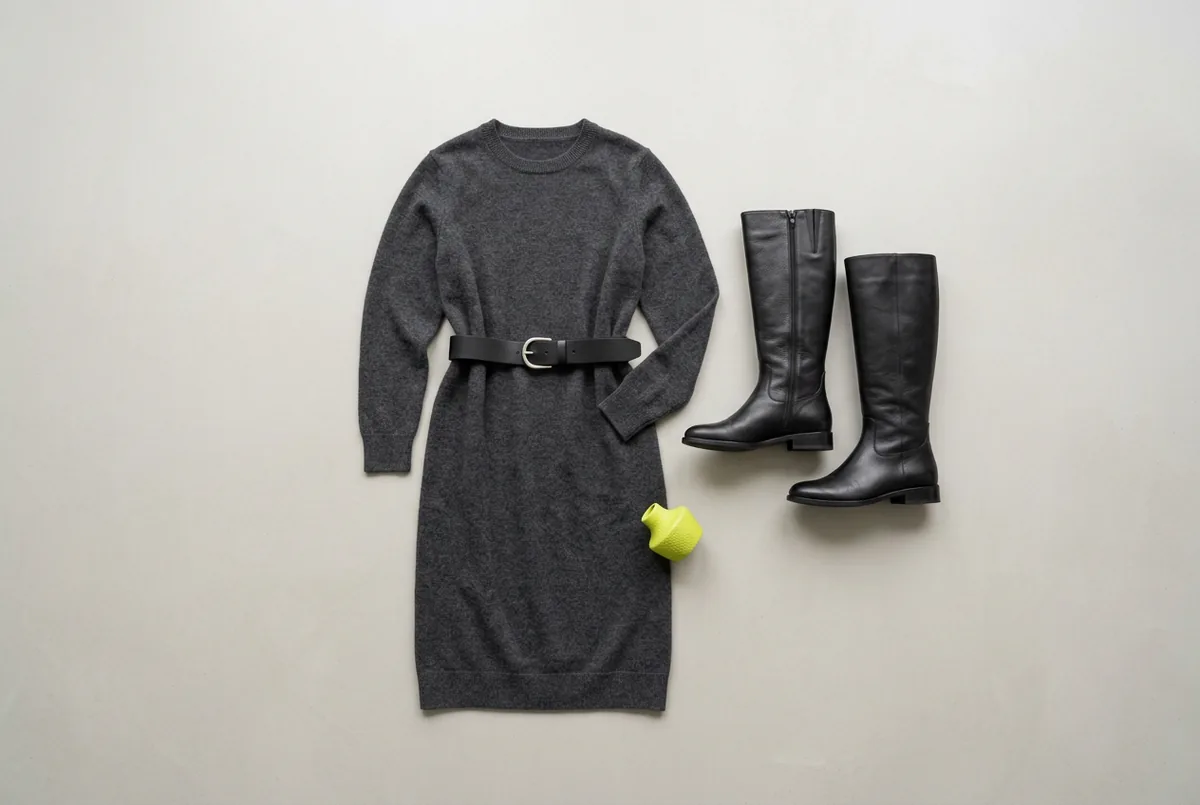
The foundation: Choosing the right dress
The success of any outfit begins with its main piece. Because sweater dresses come in a wide range of fits, fabrics, and weights, choosing the right one makes styling much simpler. Look for a dress that skims the body without clinging tightly or hanging without shape. While a very oversized fit can be a deliberate style, a dress that is simply a size too large can look unintentional.
Fabric weight is key. While a thin, flimsy knit can feel insubstantial and stretch out of shape, a very heavy cable-knit may add visual bulk and be difficult to layer. The most versatile option is a mid-weight knit like merino wool, a cashmere blend, or a dense cotton. These fabrics have enough substance and drape to hang properly without overwhelming the body’s lines. Pay attention to the cut, as a straight or gentle A-line silhouette offers the most flexibility.
Before you consider accessories, make sure the dress itself fits well. Use this checklist in the fitting room or at home to assess the core garment.
How to use a belt to define the waist
A belt is the single most powerful tool for giving a sweater dress a waist. By cinching the midsection, it breaks up the vertical column of fabric, creating proportion between the upper and lower body. Place the belt at your natural waist, which is the narrowest part of your torso, usually above your navel.
A simple, medium-width leather belt is a reliable choice. It has enough presence to be seen against the texture of a knit without being so wide that it shortens the torso. For a cohesive look, you can match the belt’s color and material to your shoes, like a black leather belt with black leather boots. A contrasting belt, on the other hand, can act as a focal point.
A belt does not work with every sweater dress. On an extremely thick or chunky knit, a belt can dig in and create awkward ruching. It is also unnecessary on dresses that already have a built-in waistline, such as a fit-and-flare style, where the dress’s own construction provides the shape.
Proportion: How to pair dress hems with boot heights
The relationship between where your dress ends and your boots begin is the secret to a polished sweater dress outfit. Getting the proportion right creates a deliberate, balanced line and avoids visually cutting the leg at an awkward point.
- For a mini dress (hem at mid-thigh): Pair it with knee-high or over-the-knee boots. The tall shaft of the boot balances the short hemline, providing coverage and creating a long, continuous line.
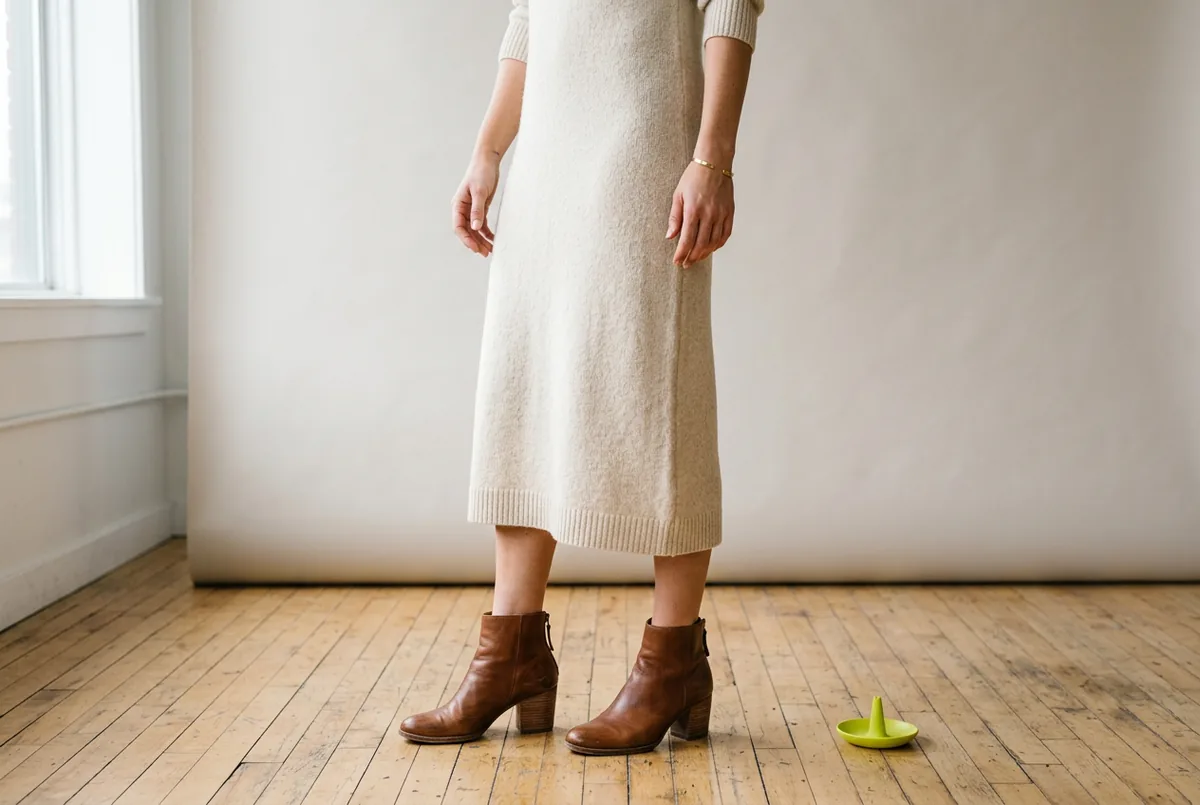
- For a knee-length dress: This length works best when the top of the boot meets or disappears under the hem of the dress, making knee-high boots the ideal partner. Pairing a knee-length dress with ankle boots can create a horizontal line on the lower leg that interrupts the overall vertical silhouette.
- For a midi dress (hem at mid-calf): Ankle boots are an excellent match. The space between the dress hem and the top of the ankle boot looks intentional and modern. Knee-high boots also work if the dress is long enough to completely cover the top of the boot.
- For a maxi dress (hem at the ankle): Because only a small part of the shoe is visible, ankle boots or even a clean leather sneaker can work well.
This simple list summarizes the key proportions for footwear.
Do
- Pair a midi dress with ankle boots
- Wear knee-high boots that meet the hem of a knee-length dress
- Match boot color to the dress for a longer line
Avoid
- A boot shaft that ends mid-calf with a knee-length hem
- Flimsy, unstructured boots with a substantial knit dress
- Bulky socks bunching over the top of ankle boots
Outfit formulas for different occasions
With the principles of fit, structure, and proportion in mind, you can build repeatable outfits for different levels of formality. These three formulas adapt the sweater dress for a casual weekend, a business casual office, and a dressier evening.
Weekend casual
For a relaxed but put-together weekend look, choose a comfortable, slightly oversized sweater dress in a substantial knit, like a textured cotton or a chunky wool blend. A crewneck or turtleneck style in a neutral color like oatmeal, gray, or navy is a great base. Instead of a belt, let the dress hang straight and create structure with your footwear. Pair it with a flat, rugged boot with a thick lug sole. The visual weight of the boot balances the volume of the dress. A simple crossbody bag completes the practical, comfortable outfit.
Business casual
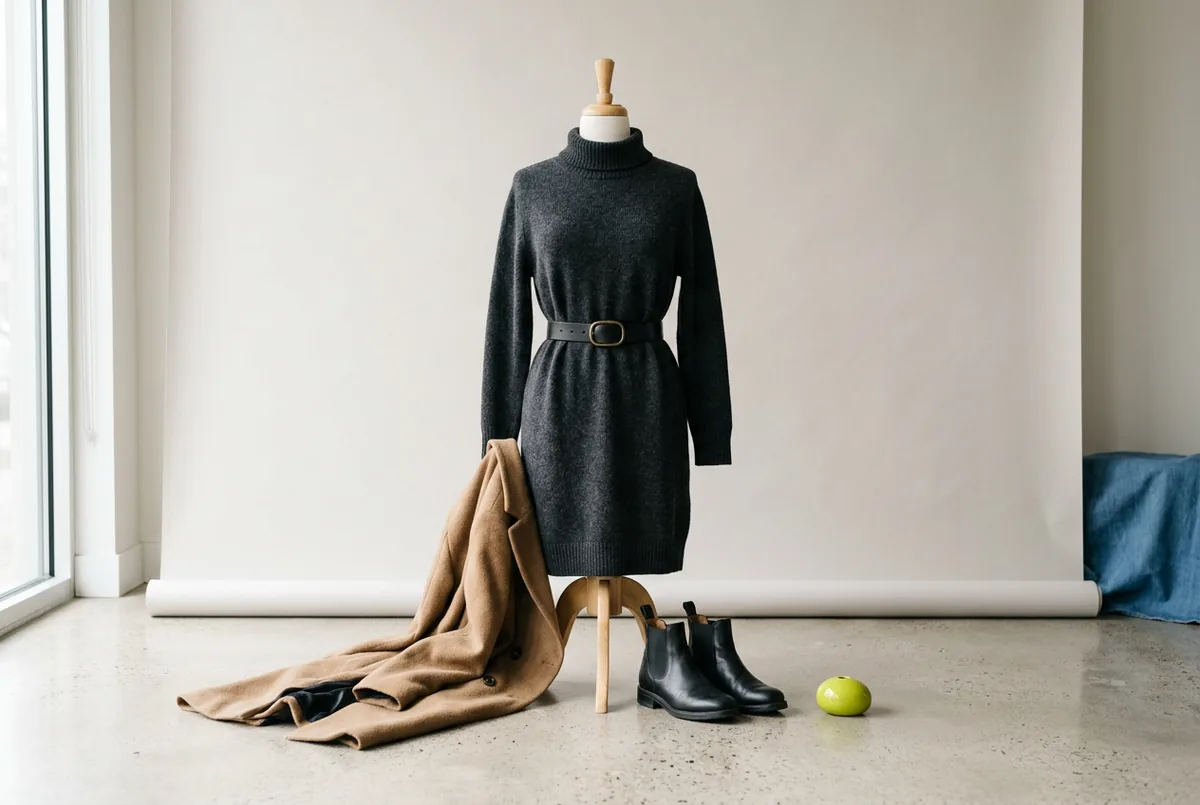
A sweater dress can be appropriate for many modern workplaces, especially in the fall and winter. The key is to choose a more refined knit and pair it with tailored pieces. A fine-gauge merino wool or cashmere-blend dress that falls to the knee or mid-calf works well. Stick to classic, solid colors like black, charcoal, navy, or camel. This outfit formula shows how to pull the look together.
The tailored coat provides sharp lines that contrast with the softness of the knit, while the belt ensures the silhouette remains defined. This same logic applies to other business casual outfits, as explained in our guide on what to wear to a job interview.
Evening out
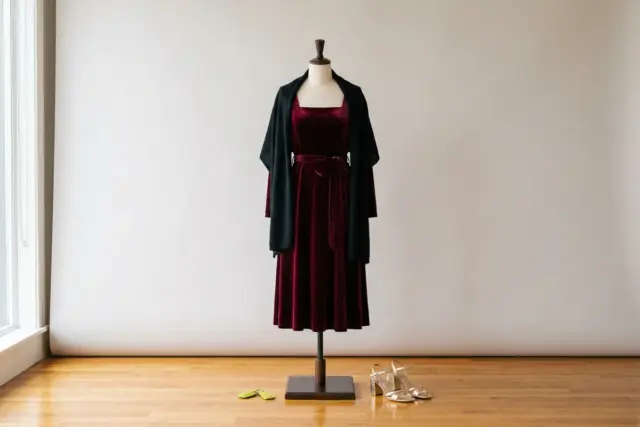
To make a sweater dress work for an evening occasion, focus on fabric and silhouette. Choose a dress in a sleeker, more fluid knit, such as a silk blend, a fine-gauge viscose, or a dress with a bit of sheen. A darker color like black, burgundy, or forest green often feels more formal. A fitted silhouette that falls to midi or maxi length is elegant. Pair it with heeled shoes, like pointed-toe leather boots or refined sock boots. Add a small, structured clutch in a metallic finish or contrasting texture and keep jewelry minimal and polished.
How to layer a sweater dress for warmth
In colder weather, you will need to layer your sweater dress. The wrong layers can add bulk and negate your efforts to create a defined shape. The most effective strategy is to layer with pieces that have structure.
A tailored wool overcoat that is longer than the dress is a classic pairing that maintains a long, lean line. A trench coat also works well. For a shorter outer layer, a structured blazer or a leather jacket can be a great option, especially over a straight-cut dress. The jacket’s hem creates a horizontal line that can help define the waist area. Avoid pairing a soft sweater dress with an equally soft, shapeless cardigan, as the combination lacks the structure needed to define a shape.
For warmth without volume, what you wear underneath matters. Instead of a bulky shirt, opt for thin, close-fitting base layers. A long-sleeved tee made of silk or a technical thermal fabric can add warmth without being visible or creating lumps under the knit.
Read next