In this guide (6)
To stay warm and comfortable for hours at an outdoor football game, dress in three strategic layers. Start with a moisture-wicking base layer, like a long-sleeve tee made of merino wool or a synthetic blend, to pull sweat away from your skin. Add an insulating mid-layer, such as a fleece jacket or a wool sweater, to trap your body heat. Top it with a weather-resistant outer layer, like a puffer jacket or a waterproof shell, to block wind and precipitation. This system allows you to adjust to changing temperatures, ensuring comfort from kickoff to the final whistle.
The three-layer system for any weather
Watching a game outdoors means being exposed to the elements for three to four hours, often with temperatures dropping as the sun goes down. A layering system is more effective than a single bulky coat because it creates pockets of trapped air that provide insulation. It also gives you the flexibility to adapt if you get too warm from the sun or too cold from the wind.
- Base layer: Manage moisture. The layer closest to your skin should move sweat away from your body to keep you dry. A damp base layer in the cold will make you feel chilled. Choose fabrics like merino wool, which naturally resists odors and insulates even when damp, or synthetic materials like polyester and nylon. Avoid cotton for this layer; it absorbs moisture and stays wet, pulling heat from your body.
- Mid-layer: Insulate. This is your primary warmth layer. Its job is to trap the body heat that the base layer helps you retain. The best materials are ones with loft, which creates small air pockets. A fleece zip-up, a down vest, a thick wool sweater, or a flannel shirt all work well. A zip-up or button-front piece is particularly useful because you can open it to vent excess heat without removing it completely.
- Outer layer: Protect from the elements. The final layer is your shield against wind, rain, or snow. A good outer layer, or shell, should be windproof and at least water-resistant. For cold, dry days, a down or synthetic-fill puffer jacket offers excellent warmth. If there is a chance of rain or wet snow, a waterproof-breathable jacket with a membrane is a better choice, as down loses its insulating power when wet. Look for a jacket with a hood for extra protection. You can find more information in our guide on how a winter coat should fit.
Outfit formulas for game day
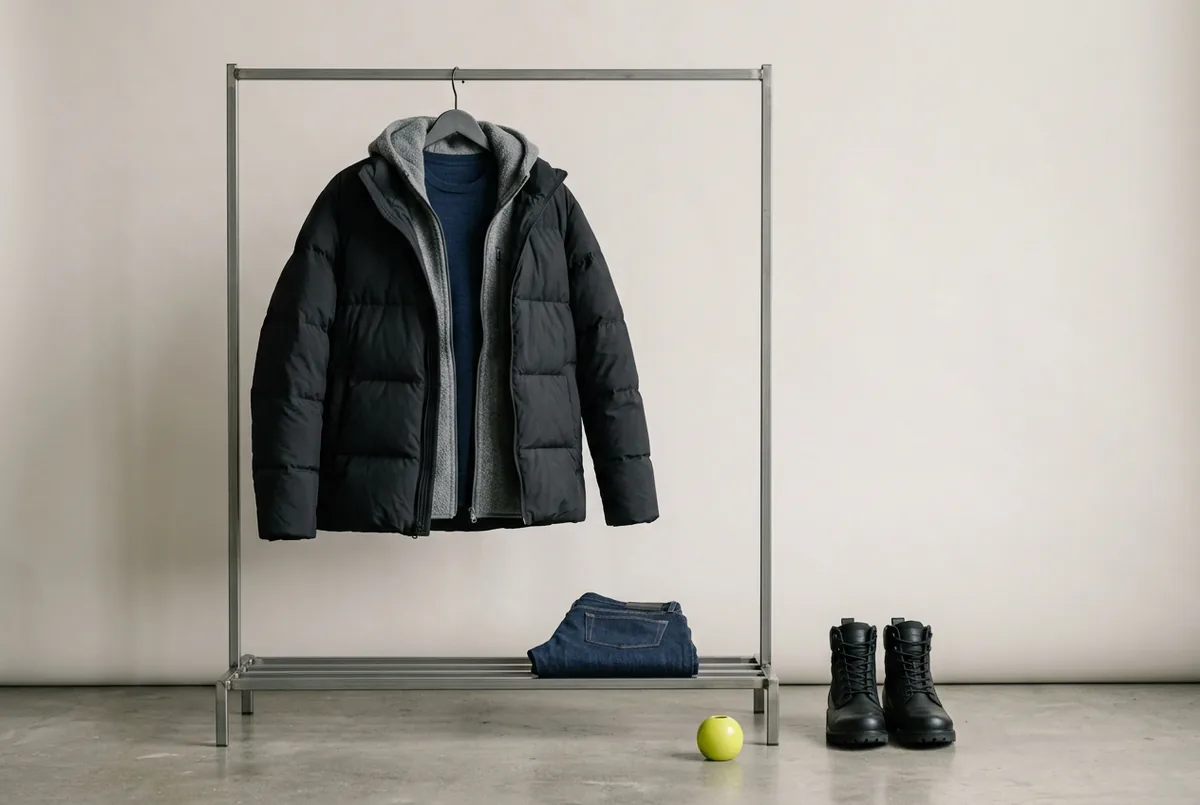
The specific pieces you choose depend on the forecast. For a cool autumn day, you might only need a base layer and a mid-layer, while a frigid winter game calls for all three, plus insulated pants and accessories. The goal is to combine function and comfort, using your team’s colors as an accent against a base of versatile neutrals.
The outfit formula above provides a blueprint for a cold day. The dark jeans are a durable, comfortable choice for dry weather. The merino base layer and fleece zip-up work together to provide serious insulation, while the puffer jacket acts as the final barrier. Black boots keep your feet warm and dry. The team-color beanie adds a celebratory touch without overwhelming the look.
The right fabrics and fit for lasting warmth
The materials you choose are just as important as the number of layers. For bottoms, standard jeans are fine for cool, dry days. For colder temperatures, consider flannel-lined pants or wearing a wool or synthetic base layer underneath your jeans. In wet conditions, water-resistant hiking or snow pants are a much better choice than denim, which gets heavy and cold when wet.
For your feet, wool socks are the single most important item for keeping your feet warm and dry. Wear them with comfortable, closed-toe shoes. For cold or wet weather, insulated and waterproof boots are essential. Make sure your boots are not too tight and have been broken in before game day; you should have enough room to wiggle your toes, which helps circulation and keeps your feet warmer.
How to wear team colors tastefully
Supporting your team is part of the fun, but you do not have to dress in head-to-toe logos. A more understated approach often looks more put-together and allows you to wear your functional, high-quality layers for other occasions. The easiest way to show your colors is with accessories. A beanie, scarf, or pair of gloves in a team color adds a clear statement of support against the neutral backdrop of your outerwear. This strategy allows you to invest in a quality neutral coat (like black, gray, or navy) that will serve you for years, rather than a team-specific jacket you can only wear to games.
Do
- A beanie or scarf in a team color
- One layer (like a fleece) in a team color
- Neutral outerwear that goes with everything
Avoid
- Head-to-toe team gear
- A low-quality logo jacket
- Forgetting the functional layers
Another option is to choose one of your layers to be the team-color piece. For example, wear a green fleece jacket for a team with green colors, but keep your base layer, pants, and outer jacket neutral. This creates a focused pop of color that looks intentional.
What about early season games?
Football season starts in late summer, and early fall games can be surprisingly warm and sunny. For these conditions, the layering principle still applies, but the layers themselves will be lighter. You might opt for a short-sleeve synthetic tee as your base layer instead of a long-sleeve wool one. Your mid-layer could be a light long-sleeve shirt or an open flannel shirt, something you can easily take off and tie around your waist if the sun is strong.
Your outer layer might not be for warmth but for sun or rain protection. A light, packable rain jacket is always a good idea. Don’t forget sun protection: a baseball cap in your team’s colors, sunglasses, and sunscreen are essential for daytime games, even on cloudy days.
Beyond clothing: what else to bring
Your outfit is only part of the equation for staying comfortable. Many stadiums have strict rules about what you can bring in, often requiring items to be in a specific size of clear bag, so check the venue’s policy before you go.
A seat cushion is a small item that makes a huge difference. A thick piece of closed-cell foam insulates you from the cold, hard bleacher seat, which can otherwise sap your warmth throughout the game. A blanket is another valuable addition. You can wrap it around your legs for an extra layer of insulation. For very cold games, chemical hand and toe warmer packets, available at most sporting goods or drug stores, can provide hours of targeted heat. Finally, consider bringing a portable power bank for your phone; cold weather can drain batteries much faster than usual.
Read next