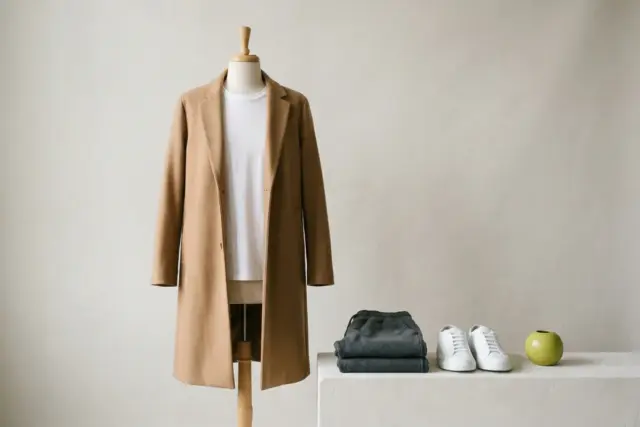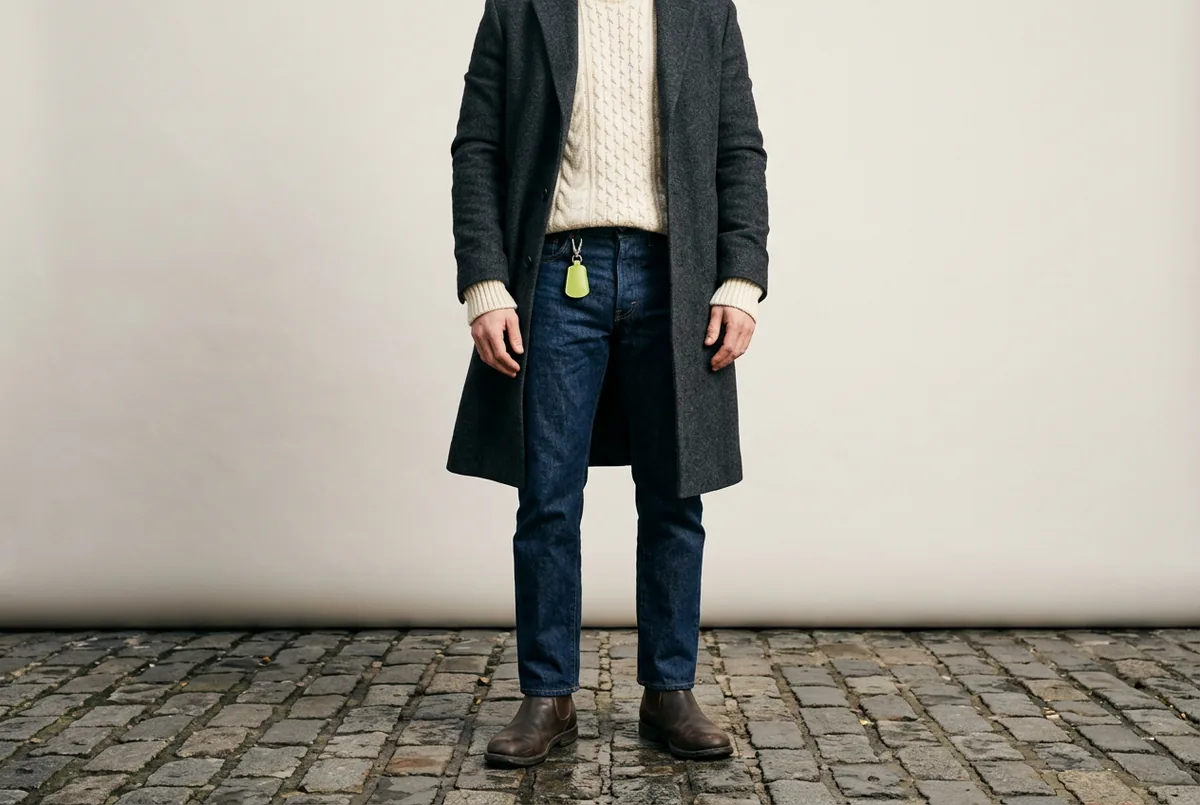
An effective winter coat fits with enough room for your thickest layer, like a heavy sweater or fleece, without compressing the garment’s insulation. The shoulder seams should end at the edge of your shoulder bones, and the sleeves should be long enough to cover your wrists. This combination ensures the coat can trap warm air effectively while allowing you to move, which is the primary job of winter outerwear. A coat that fits snugly over a t-shirt will be too tight, and therefore colder, when you need it most.
The most important fit test: try it on with your winter layers
The single biggest mistake when shopping for a winter coat is trying it on over just a thin shirt. The coat’s real-world performance depends on how it fits over the clothes you will actually wear in cold weather. Before you go to the store, put on the thickest sweater, fleece, or blazer you own.
Warmth comes from trapped air. The insulation in a puffer jacket (whether down or synthetic) and the loft of a wool sweater both work by creating thousands of tiny air pockets that hold your body heat. If a coat is too tight, it compresses this insulation, eliminating the air pockets and reducing its ability to keep you warm. You need space for the system to work. The following checklist, performed while wearing your thickest layer, will help you find the right fit.
Where the hem should land for warmth and proportion
A coat’s length determines its warmth and how it affects your overall silhouette. There is no single correct length; the best choice depends on your climate and daily activities.
Short coats that end at the hip are best for mobility and milder winters. They are practical for driving, as they do not bunch up when you sit, but they offer little protection for your seat and legs. They are a good option for regions with less severe cold or for people who are primarily moving from a heated house to a heated car.
Mid-length coats, which end anywhere from the bottom of your fingertips to just above the knee, are the most versatile. This length provides substantial warmth by covering the upper legs, a critical area for heat loss, without seriously restricting movement for walking. For most people in most US climates, a mid-thigh coat strikes the best balance between warmth and practicality.
Long coats ending at the knee or below offer maximum protection. They are the standard for the coldest parts of the country, like the Northeast and Midwest, especially for anyone who walks or waits for public transit. The continuous line of a long coat can create a strong vertical silhouette. The main drawback is a potential lack of mobility, which can make them cumbersome for driving or cycling.
Fitting different coat types: wool overcoats vs. puffer jackets
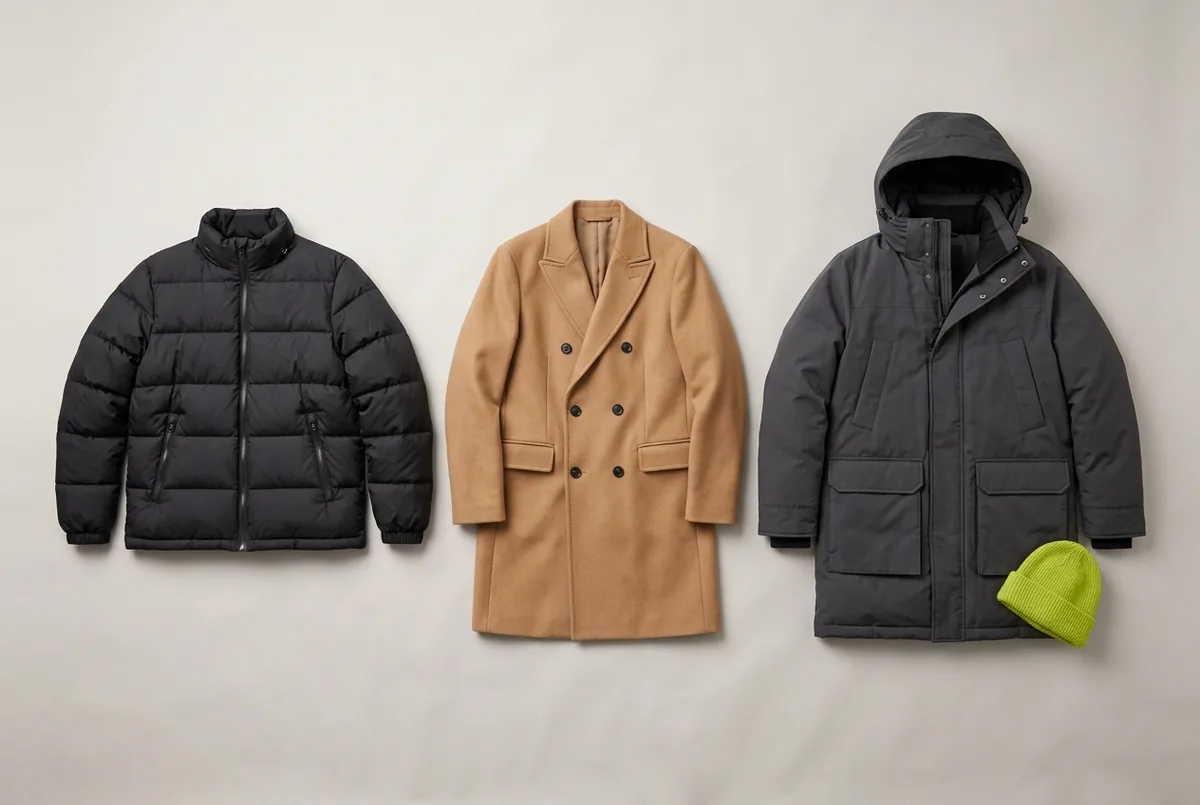
The material of a coat changes what a good fit looks like. A structured wool coat fits differently from a soft, insulated parka.
Structured coats like wool overcoats
A classic wool or wool-blend overcoat is a structured garment. Its fit is defined by its tailoring, particularly in the shoulders. As with a suit jacket, the shoulder seam must sit squarely at the edge of your shoulder bone. This is the most difficult part of a coat to alter, so it should be your first priority. From there, the coat should hang cleanly without pulling at the buttons or twisting. The principles are nearly identical to those for tailored jackets; getting the shoulders right is the foundation of the fit. For a detailed look at how a tailored garment should fit, see our guide to how a suit should fit.
Insulated coats like puffers and parkas
With puffers and other insulated parkas, the goal is different. These coats have less internal structure. The fit is less about precise seams and more about volume. You need enough space for the down or synthetic fill to remain lofty and trap air. When you try it on, the individual quilted sections (baffles) should look full, not flattened against your body. Pay close attention to the armholes and chest; these areas should allow for full range of motion without compressing the insulation. Because these coats are rarely tailored, it is important to find a size that works off the rack.
What about sizing up?
It can be tempting to simply go one size up from your usual to make room for layers. This sometimes works, but it can also create new fit problems. A coat is sized as a whole, so a larger size will have wider shoulders, a longer torso, and longer sleeves. If you size up, the shoulder seams may droop down your arms and the sleeves may completely cover your hands.
First, always try your normal size while wearing your thickest layer. Many brands design their outerwear with layering in mind, so your usual size might already have the necessary room. Only consider sizing up if your true size feels genuinely restrictive in the chest and back. If you do, make the shoulder fit your deciding factor. A little extra length in the sleeve can be shortened, but shoulders that are too wide are a sign the coat is simply the wrong size.
Caring for your coat and what it means for fit
The material of your coat not only dictates its fit but also its care routine. A well-fitting coat is one you can wear often, and that means keeping it clean without damaging it. Always check the care label first; it provides the one safe cleaning method the manufacturer guarantees. The instructions are there for a reason, often to prevent shrinkage, loss of insulation, or damage to the fabric’s finish.
Wool coats, for example, often require minimal washing and can be refreshed by simply airing them out. When they do need cleaning, it is typically hand washing or dry cleaning to prevent the wool from felting, which is when the fibers lock together and shrink permanently. Insulated parkas and puffers, especially those made with synthetic materials like polyester, can usually be machine washed, but require specific care to maintain the loft of their insulation.
| Care | Wool | Polyester |
|---|---|---|
| Washing | Hand wash cold with wool detergent, or the wool cycle | Machine wash, cold or warm |
| Drying | Flat, never hanging | Line dry, or tumble dry on low |
| Ironing | Steam, or medium heat with a damp press cloth | Low heat |
| Watch out | Heat plus agitation shrinks it for good (felting) | Holds on to odors; skip fabric softener on activewear |
The table above shows general guidelines for wool and polyester, two common materials for winter coats. For wool, the key is to avoid heat and agitation in the wash. For down-filled jackets, drying on low heat with a few clean tennis balls helps break up clumps and restore loft. For synthetic fills like polyester, the most important thing is using low heat to avoid damaging the fibers; check the label for specific drying instructions. A coat that is too tight might show wear faster at stress points, and frequent, improper washing can accelerate this. A proper fit ensures the garment isn’t under constant strain, extending its life.
A note on alterations
Like any other garment, a winter coat can be adjusted by a tailor for a better fit. However, some alterations are simple while others are complex and expensive.
Sleeve length is a routine alteration for most coats, including those with a simple cuff. Tapering the waist of a wool overcoat to create a more defined shape is also a common and straightforward job. These adjustments can make a good-fitting coat into a great one.
Altering the shoulders of a coat, however, is a major undertaking that requires deconstructing and rebuilding the most complex part of the garment. It is almost never worth the cost. Changing the chest width or the overall length is similarly difficult. The practical rule is to buy a coat that fits correctly in the shoulders and chest. A tailor can fine-tune the rest.
Before you make a final decision, check the coat’s functional details. Are the pockets deep enough? Can you easily operate the zipper and snaps while wearing gloves? Is the hood adjustable, and does it obstruct your peripheral vision when you turn your head? A coat that fits well but fails at these small, practical tasks will become a source of daily frustration.
Read next