In this guide (6)
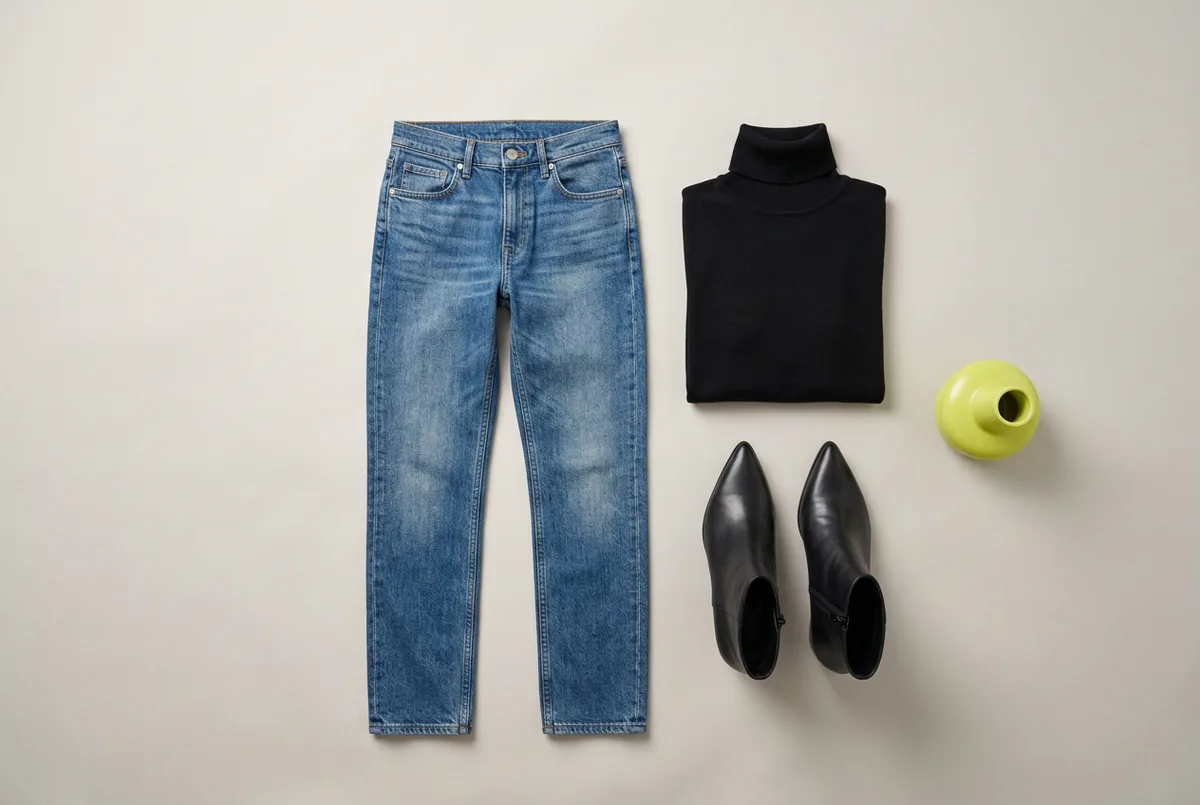
The most effective way to style straight-leg jeans is to focus on proportion, which starts where the hem of the jean meets the shoe. For a modern look, pair full-length jeans that cover the ankle with shoes that create a long, unbroken line, such as pointed flats or heeled boots. Cropped straight-leg jeans, which end above the ankle, work best with shoes that highlight the exposed ankle, like loafers, sneakers, or sandals. Balancing the straight silhouette of the pants with a defined waist is the other key to a polished outfit.
Where the hem should land
Unlike skinny jeans that end at the ankle or wide-leg jeans that cover the shoe, straight-leg jeans offer more variety in length. The two most common and versatile lengths are full-length and cropped. Choosing one is a matter of preference and depends on the shoes you plan to wear.
Full-length jeans should have an inseam long enough for the hem to graze the top of your foot. This creates a long, continuous vertical line from your hip to your shoe. This length pairs best with shoes that sit close to the foot, like heeled ankle boots, pumps, or pointed-toe flats. The goal is a clean line where the fabric falls straight over the shoe without bunching or pooling.
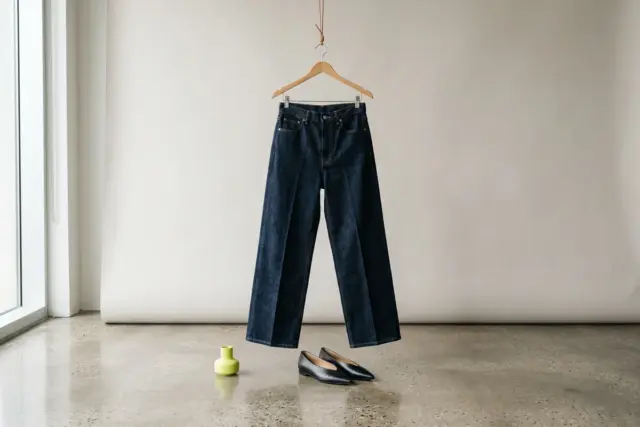
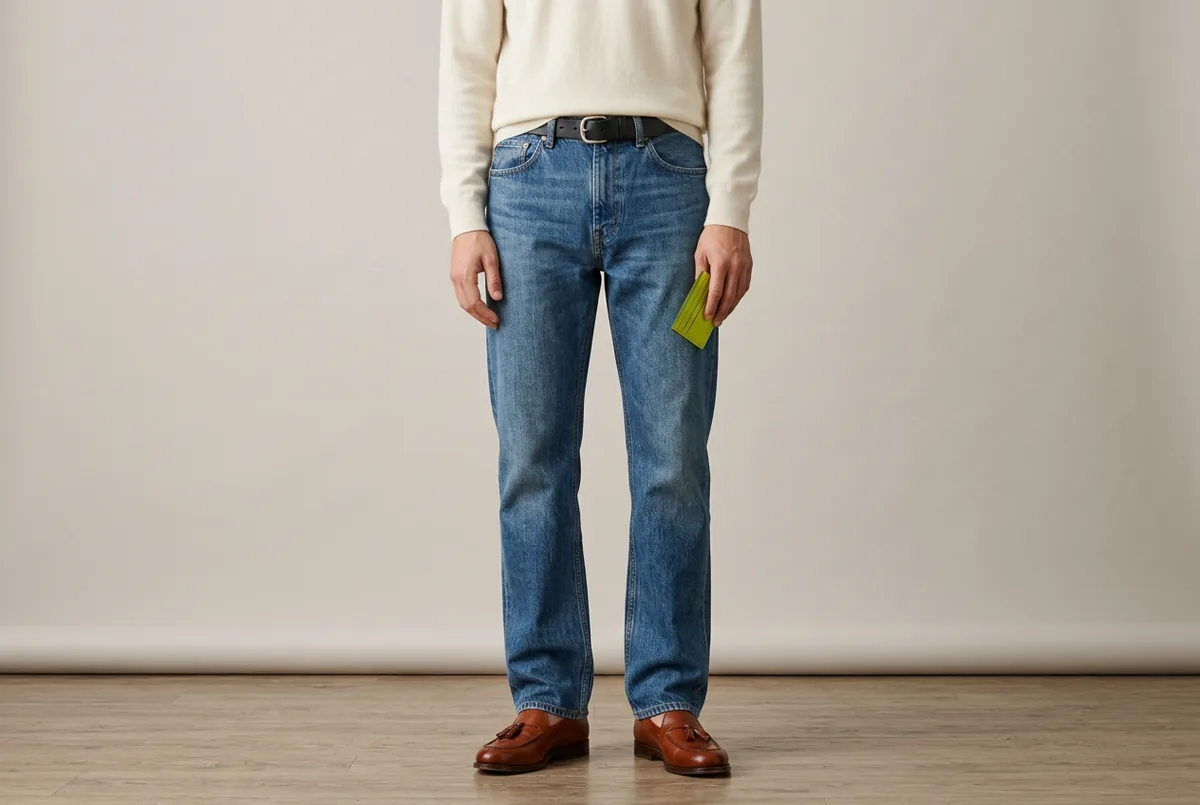
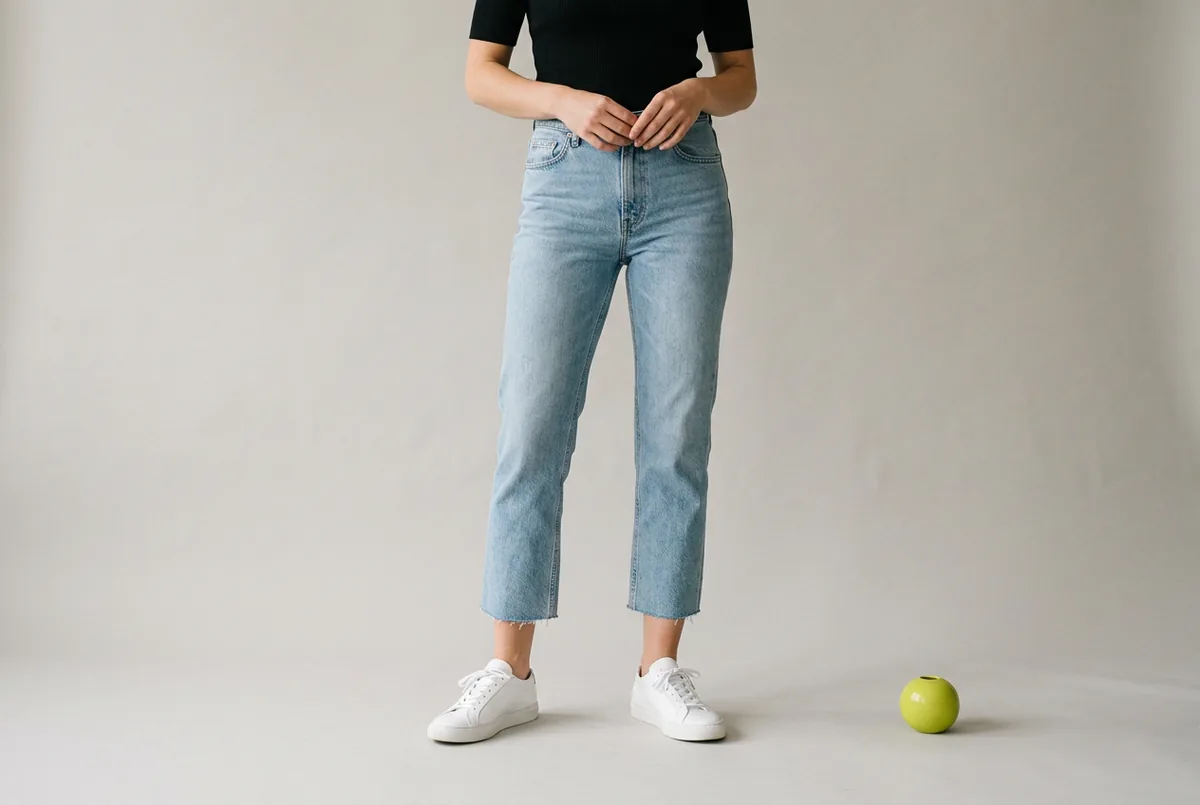
Cropped jeans should end just above your ankle bone. This creates a deliberate, small gap between the hem and your shoe, which draws attention to your footwear. This style is ideal for showcasing sneakers, loafers, ballet flats, and sandals. Be mindful of the exact endpoint: a hem that hits at the narrowest part of your ankle is more effective than one that ends at the widest part of your calf, which can visually shorten the leg line.
The best shoes for straight-leg jeans
The shoe you choose changes the entire feel of the outfit. The straight leg opening requires careful pairing to avoid looking bulky or dated.
Ankle boots
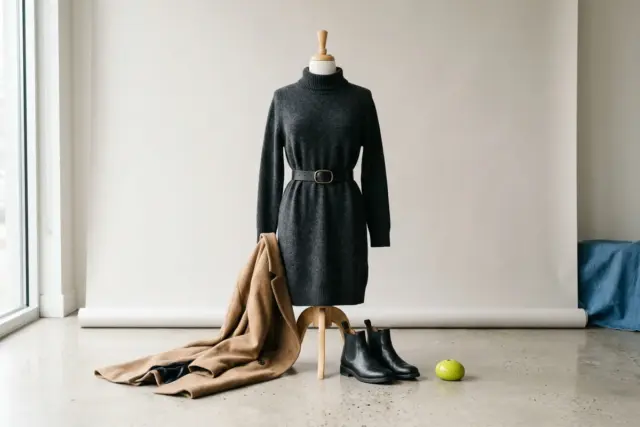
Ankle boots are a classic partner for straight-leg jeans, but the fit is everything. The main challenge is to avoid the fabric bunching awkwardly where the jean meets the top of the boot. The solution is to choose an ankle boot with a slim, fitted shaft that can slide easily under the leg of the jean. For full-length styles, the boot shaft should be tall enough to disappear completely under the hem. For cropped jeans, the boot can meet the hem or leave a small space of skin or sock showing. The principles are similar to those for other pant styles, as detailed in our guide on how to wear boots with wide-leg jeans.
Flats and loafers
With full-length straight-leg jeans, a pointed-toe flat helps elongate the leg line where a rounded toe might make the foot look short. With cropped jeans, almost any flat works, including loafers and ballet flats, because the visible ankle provides enough separation to keep the proportions balanced.
Sneakers
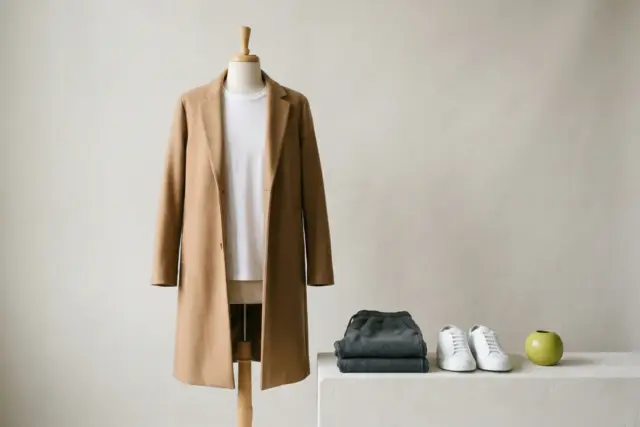
Sneakers give straight-leg jeans a relaxed, modern feel. They pair most easily with cropped or cuffed styles. The space between the hem and the top of the sneaker is key to preventing the look from feeling heavy or cut off at the ankle. If you wear sneakers with full-length jeans, opt for a low-profile model and ensure the hem just skims the top of the shoe without puddling on it.
Heels and pumps
A classic pump or a heeled sandal instantly dresses up a pair of straight-leg jeans. They work best with full-length cuts, where the combination creates a long, clean line. For the most polished look, the hem should fall to the top of your foot when standing, almost brushing the ground at the back of the heel.
Creating balance with tops and layers
Because straight-leg jeans have a uniform width from the hip to the ankle, defining your waist is the simplest way to add shape and balance to your outfit. Without this, the combination of a loose top and straight pants can create a blocky silhouette.
A tucked-in top (whether a fitted turtleneck, a simple crewneck t-shirt, or a silk blouse) is a reliable method. Tucking the top into high-waisted or mid-rise jeans highlights the narrowest part of your torso. If a full tuck feels too formal, a partial tuck (or “French tuck”) at the front achieves a similar effect with a more relaxed feel. This works especially well with chunkier sweaters or looser button-down shirts.
Adding a third piece, like a blazer, cardigan, or jacket, adds structure and completes the look. A tailored blazer over a tucked-in t-shirt and straight-leg jeans is a reliable smart casual formula.
What to look for when trying on straight-leg jeans
The right fit is essential for the silhouette to work as intended. A pair that’s too tight in the legs will read as skinny jeans, while a pair that’s too loose might look sloppy. When you are in the fitting room, use this checklist to test the fit in the key areas.
A high rise that sits at or above your navel is common with this style and makes tucking in tops easier. If the leg is tight on your calf, the cut is likely a “slim straight” style, not a true straight leg. For more on general fit, see our guide on how pants should fit.
Common styling mistakes and how to fix them
A few common issues can make straight-leg jeans look awkward. Luckily, they are easy to fix by paying attention to length and proportion.
Do
- Align hem length with shoe type
- Define your waist with a tuck or a belt
- Choose ankle boots with a slim shaft
Avoid
- Jeans bunching on top of bulky boots
- A hem that drags on the floor
- Pairing a loose top with the jeans without any tuck
The most frequent problem is the “bunching effect,” where the jean leg stacks uncomfortably on top of an ankle boot. This happens when the jean’s leg opening is too narrow to fit cleanly over the boot shaft. The solution is to either choose boots with a very slim, sock-like shaft or to opt for cropped jeans that end above the boot. A hem that is too long and pools around the ankles or drags on the ground is another issue; it looks untidy and can cause the fabric to fray. Finally, pairing a loose, untucked top with straight-leg jeans can create a shapeless look. Using a full or partial tuck restores waist definition and a sense of proportion.
How to care for your jeans
To keep your jeans looking their best, you do not need to wash them after every wear. In fact, washing denim less frequently helps preserve its color and shape. When you do wash them, follow the instructions on the care label. The table below summarizes the standard care for denim.
| Care | Denim |
|---|---|
| Washing | Inside out, cold water, as rarely as you can |
| Drying | Line dry, out of direct sun |
| Ironing | Medium to high heat, inside out |
| Watch out | Dark washes bleed dye at first; wash them separately |
Always turn your jeans inside out and use cold water to minimize fading and prevent shrinking. This is especially important for jeans with spandex or elastane, as heat can damage the stretch fibers. Dark-wash jeans often bleed indigo dye in the first few washes, so wash them separately or with other dark colors. The best way to dry jeans is to hang them, as the high heat from a machine dryer can cause fading and wear out the fabric, particularly any stretch fibers.
If your jeans are slightly too long for a particular pair of shoes, a simple cuff provides an easy, temporary adjustment. A single, crisp cuff looks more intentional and modern than a small, messy roll. It is a practical way to alter the length and silhouette on the fly, making one pair of jeans work with everything from loafers to ankle boots.
Read next