In this guide (5)
A pair of pants that fits well is comfortable at the waist, skims the hips and thighs without pulling tight, and has a length that is proportional to the cut of the leg and the shoes you wear. When you try them on, you should be able to sit and move without the waistband digging in, creating a gap at the back, or feeling constricted through the seat and legs. The right fit is not about a specific size, but about how the garment’s shape works with your body.
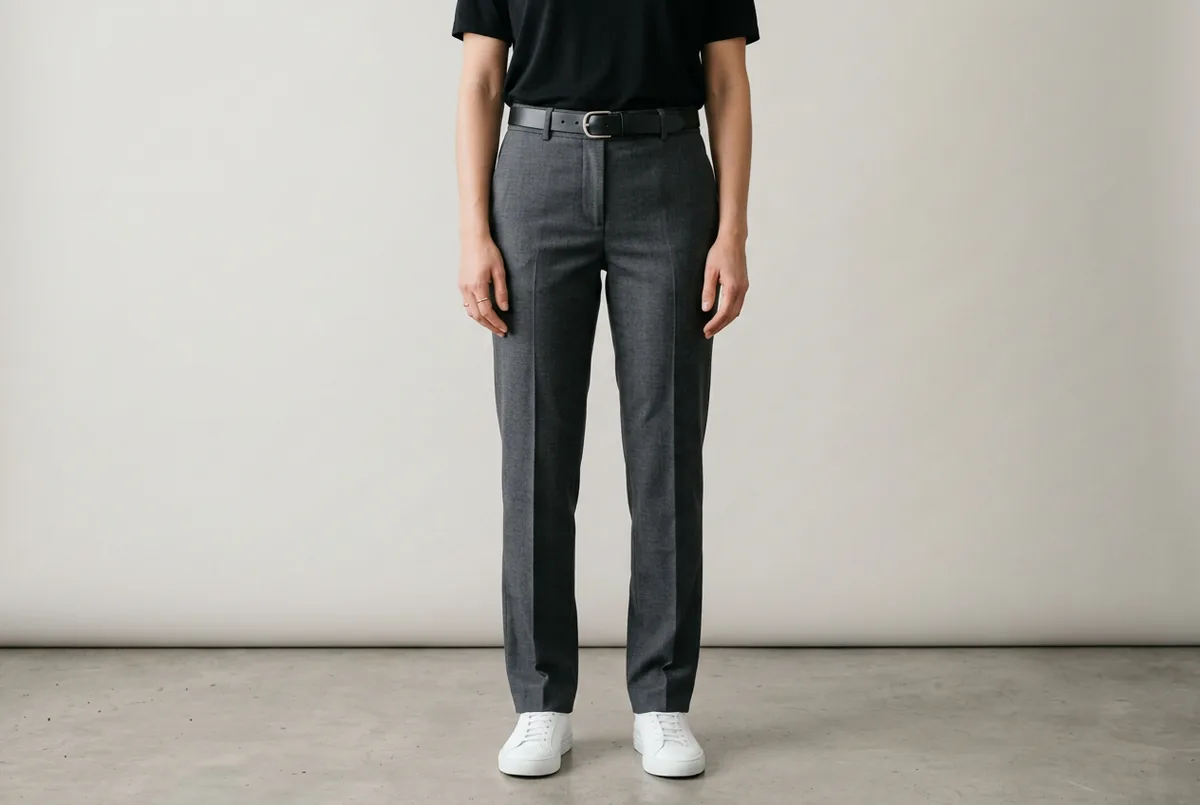
The foundation: Waist, hips, and rise
The fit across your waist, hips, and rise is the most important part to get right. These areas are the most difficult and expensive to alter, so you should prioritize a good fit here when you are shopping. Unlike a simple hem, changing the seat or crotch of a pair of pants is complex tailoring that often is not worth the cost.
The waistband should sit securely at your natural waist for high-rise styles or lower for mid- and low-rise pants, but it should not need a belt to stay up. When you sit down, it should not gap at the back. If it does, the pants may be too tight in the hips or the cut may not be right for your shape. For a detailed guide on solving this specific issue, see our article on how to find jeans that fit a curvy body and end the waist gap. Conversely, a waistband that pinches or creates a deep indent is too small.
Through the hips and seat, the fabric should follow your shape without being restrictive. Horizontal pull lines across the front or back mean the pants are too tight. If the front pockets gape open, that is another sign of a tight fit across the hips. On the other hand, excess, baggy fabric in the seat means they are too loose. The rise, which is the seam that runs from the front of the waistband to the back, should sit comfortably against your body. A rise that is too short will pull up, while a rise that is too long will sag and create a sloppy look.
Getting the length right: The inseam
The correct pant length depends entirely on two things: the cut of the leg and the shoes you plan to wear. Because of this, it is helpful to bring a pair of shoes you would typically wear with a certain style of pants when you go shopping. A hem that works with sneakers will likely be too short for heels, and a length tailored for boots might drag on the floor with flats.
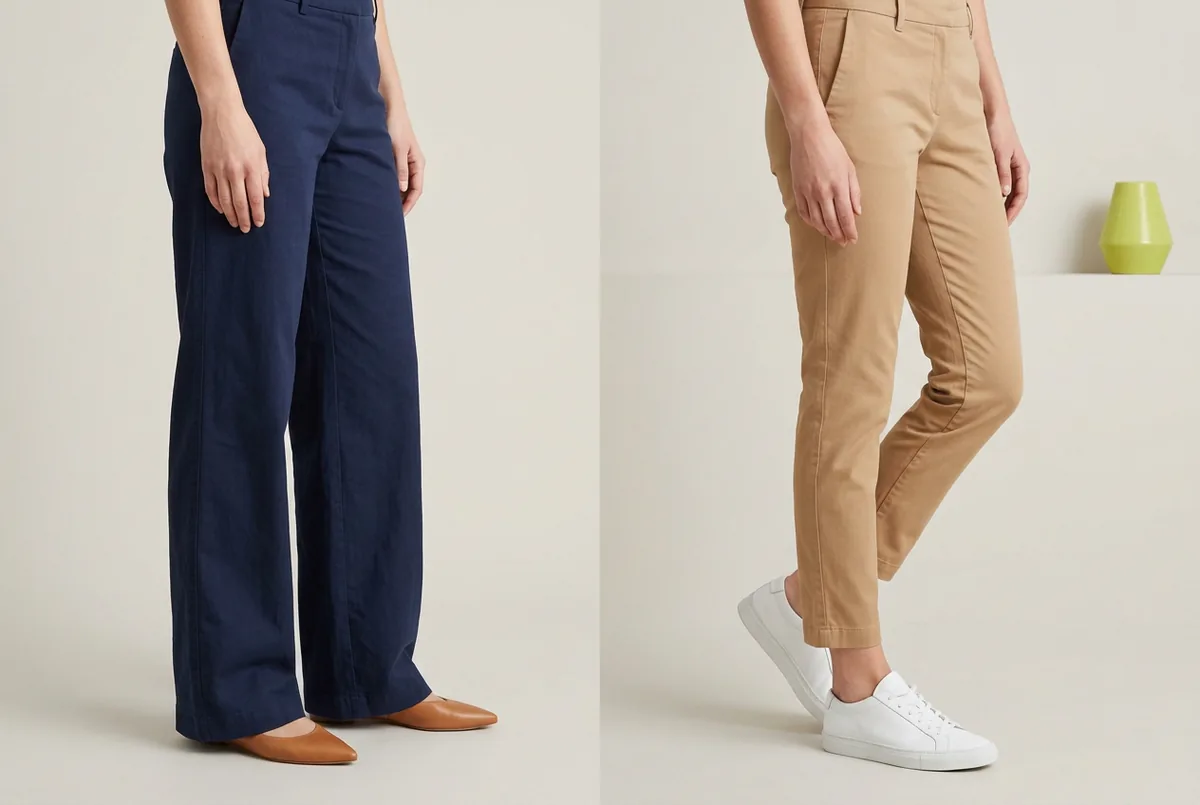
Here is a simple decision rule for common pant styles:
- Wide-leg, flare, and bootcut pants generally look best with a long inseam. The hem should nearly graze the floor at the back, covering most of your shoe but not dragging. This creates a long, unbroken vertical line.
- Straight-leg pants are more versatile. They can have a slight break (a single fold of fabric) where the hem meets the top of your shoe, or they can be cropped to end at the ankle. The ankle-length cut works well with flats, loafers, and ankle boots.
- Tapered and slim-fit pants should end at or just above the ankle bone. This prevents the fabric from bunching up around the narrowest part of the leg and creates a clean, intentional silhouette.
Getting the length wrong can throw off the proportions of an entire outfit. The good news is that hemming pants is one of the easiest and most affordable alterations you can get. If the fit is perfect everywhere else, do not pass on a pair of pants just because they are too long.
How different fabrics change the fit
The material of your pants plays a major role in how they fit, feel, and drape. A style that works well in a structured cotton might not work in a fluid rayon.
Trousers made from wool or wool-blend fabrics have excellent drape, meaning they hang smoothly from the body. This makes them a great choice for more formal or business-casual styles like wide-leg or pleated pants. They hold their shape well throughout the day.
Cotton twill, the fabric used for chinos and khakis, is more structured and rugged. It can feel stiff at first but softens with washing and wear. Because it has less give, a precise fit at the waist and hips is essential. Many cotton pants now include a small percentage of spandex (or elastane) for stretch and comfort, which provides more flexibility for movement.
Fabrics like linen and rayon (viscose) are lightweight and breathable, with a more relaxed and fluid drape. They are ideal for warmer weather and looser-fitting styles like palazzo or straight-leg pants. Be aware that these fabrics wrinkle easily and can sometimes stretch out with wear, so a fit that feels snug in the fitting room may loosen up over the day.
Synthetic fibers like polyester are often blended with other fibers to add durability and wrinkle resistance. While practical, a high polyester content can reduce breathability, making the pants feel hot in humid weather. Always check the fiber content label to know what you are getting.
A formula for well-fitting trousers
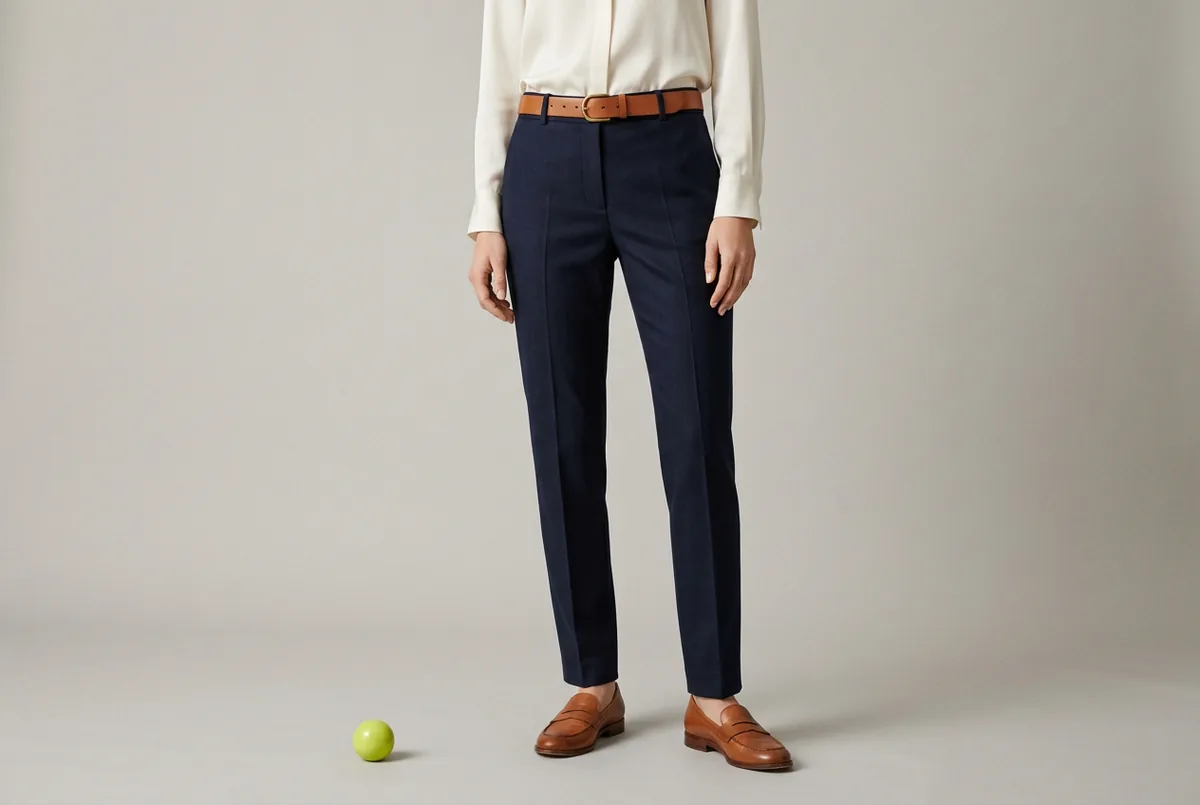
Once you find a pair of pants with a great fit, they can become a cornerstone of a polished wardrobe. The right fit does the work, allowing simple combinations to look put-together. This outfit formula uses classic pieces where the clean lines of the well-fitting trousers are central to the look’s success.
This combination works because each piece is simple and the focus remains on the silhouette. The trousers fit cleanly through the hip, the blouse drapes without pulling, and the leather accessories add a finished texture. The principles of proportion and fit are what make it work, not trends or elaborate styling. For ideas on pairing different shoe styles with wider pant legs, see our guide on how to wear flats with wide-leg jeans.
What a tailor can (and cannot) fix
Knowing what is possible to alter can save you from buying a bad fit or from passing up a pair of pants that is almost perfect. Some adjustments are simple and routine for any tailor, while others are structural and not worth the attempt.
Do
- Hemming the length
- Taking in the waistband
- Tapering the leg from the knee down
Avoid
- Fixing a tight crotch or rise
- Letting out the hips or thighs significantly
- Fixing gaping front pockets
Easy fixes:
- Hemming: As mentioned, adjusting the length is the most common and straightforward alteration.
- Waistband adjustments: Taking in a waistband that is slightly too large is also a standard job, especially on trousers and chinos that have a center-back seam. Letting a waistband out is harder and depends on how much extra fabric is available in the seam allowance.
- Tapering the legs: If you like the fit in the seat but want a slimmer leg, a tailor can easily taper them from the knee down.
Difficult or impossible fixes:
- The rise: The distance from the waistband to the crotch seam is nearly impossible to change. If it pulls or sags, the pants do not fit.
- Tight hips, seat, or thighs: While a tailor can sometimes let out seams a small amount, there is rarely enough extra fabric to fix a fit that is truly tight. This will cause pulling and stress on the seams.
- Pocket placement: If pockets are gaping or positioned oddly on your body, this is a sign of a fundamental incompatibility between the pants’ cut and your shape. This cannot be fixed.
The best strategy is to buy pants that fit the widest part of your lower body (usually your hips or thighs) and the rise. From there, a tailor can perfect the waist and the length for a custom-fit result.
Read next