In this guide (6)
- Why the curved silhouette breaks traditional shoe rules
- The toe shape threshold: almond, pointed, or low profile
- The ankle boot formula: slim shafts that slide under the hem
- Low shoes and exposed skin: loafers, flats, and sneakers
- Fitting room tests for barrel jean hems and footwear
- What to adjust for severe winter weather and heavy fabrics
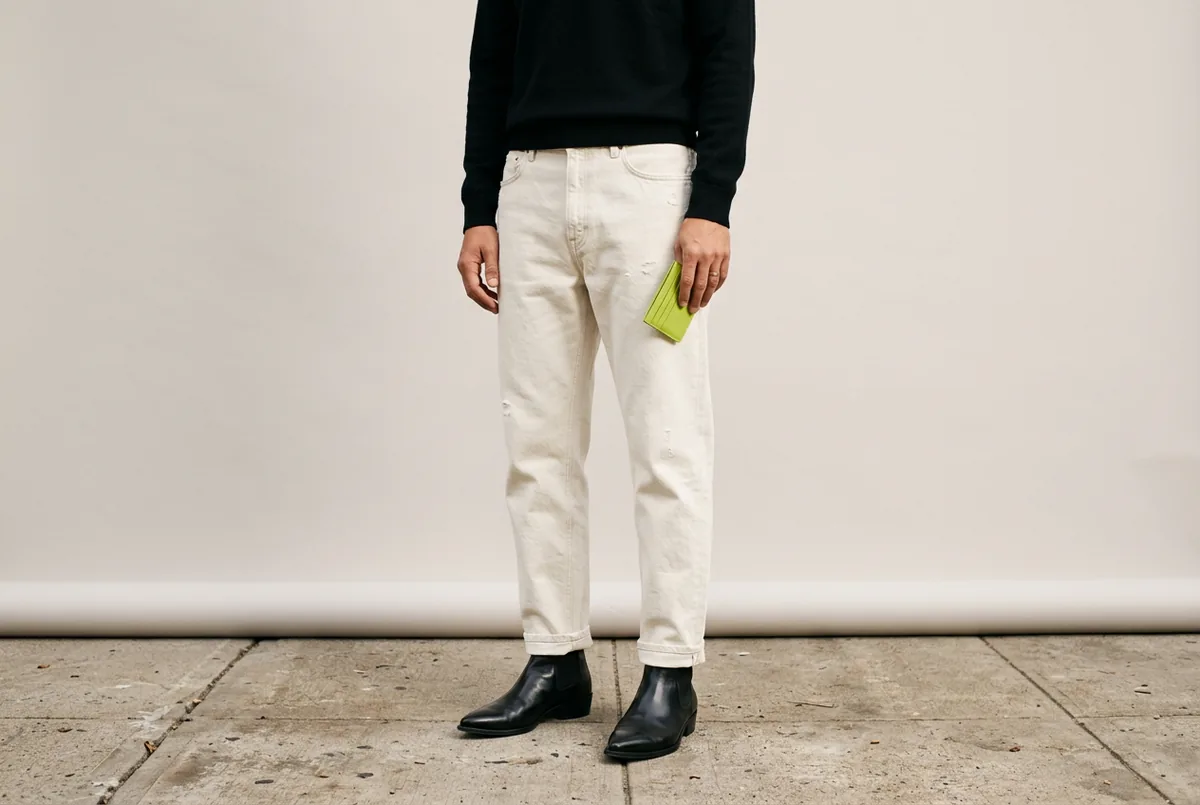
Barrel jeans balance best with footwear that either slides cleanly inside the tapered cuff or exposes the instep to counteract the wide knee curve. The deciding factor is the relationship between the shoe collar and the denim hem. Shoes with an almond, pointed, or squared toe extend the vertical line of the leg forward, while low-profile soles or skin-hugging boot shafts prevent fabric from bunching around the ankle bone. Heavy, round-toe sneakers and wide-mouth work boots collide with the inward taper of the jean, creating an abrupt horizontal shelf that cuts off your proportions.
Why the curved silhouette breaks traditional shoe rules
A barrel jean, sometimes called a horseshoe cut, balloons outward through the thigh and knee before curving sharply back inward toward the lower calf. Standard straight jeans drop in a continuous column, and wide-leg trousers fall in an unbroken drape from the hip to the floor, as detailed in our guide on choosing flats for wide-leg jeans. Because barrel denim introduces deliberate horizontal volume at the center of the leg, the hem sits higher, usually terminating just above the ankle bone.
That sudden inward taper changes how shoes sit against the fabric. When you pair a voluminous leg with a wide, chunky shoe opening, the hem catches on the collar of the shoe. The denim folds over itself, creating a bulky ring of fabric that widens the narrowest point of your lower body. To keep the visual weight intentional, your footwear needs to provide a clear contrast: either extend the foot forward with a tapered toe or reveal the narrow profile of the ankle.
The toe shape threshold: almond, pointed, or low profile
Toe shape determines whether your foot anchors the dramatic curve of the pants or disappears beneath it. Because the widest point of the jeans sits between the mid-thigh and the knee, a blunt, rounded toe creates a second sphere of visual weight at the floor. The eye bounces between two bulky shapes, which foreshortens the leg line.
Pointed and almond toes provide an immediate counterweight. The forward extension of a sleek toe box pulls the gaze downward, continuing the line that started at the waistband. A neat square toe produces a similar balancing effect by offering a clean, architectural edge that matches the structural seams of curved denim.
If you prefer flat shoes or casual sneakers, monitor the sole thickness and the width of the toe cap. Thin-soled retro court sneakers and low-profile running shoes work because they keep the foot slim and grounded. Chunky skate shoes, heavy lug-sole platform sneakers, and wide work boots overwhelm the tapered cuff and make the lower hem look pinned against the floor.
The ankle boot formula: slim shafts that slide under the hem
During fall and winter, ankle boots are the most practical footwear for curved denim, but their shaft diameter makes or breaks the outfit. The boot shaft must fit like a sock, hugging the lower calf tightly so the tapered hem of the jeans drapes smoothly over the leather. If the boot shaft is stiff and wide, the hem perches awkwardly on top of the rim, creating deep horizontal creases across the shin.
When styling boots under barrel jeans, check where the hem lands relative to the top of the boot. Unlike pairing footwear with wide trousers, which we explore in our guide on how to wear boots with wide-leg jeans, barrel denim requires the hem to clear the ankle joint without dragging. A boot shaft that reaches well above the ankle bone guarantees that no skin shows when you take a step, preserving warmth during freezing weather in the Northeast and Midwest.
Low shoes and exposed skin: loafers, flats, and sneakers
In mild climates such as coastal California, or during early autumn across the South, revealing the instep and ankle bone remains the simplest way to style curved denim. Showing the narrowest point of the lower leg highlights the deliberate balloon shape of the trousers.
Loafers, ballet flats, and Mary Janes with a low vamp leave the top of the foot open, establishing an airy base for dense denim. When selecting loafers, prioritize classic penny or horsebit designs with slim leather outsoles over exaggerated lug soles. A heavy platform loafer creates the same visual bottleneck as a combat boot, fighting the inward sweep of the hem.
When temperatures drop, you do not have to abandon low shoes. A medium-weight wool or cotton ribbed sock fills the ankle gap effectively. To keep the silhouette cohesive, match your sock color to your footwear to create an unbroken boot-like line, or choose a neutral cream or heather gray that complements your knitwear.
Do
- Pick pointed, almond, or slim square toes that lead the eye forward
- Choose boot shafts that hug the lower calf snugly
- Wear low-profile sneakers with thin outsoles and narrow toe boxes
- Expose the ankle bone or bridge the gap with a clean ribbed sock
Avoid
- Tuck curved denim cuffs into mid-calf boots
- Pair wide hems with wide-mouth pull-on boots that catch the fabric
- Wear thick platform skate sneakers that pool denim over the laces
- Roll thick cuffs that add bulk to an already tapered hem
Fitting room tests for barrel jean hems and footwear
Curved jeans behave differently in motion than hanging on a rack. Fabric weight and the placement of the curved outer seam dictate where the trousers break across your shoes. Use this hands-on test in the fitting room before altering your hem or committing to a new pair of shoes.
If the cuff catches on your shoe as you walk, your footwear is either too wide at the collar or your jeans are hemmed too long. A tailor can shorten barrel jeans, but they must take length from the bottom hem rather than altering the curved knee seam, which preserves the intended volume of the pattern.
What to adjust for severe winter weather and heavy fabrics
When winter brings deep snow, freezing slush, or sub-zero temperatures, the rule of exposing ankles or wearing delicate glove boots needs adjustment. Heavy winter gear naturally resists sleek proportions, yet you can still maintain balance without freezing.
Avoid tucking barrel jeans into tall, rigid winter boots. Forcing the wide curved knee and tapered calf into a tall shaft creates awkward folds around your knees and thigh. Instead, select a winter boot that features a narrow, lace-up ankle shaft in waterproof leather or dense nylon. Lace the shaft firmly against your ankle so the denim hem falls naturally over the top. If slush forces you to keep cuffs off the ground, an ankle-height Chelsea boot with stretch side panels gives you traction while sliding underneath the tapered opening.
Fabric weight also alters the shoe pairing. Heavy, rigid cotton denim holds an exaggerated sculptural bow that needs a substantial leather shoe with a firm sole to anchor it. Softer denim blends containing lyocell or rayon produce a relaxed, slouchy curve that drapes closer to the body, pairing comfortably with lighter leather flats or soft suede slip-ons without appearing bottom-heavy.
Read next