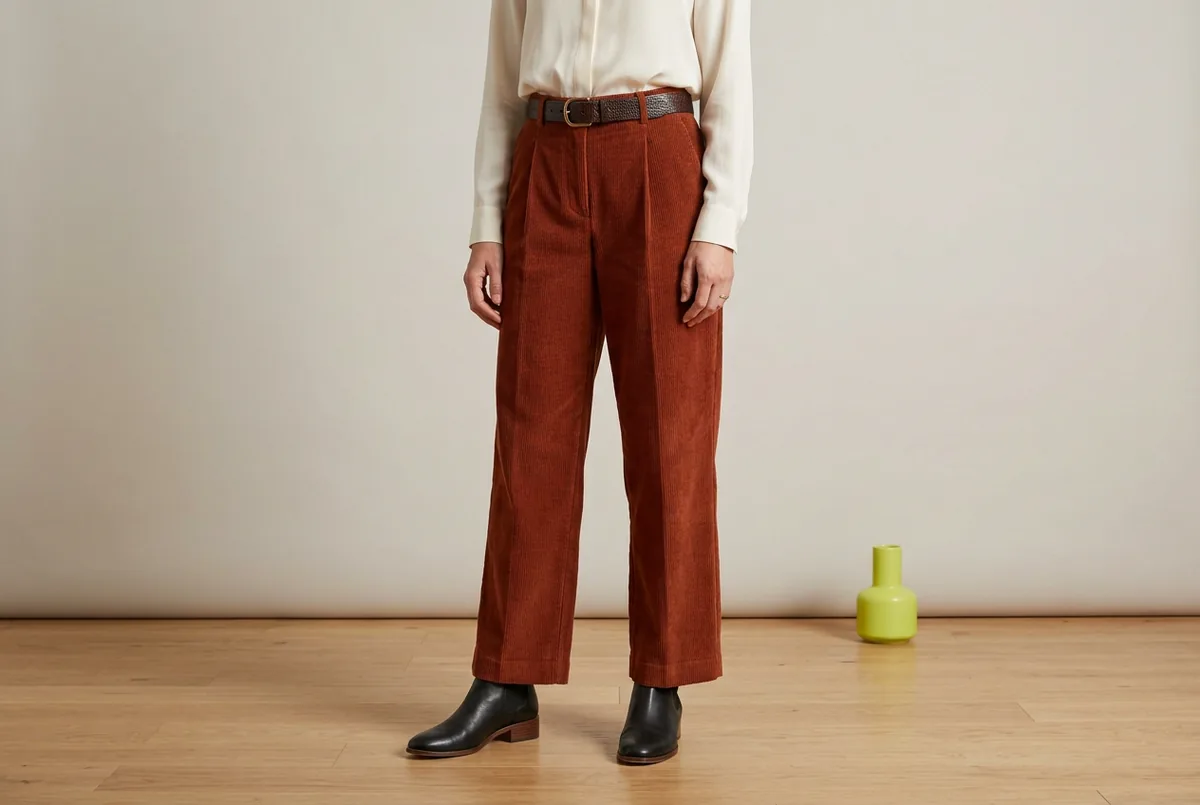
To wear corduroy pants without looking dated, pair their distinct texture with smooth, modern pieces. The key is contrast: balance the fabric’s inherent weight and vintage association with clean silhouettes and simple materials. For example, combine wide-wale corduroys with a sleek silk-blend shirt, or pair slim-cut cords with a crisp, slightly oversized poplin button-down. This mix of textures and proportions grounds the corduroy in a current context, moving it away from a purely retro look.
Choosing your corduroy: Wale, weight, and cut
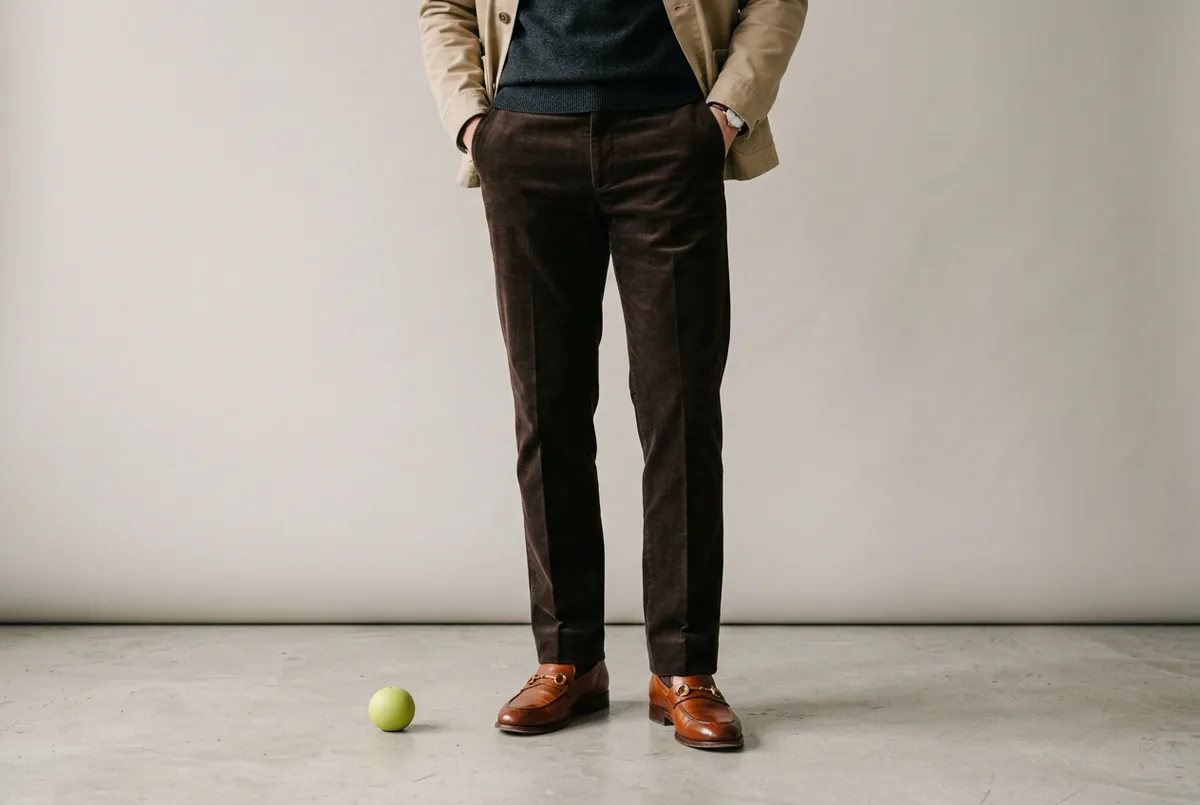
Corduroy is a cotton fabric with a distinct visual and physical texture, defined by its “wales,” or the ribs that run down its length. The width of these wales can vary from very fine (pinwale) to thick and chunky (wide-wale), which affects the fabric’s look and feel. This texture gives the pants weight and a substantial hand, which is why it is a fall and winter staple. The main principle for styling it in a modern way is to not overwhelm the outfit with more of the same.
When corduroy is paired with other heavy, highly textured fabrics (like a thick cable-knit sweater, a nubby tweed jacket, or a flannel shirt), the result can feel bulky and one-note. Instead, create a deliberate contrast. Let the corduroy be the primary texture in your outfit and pair it with smoother, simpler fabrics.
Think of materials that provide a clean surface:
- Fine-gauge knits: A merino wool crewneck or a cashmere turtleneck has warmth without the bulk of a chunky knit.
- Silk and silk-blends: A blouse with a fluid drape offers a sophisticated contrast to the corduroy’s structure.
- Crisp cotton: A classic poplin or oxford shirt provides a sharp, clean counterpoint.
- Simple jersey: A high-quality, well-fitting t-shirt can dress down corduroys for a relaxed, simple look.
This principle of balance also applies to proportion. Because the fabric has some heft, pay attention to the silhouette you are creating. If the pants are wide or voluminous, a more fitted or tucked-in top helps define your shape. If the pants are slim, you have more freedom to play with volume on top.
For wide-leg or flared corduroys
A wide-leg or flared corduroy pant creates a statement silhouette with volume at the bottom. To keep the look intentional and not overwhelming, the most effective approach is to balance that volume with a top that is more fitted or tucked in. This defines the waist and keeps the overall proportions in check. A high-waisted cut is particularly effective here, as it lengthens the leg line.
For the shoes, a bit of height from a block-heeled boot, a platform loafer, or a wedge helps lift the hem off the ground, ensuring the pants drape correctly and do not pool at the ankle. This maintains a long, unbroken vertical line.
For straight-leg corduroys
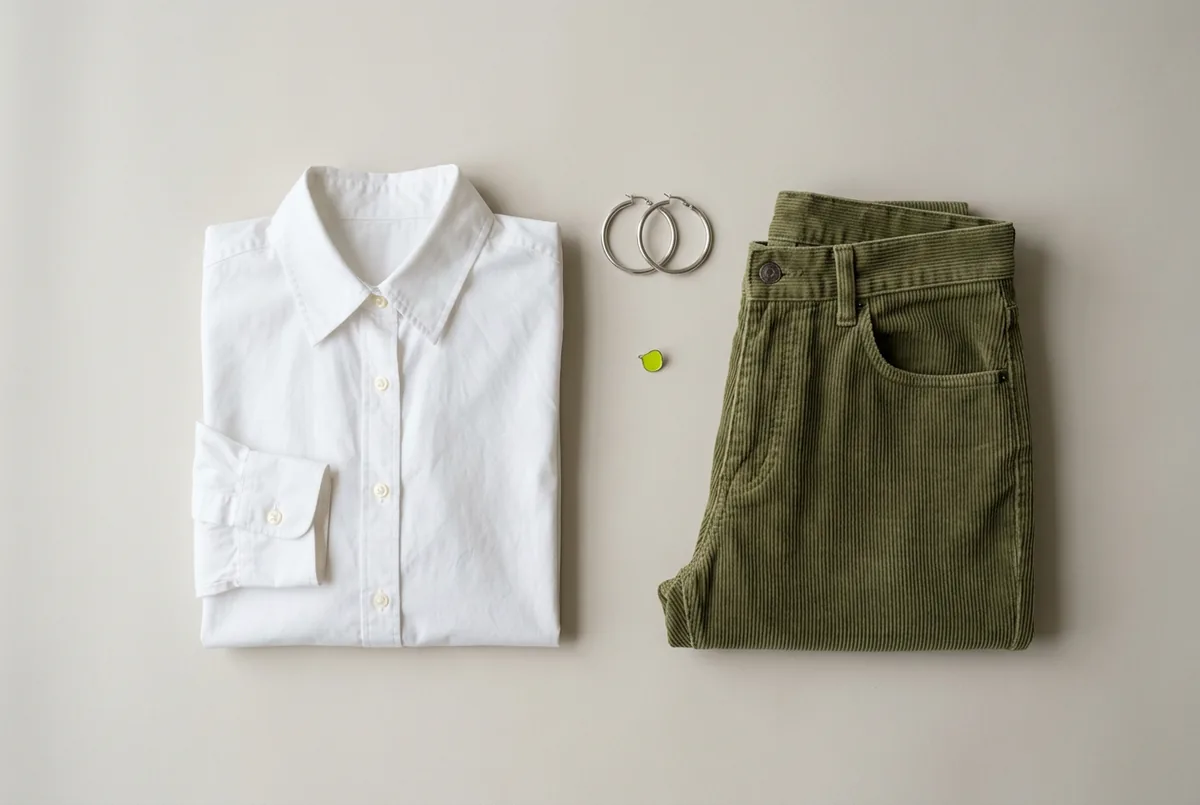
The straight-leg corduroy is a classic cut that offers great versatility. It lacks the exaggerated volume of a wide-leg style and the body-hugging fit of a slim cut, making it a straightforward foundation for many outfits. You can pair it with both fitted and slightly more relaxed tops without disrupting the overall balance.
An easy, classic combination is a pair of straight-leg cords in a neutral color like tan, olive, or navy with a crisp white shirt. A partial tuck at the front, known as a French tuck, defines the waist without looking overly formal. To add a layer for cooler weather, a simple blazer, a hip-length cardigan, or another type of light jacket works well.
The shoe choice helps set the tone. Loafers or simple leather sneakers create a relaxed, everyday look. Ankle boots are also a natural pairing; ensure the pants’ hem either just covers the top of the boot shaft or is cuffed once or twice to sit just above it. This small gap of ankle or the clean line where pant meets boot keeps the look sharp.
For slim or skinny corduroys
Slim-cut corduroy pants offer the most leeway for playing with volume on top. Following the classic silhouette rule of “slim on the bottom, volume on top,” you can pair these pants with oversized sweaters, relaxed-fit blazers, or tunic-length shirts. The slim leg provides a neat, narrow foundation that prevents the overall outfit from looking shapeless.
Consider an outfit of slim corduroys in a rich jewel tone like burgundy or deep teal paired with a soft, slightly oversized crewneck sweater in a neutral like heather gray or oatmeal. The sweater’s hem should land around the hip, creating an easy, comfortable silhouette that feels put-together.
Because the ankle is tapered, this style works with nearly any footwear. Flat shoes like ballet flats and loafers are a comfortable option. Ankle boots are a classic choice. You can also tuck slim corduroys into taller boots, such as knee-high riding boots, for a practical and traditional fall look.
What to avoid with corduroy pants
Styling corduroy well is often about avoiding a few common pitfalls that can make an outfit feel dated or unbalanced. The most frequent misstep is piling on too many textures at once or accidentally recreating a costume from a specific decade. A modern approach is about integrating the fabric into your current wardrobe, not building a theme around it.
Do
- Pair corduroy with smooth fabrics like cotton, silk, or fine-gauge knits
- Choose modern silhouettes for your tops and layers
- Tuck or half-tuck your shirt to define your waist
- Ensure the pant hem breaks cleanly over your shoe
Avoid
- Combining corduroy with other heavy textures like chunky knits or tweed
- Wearing a full 70s-inspired look with a peasant blouse and platforms
- Pairing baggy corduroys with an equally baggy, untucked top
- Letting a wide-leg hem drag on the ground
Caring for your corduroy pants
Corduroy is a durable fabric, but its signature piled texture requires specific care to maintain. Most corduroy is made from cotton or a cotton blend, so the general rules for cotton care apply, but with a few extra steps to protect the wales. As always, the garment’s care label provides the most reliable instructions.
| Care | Cotton |
|---|---|
| Washing | Machine wash, cold or warm; dark colors inside out |
| Drying | Line dry, or tumble dry on low |
| Ironing | High heat |
| Watch out | 100% cotton can shrink in a hot first wash |
If your pants contain spandex or elastane for stretch, avoid high heat in the washer and dryer, as it can damage the fibers and cause the fabric to lose its recovery. To keep your corduroys looking their best:
- Turn them inside out. Before washing, turn the pants inside out. This protects the ribbed pile from abrasion in the machine, which can lead to crushed or worn-looking patches.
- Wash with cold or warm water. Use a cold or warm water cycle with like colors. Dark-colored corduroys, especially new ones, can release dye in the first few washes, so wash them separately or with similar dark items.
- Choose a gentle drying method. While you can tumble dry on low heat (again, inside out), line drying or drying on a hanger is a safer option. It prevents potential shrinkage and is gentler on the fabric’s pile.
- Iron on the reverse. While cotton can typically take high heat, it is best to iron corduroy on the reverse with a low to medium setting. Ironing directly on the fabric’s surface, especially with high heat, can permanently crush and flatten the wales. Using steam can help relax wrinkles without applying direct pressure.
Read next