In this guide (5)
A great raincoat fits with room for a sweater or blazer underneath, with sleeves that cover your wrists and a hem that covers your seat. To actually keep you dry, it must be made of a truly waterproof (not just water-resistant) fabric with sealed seams, and have enough breathability that you do not feel like you are wearing a plastic bag. The right fit prioritizes coverage and ease of movement over a close-cut silhouette.
A raincoat that fails in a downpour is worse than useless. The difference between a jacket that works and one that soaks through often comes down to technical details that are easy to miss on the rack. Before you check the fit, check the tag for two key terms: waterproof and breathable.
Waterproof vs. water-resistant
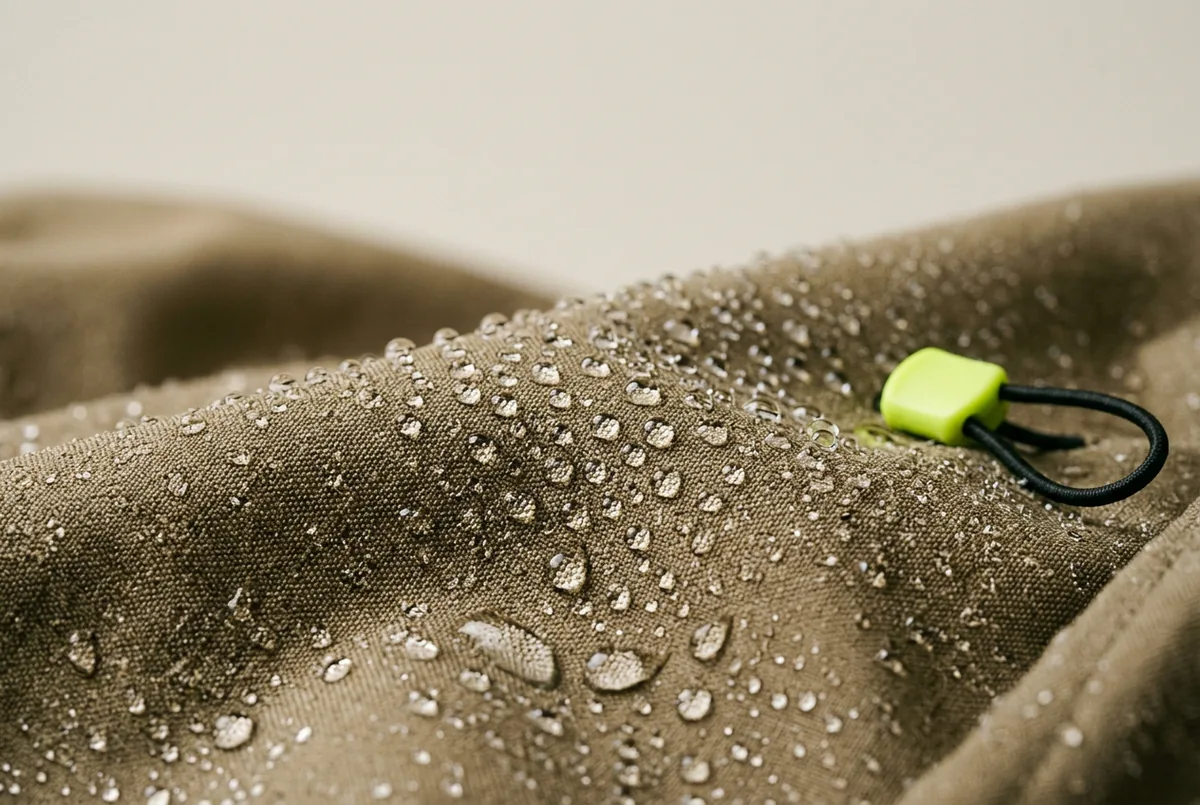
A garment labeled water-resistant (or water-repellent) can handle a light shower for a short time. Its fabric is either tightly woven or treated with a coating, often a Durable Water Repellent (DWR) finish, that makes water bead up and roll off. In sustained rain, however, water will eventually soak through. These jackets are best for a misty day or a quick dash from the car to the office.
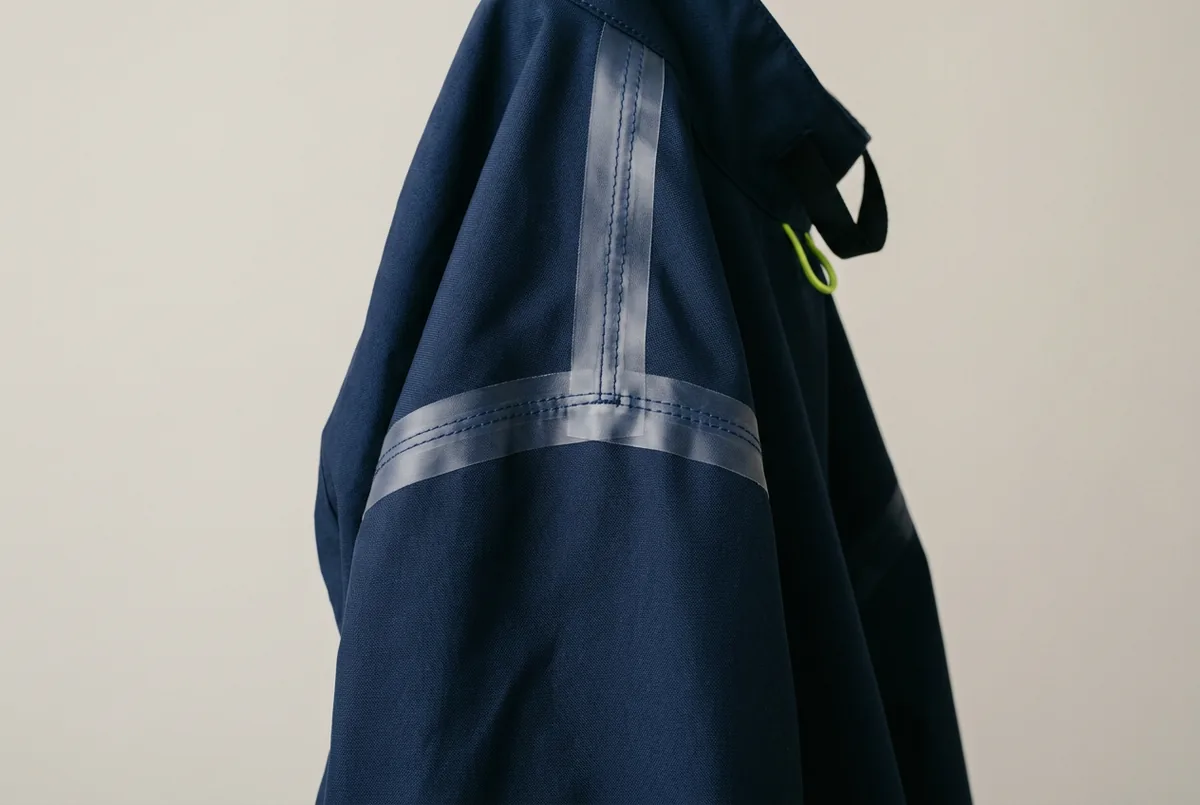
A waterproof garment is built to withstand heavy, persistent rain. The fabric itself is a barrier to water. For a jacket to be truly waterproof, it must also have sealed or taped seams. Without this, water will seep through the tiny holes made by the sewing needle along the seams of the shoulders, hood and arms. If the label says “waterproof” but you do not see tape covering the seams on the inside, it will not keep you dry in a storm.
Many waterproof jackets are also advertised as breathable. This means the fabric is engineered to let water vapor (your sweat) escape from the inside while blocking liquid water (rain) from the outside. This is what prevents the clammy, sticky feeling of wearing a simple plastic poncho. A lack of breathability is why you can feel wet inside a raincoat even when no water has leaked in.
The fit checklist: What to test in the store
When trying on a raincoat, wear or bring a mid-weight layer, like a thick sweater or a fleece jacket, that you would typically wear in cool, wet weather. The goal is to find a fit that works over your everyday clothes without being restrictive or excessively bulky.
The checklist above gives you a series of tests to perform in the fitting room. A common mistake is to buy a raincoat that fits snugly over a t-shirt. This leaves no room for the warmer layers you will need on a cold, rainy day, and a tight fit can restrict movement and reduce the fabric’s breathability.
Key features for staying dry
Beyond fit and fabric, the small details of a raincoat’s construction make a significant difference in its performance.
- Sealed Seams: As mentioned, this is non-negotiable for a waterproof jacket. Look inside the coat for a strip of tape covering the stitching. “Critically taped” or “taped in key areas” means only some seams are sealed, usually on the hood and shoulders. “Fully taped” means every seam is sealed for maximum protection.
- Storm Flaps: A flap of fabric that covers the front zipper is essential. It prevents wind-driven rain from getting through the teeth of the zipper. Some jackets use waterproof zippers, which have a rubbery coating and do not require a flap, but a traditional zipper with a good storm flap is just as effective.
- Adjustable Cuffs, Hem and Hood: Velcro tabs, snaps or elastic toggles allow you to cinch these openings tight against the rain and wind. A well-designed hood will have adjustments for both the opening around your face and the volume at the back of the head, so it turns with you instead of creating blind spots.
- Vents: For jackets made of less breathable materials, vents help manage moisture from the inside. Pit zips (zippers under the armpits) provide the most effective ventilation, allowing you to dump heat quickly. A back vent with a mesh lining is another common feature that improves airflow.
Choosing a style that works for you
A high-performance raincoat does not need to look like you are about to summit a mountain. Many classic styles are designed for rain and can be easily incorporated into a daily wardrobe for commuting or weekend errands. While a winter coat prioritizes warmth, a raincoat is about staying dry, and its style should serve that function. You can find more on this topic in our guide to how a winter coat should fit.
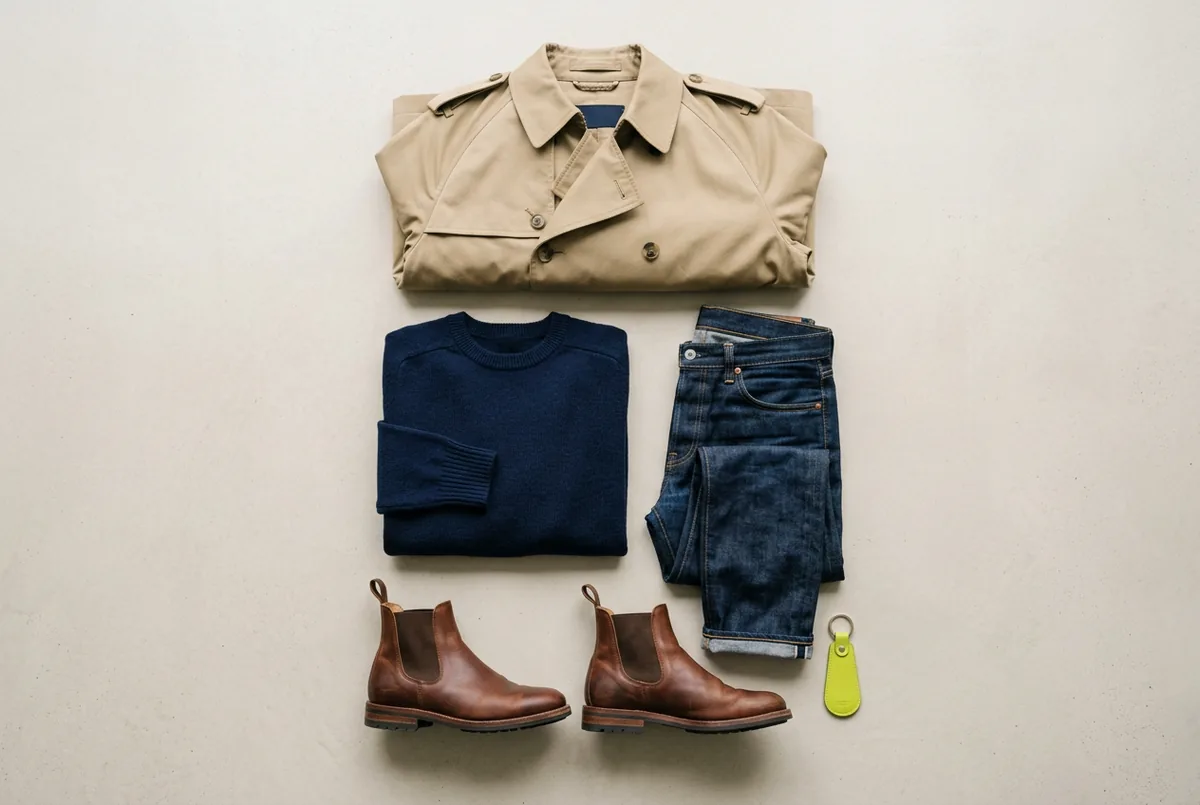
The trench coat is a classic example of a functional design. Originally military wear, its features, like wide lapels, a double-breasted closure and a belt, are all practical for keeping out weather. A modern mac or car coat offers a simpler, single-breasted silhouette that is just as versatile. These styles, often made of waterproof or water-resistant cotton or synthetic blends, work just as well over a suit as they do over jeans and a sweater.
For color, neutrals like khaki, navy, olive and black offer the most versatility. A brightly colored raincoat, in red or yellow, is a classic choice that also improves your visibility on gray, overcast days.
How to care for your raincoat
To maintain its performance, a raincoat needs to be cleaned periodically. Dirt, body oils and household detergents can clog the pores of a breathable membrane and break down the DWR finish, causing the fabric to “wet out,” or become saturated on the surface.
Always follow the instructions on the garment’s care label. The Federal Trade Commission requires manufacturers to provide at least one safe cleaning method. As a general rule for technical rainwear:
- Empty the pockets and close all zippers, flaps and Velcro tabs.
- Use a detergent specifically designed for waterproof outerwear. Regular laundry detergents can leave residues that harm the DWR coating.
- Wash on a gentle cycle with cold or warm water. Do not use fabric softener.
- Run an extra rinse cycle to ensure all detergent is removed.
- Line dry your raincoat on a hanger, or tumble dry on low heat if the care label permits. High heat can damage the waterproof membrane. After it is dry, you can help reactivate the Durable Water Repellent (DWR) finish by tumbling it for another 20 minutes. Stick to low heat, unless the label explicitly states that medium heat is safe for this purpose.
| Care | Polyester |
|---|---|
| Washing | Machine wash, cold or warm |
| Drying | Line dry, or tumble dry on low |
| Ironing | Low heat |
| Watch out | Holds on to odors; skip fabric softener on activewear |
If you notice that water no longer beads up on the jacket’s surface, it is time to refresh the DWR finish. After washing, you can apply a spray-on or wash-in DWR product, available from outdoor goods stores. Follow the product’s instructions, which usually involve tumble drying to cure the finish. A well-cared-for raincoat is a long-term investment in staying dry and comfortable.
Read next