In this guide (5)
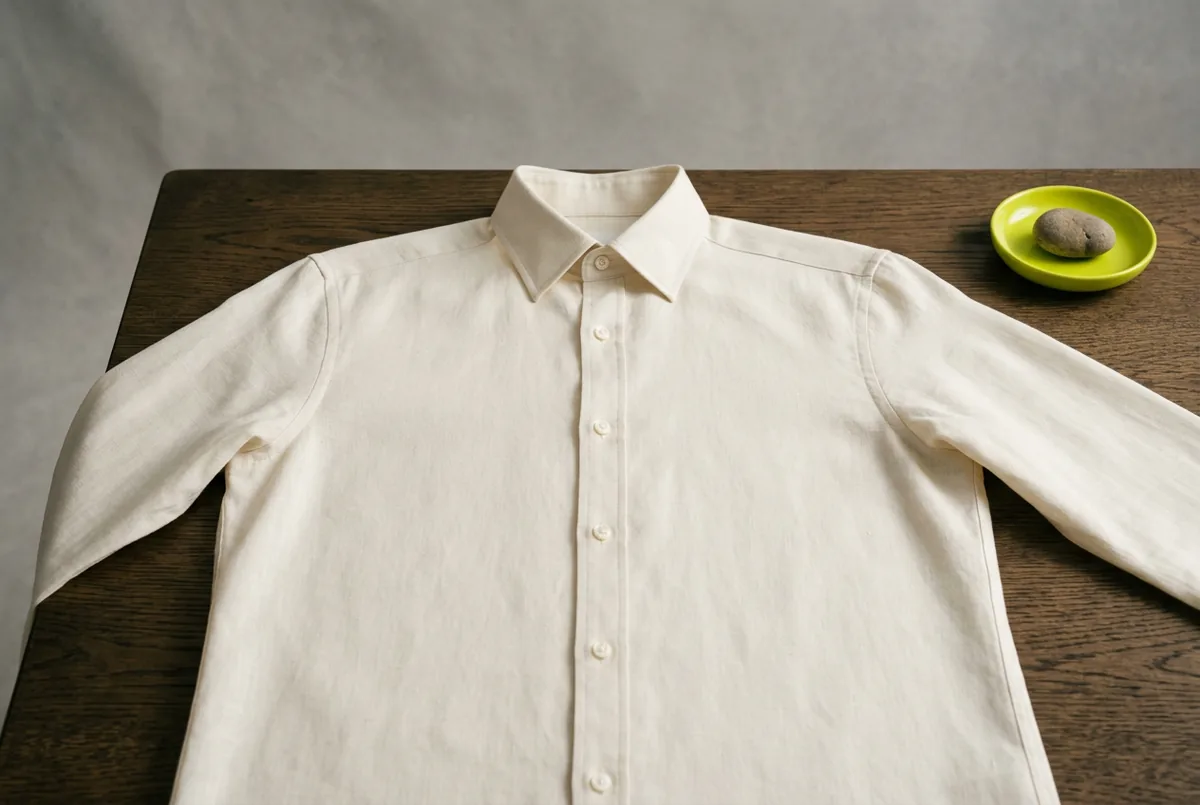
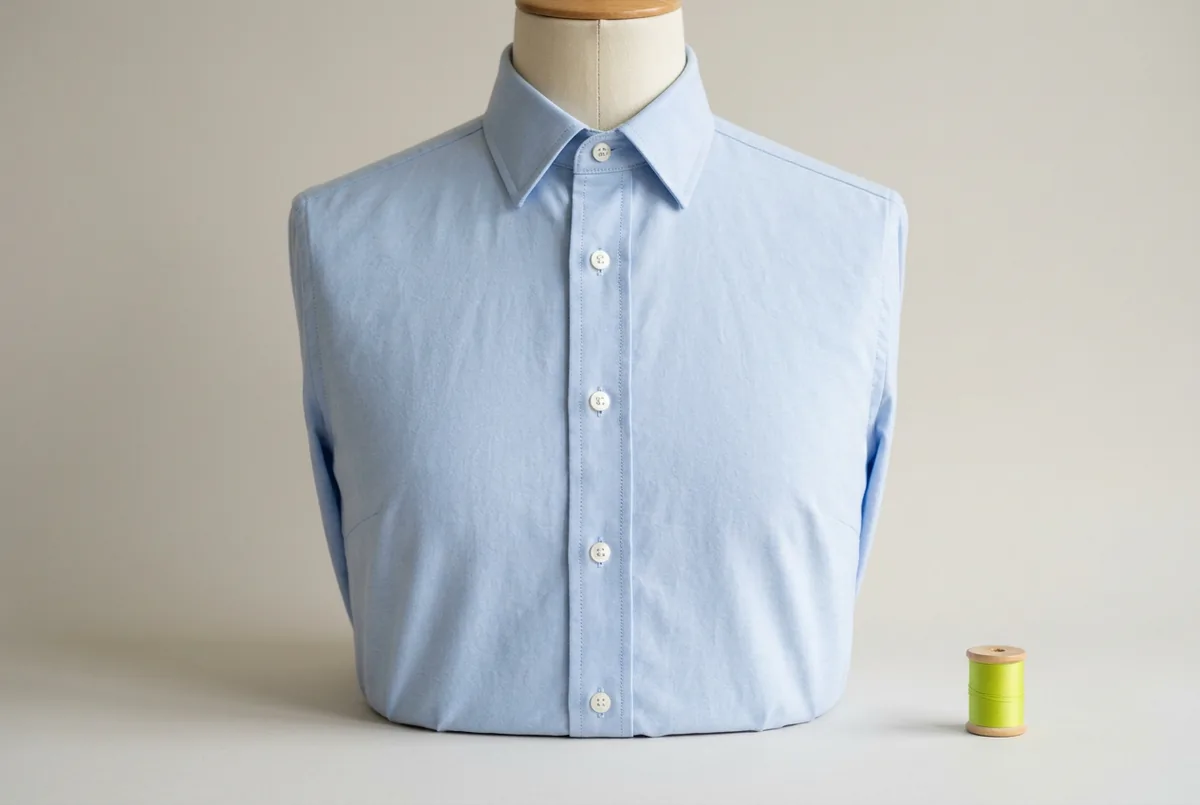
A well-fitting button-down shirt closes smoothly without pulling, the shoulder seams align with your shoulder bones, and the sleeves end at your wrist bone, allowing for a full range of motion. The front button placket should lie flat against your torso without gaping or creating an “X” shape of strained fabric, a sign that the shirt is too tight across the bust or hips. This holds true whether you are standing, sitting, or reaching for something.
The universal fit points: shoulders, chest and sleeves
Before considering different styles like fitted or oversized, a good button-down must pass three non-negotiable fit tests. These areas are the most difficult and expensive to alter, so getting them right from the start is the key to a shirt that looks and feels right.
Shoulders: This is the most important fit point. The seam that connects the sleeve to the body of the shirt should sit squarely on the edge of your shoulder bone. If the seam slides down your upper arm, the shirt is too big. If it sits up on your collarbone, it’s too small and will restrict movement. Unlike sleeve length or waist shaping, adjusting the shoulders is major tailoring surgery, so prioritize a perfect shoulder fit above all else.
Chest and bust: The fabric across the chest should be smooth. The most common fit problem is gaping between the buttons, which happens when a shirt is too small across the bust. The button placket (the strip of fabric with the buttonholes) must lie flat. If you see fabric pulling into an X-shape centered on a button, the shirt is too tight. The fit should allow you to move comfortably without the buttons looking like they are under strain.
Sleeves: With your arms relaxed at your sides, the cuff should end at the break of your wrist, right where your hand begins. This allows a bit of the shirt cuff to show when worn under a jacket sleeve. The cuff itself should be snug enough that it doesn’t slide down over your hand, but with enough room to accommodate a watch. When you bend your elbow, the sleeve should not pull back so far that it exposes your entire forearm.
The fit checklist for the dressing room
To find the right shirt, you need to do more than just stand still in front of a mirror. A shirt that seems fine when you are stationary can reveal its fit issues the moment you move. Use these simple, hands-on tests in the dressing room to assess the fit from all angles.
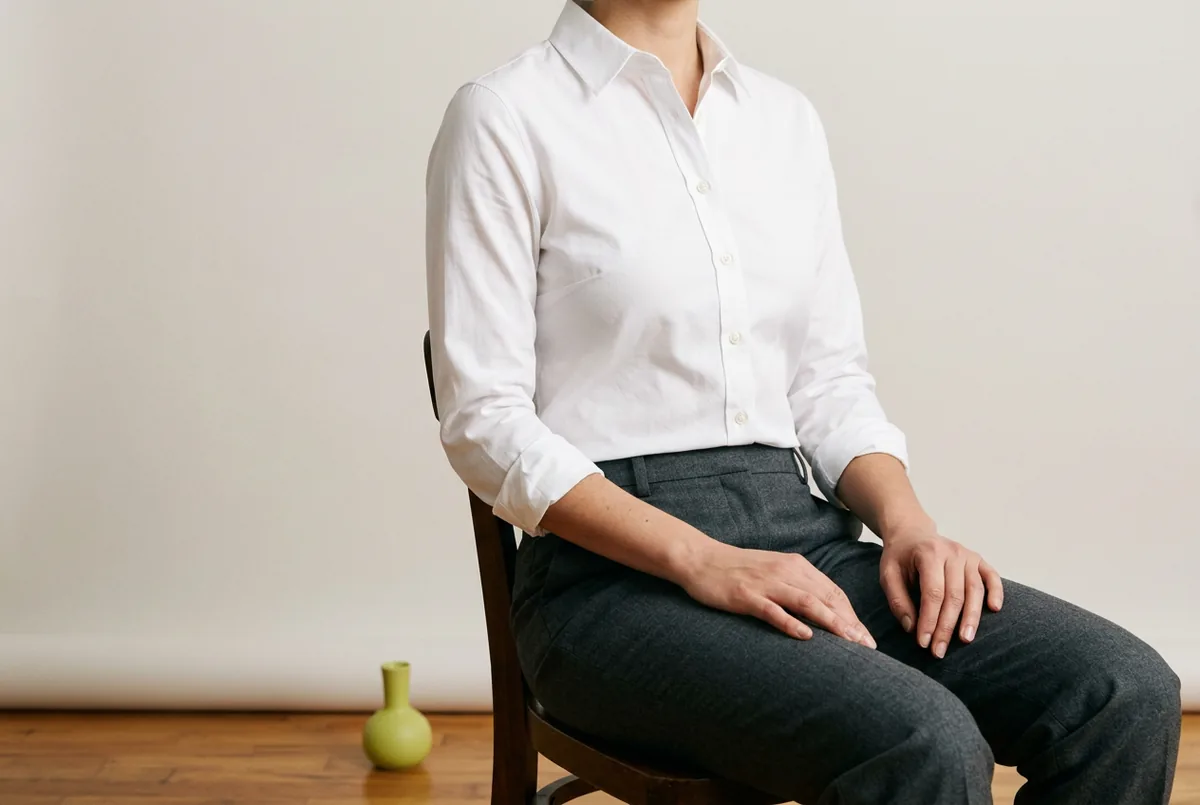
The sit-down test is especially important. Many shirts fit well when you are standing, only to gap at the bust or feel tight across the hips as soon as you take a seat. Since you will likely be sitting for parts of the day, this test mimics real-world conditions and prevents a common fit problem.
Choosing your style: fitted, classic or oversized
Once you have the basics of fit down, you can choose the silhouette that works best for your needs and personal style. Each style has its own fit considerations.
Fitted shirts
A fitted shirt follows the contours of the body more closely, creating a defined shape. This is usually achieved with vertical darts at the bust and in the back. The goal is shaping, not squeezing: it should skim your figure without being tight. Many fitted shirts include a small percentage of spandex or elastane (typically 2-4%) in the fabric blend. This provides stretch, which improves comfort and mobility and helps prevent gaping. A fitted shirt is a polished choice that tucks cleanly into pants and skirts without excess fabric bunching at the waist.
Classic shirts
The classic, or straight-fit, shirt has a straighter cut through the body than a fitted shirt. It has less shaping at the waist, offering more room and a more traditional, structured look. This is the workhorse of many wardrobes, often seen in business casual environments. When checking the fit of a classic shirt, ensure there is enough room in the torso for comfort, but not so much that it looks baggy or boxy. The fabric should fall cleanly from the shoulders.
Oversized shirts
An oversized shirt is designed to be voluminous, but it should not look like you are wearing a shirt that is simply several sizes too large. The fit is intentional. Look for design cues like a dropped shoulder seam (where the seam is meant to fall down the upper arm) and a longer, often curved, hem. The key to wearing an oversized shirt is proportion. The fabric should have a fluid drape so that it hangs and moves well, rather than adding bulk. Because the shirt itself is voluminous, it often works best balanced with more fitted bottoms, like straight-leg jeans or leggings. An oversized shirt is also one of the easiest to style in different ways, such as worn open as a light layer, knotted at the waist, or with a half-tuck.
What to look for and what to avoid
When you are assessing a shirt, small details can make a big difference in quality and long-term wear. Paying attention to these points can help you choose a better garment.
Do
- Shoulder seams aligned with your shoulder bones
- A smooth, flat button placket
- Enough room to move your arms freely
- Fabric with good drape, like cotton or viscose
Avoid
- An 'X' shape pulling at the chest button
- Seams drooping down your upper arm
- Gaping between buttons when you sit or move
- Cuffs that slide down over your hands
Also consider the fabric. A 100% cotton shirt is breathable and classic, while a cotton-spandex blend offers mobility. Viscose and lyocell offer a fluid drape and soft feel, which is excellent for oversized styles. Check the fabric’s opacity; hold it up to the light to see how sheer it is and decide if it will require a camisole underneath.
When the fit is not quite right: the role of tailoring
Finding a shirt that fits perfectly off the rack is difficult, especially if your proportions don’t match a brand’s standard sizing model. This is where a good tailor can make a significant difference. However, it is important to know which alterations are simple and which are complex.
Easy alterations include shortening the sleeves (usually done from the cuff), hemming the shirt’s length, or adding darts to the back or bust to create a more fitted shape in a classic-cut shirt. These are routine, low-cost adjustments that can dial in the fit of a shirt that is already a good match in the shoulders and chest.
Difficult alterations involve the shoulders, armholes, or the overall width of the chest. Changing the slope or width of the shoulders is one of the most complex and expensive tailoring jobs, and the results are not always perfect. As our guide to suit alterations explains, it is almost always better to buy for the shoulders and tailor the rest. If the shirt is too tight across the bust, a tailor cannot add fabric that isn’t there. For this reason, always buy a shirt that fits the widest part of your body (often the shoulders or bust) and have the smaller parts tailored down.
Read next