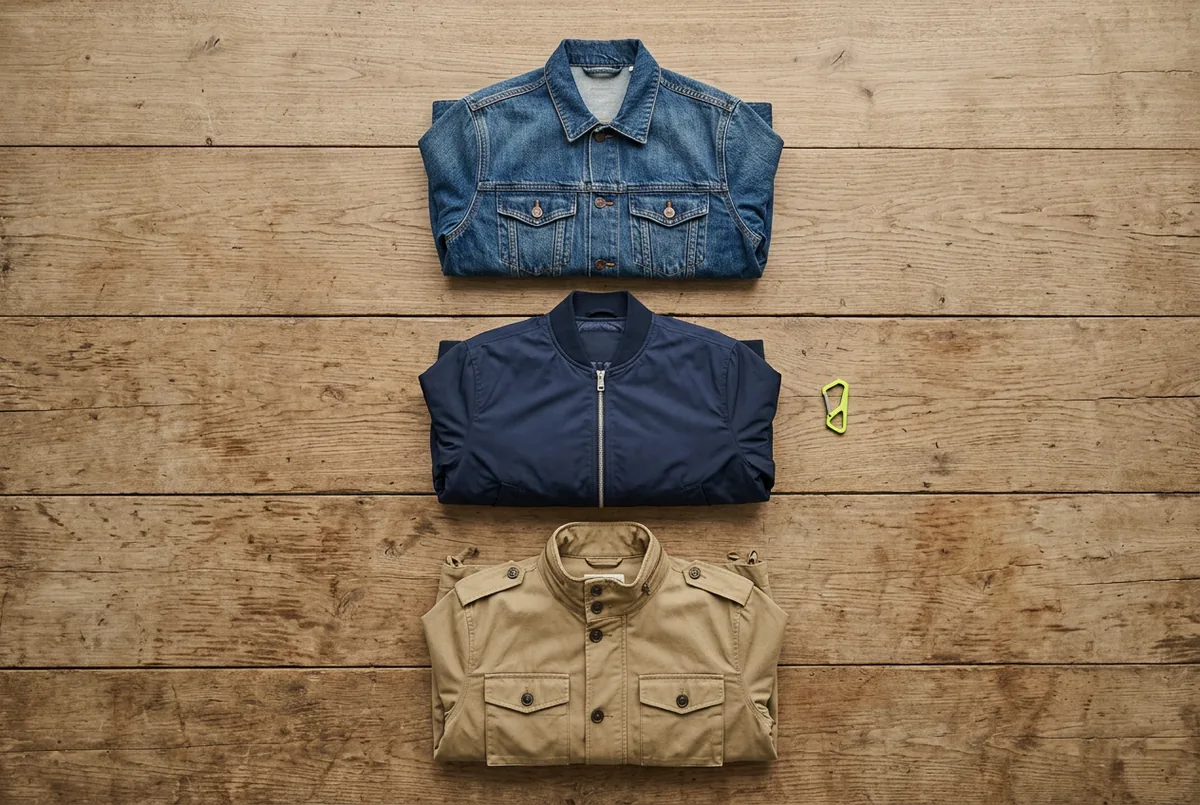
A light jacket is the most practical piece of menswear for fall. To choose the right one, focus on three classic styles that cover most situations: the denim jacket for casual wear, the bomber jacket for a smarter look, and the field jacket for function and warmth. The best choice will fit correctly at the shoulders, end around your hips, and have just enough room to layer over a shirt or a light knit. This approach ensures you get a jacket that is genuinely useful for the varied temperatures of the season.
How to find the right fit
Before looking at styles, understanding the principles of a good fit ensures your jacket will look right and feel comfortable. Unlike a winter coat, a light jacket is a finishing piece, not a heavy layer meant to go over bulky sweaters or suits. Its proportions are key to making an outfit look intentional. The single most important fit point is the shoulders; the seam should sit directly on the edge of your shoulder bone. This is the hardest part of a jacket to alter, so prioritize getting it right when you buy. The chest should have enough room to zip or button over a shirt without pulling the fabric tight into an ‘X’ shape. The length is also critical: for most light jackets like bombers and denim styles, the hem should land at or just below your belt line, around your hips. This preserves a clean vertical line with your trousers. Finally, the sleeves should end at your wrist bone, allowing a little of your shirt cuff to show.
To be sure of the fit in a store, use a few simple tests. The checklist below outlines what to look for and how to check it with a few movements.
The denim jacket: A casual classic
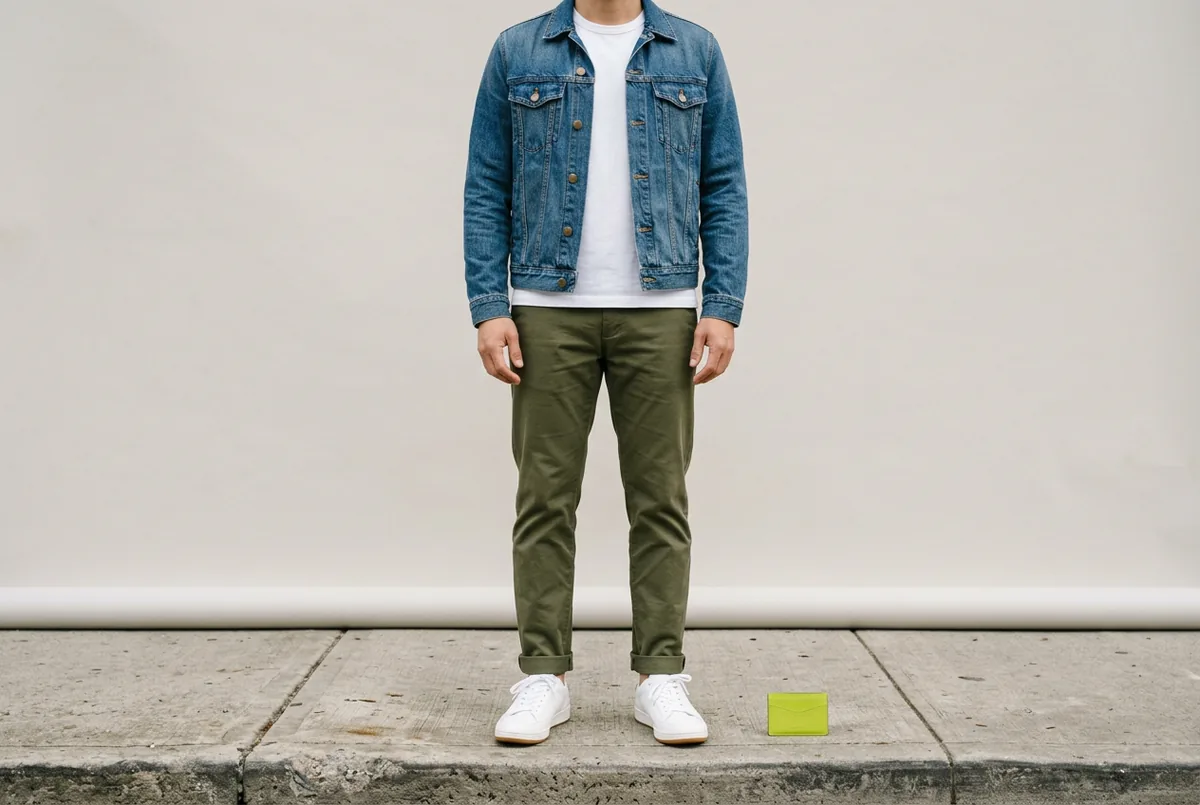
The denim jacket is a workwear icon that has become a staple of casual style. Made from sturdy cotton twill, it is durable, easy to wear, and develops character over time. Its natural habitat is the weekend: for errands, a casual get-together with friends, or an evening outdoors when the air has a slight chill. Because it is made of cotton, it is breathable and comfortable on a mild fall day, but it will not offer much protection in rain or strong wind.
The key to wearing a denim jacket well is to treat it as a rugged alternative to a blazer or cardigan. It adds a layer of texture and a relaxed feel to simple outfits. While the rule against wearing it with jeans (the “Canadian tuxedo”) is outdated, the easiest way to get it right is to ensure contrast. If you wear jeans, pick a pair that is a significantly different shade from the jacket. A mid-wash blue jacket works well with dark indigo or black jeans, or even better, with chinos in a different color and fabric altogether.
The bomber jacket: Smart and versatile
Originally designed for military pilots, the bomber jacket is defined by its cropped length, front zipper, and ribbed knit trim at the cuffs and hem. This style is a step up in formality from the denim jacket and one of the most versatile light jackets a man can own. It works for a wide range of smart casual situations, from a dinner out to a workplace with a relaxed dress code. Its clean lines and fitted waistband create a sharp silhouette that pairs well with both trousers and jeans.
Bombers come in many fabrics, from the traditional nylon to wool, suede, and leather. A simple nylon bomber in a dark, neutral color like navy, black, or olive is the most adaptable. It has a slight sheen that adds a modern touch and offers some resistance to wind and light rain. The defined waist of a bomber jacket creates a clear separation between your upper and lower body, an effect that works well with untucked shirts or knits. For a simple and effective outfit, wear it over a fine-gauge sweater with tailored trousers.
The field jacket: Practical and layered
The field jacket is another piece with military roots, designed for utility and function. It is typically made from durable cotton canvas or a cotton-blend fabric and is distinguished by its four large front pockets, a slightly longer cut that extends past the belt, and often a stand-up collar that may conceal a hood. This makes it an excellent choice for fall weather that is unpredictable, offering more coverage and storage than a bomber or denim jacket.
The field jacket’s rugged character lends itself to layered, textural outfits. It is the perfect top layer for a look built around flannel shirts, chunky knits, or chambray. Because it is less structured than a blazer and more substantial than a shirt, it bridges the gap between indoors and outdoors. A classic color like khaki, olive green, or navy will be the most versatile. The length provides more protection from the elements, and the pockets are genuinely useful, making it a practical choice for a day that involves being out and about.
Choosing the right fabric for the weather
The style of a jacket is only half the story; the fabric determines when and where you can wear it. In a country with climates as varied as the United States, a light jacket for a dry West Coast fall is different from one for a damp New England autumn.
- Cotton: Found in denim jackets and many field jackets, cotton is breathable and comfortable in mild temperatures. It absorbs moisture, however, so it is not ideal for rainy days. It is a solid choice for the dry, sunny days common in early fall across much of the country.
- Nylon and Polyester: Common in bomber jackets, these synthetic fibers are excellent at blocking wind and resisting light rain. The downside is that they are not very breathable. They can feel clammy in humid conditions or if you are active. They are best for cool, windy, or drizzly days.
- Wool and Suede: These materials are warmer and are generally found on higher-end bombers or chore coats. They provide good insulation as the season progresses into late fall. Both require more careful maintenance and are not suited for wet weather unless they have been specifically treated.
Before buying, check the fiber content label. A jacket’s material is the best guide to its true performance against the weather, more so than its style or weight might suggest.
Read next