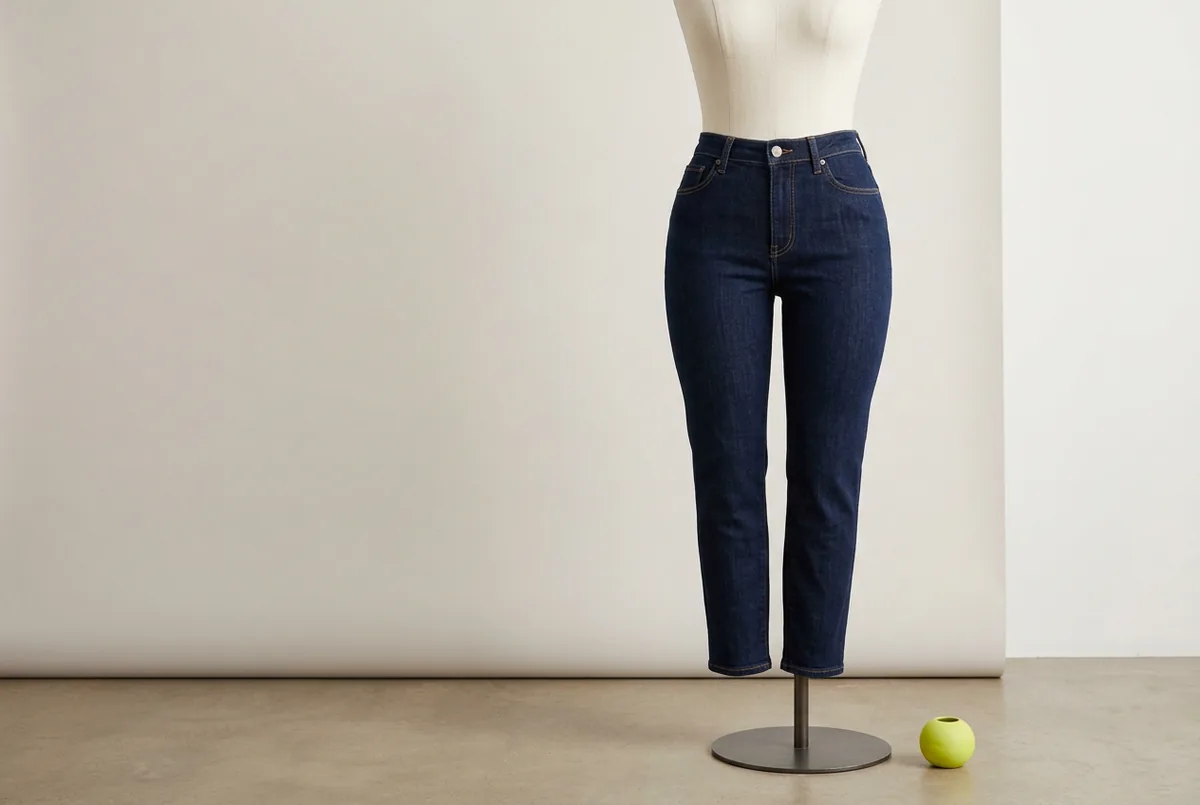
To find jeans that fit wider hips and thighs without gaping at the waist, look for styles explicitly labeled as a “curvy fit.” These are cut with a smaller waist-to-hip ratio, meaning they have more room through the seat and thighs while keeping the waist trim. The right fabric is just as important. A denim blend that includes some spandex (also called elastane) provides enough stretch to conform to your body’s lines and close the gap at your back, without feeling restrictive or losing its shape after a few hours of wear.
What “curvy fit” means and why it works
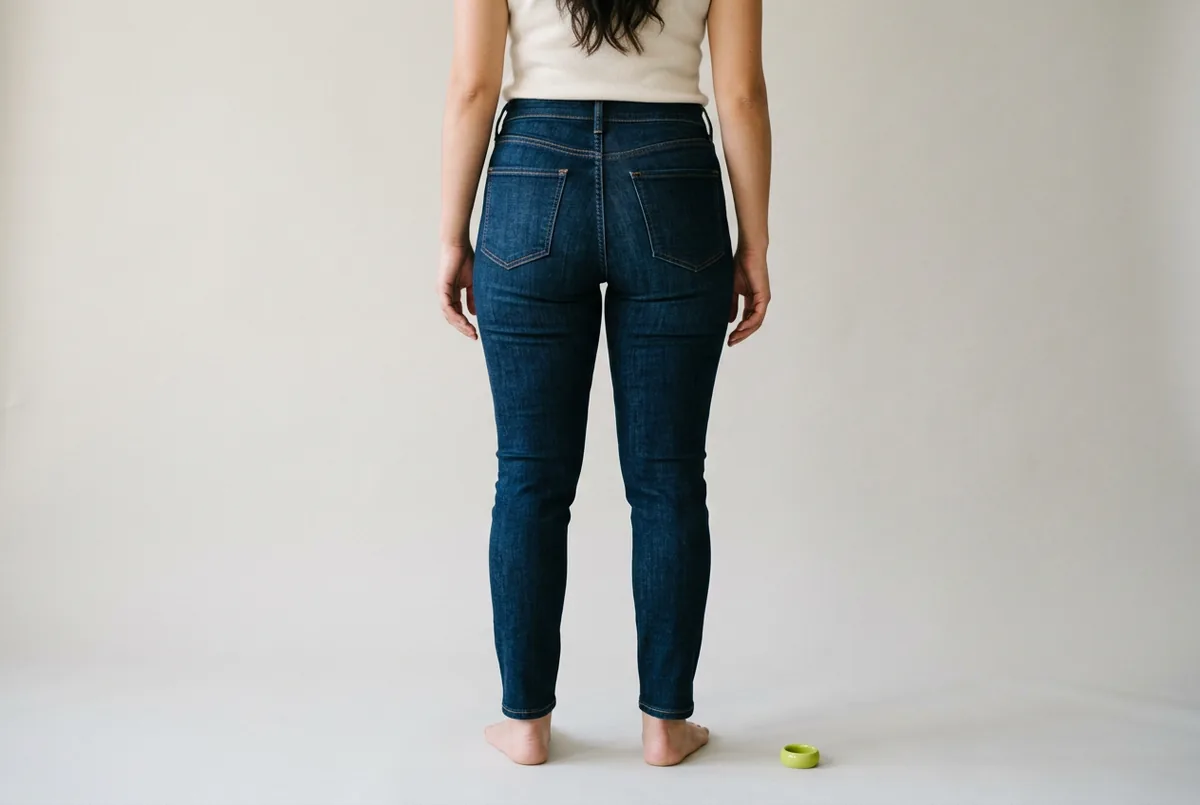
The persistent gap between your lower back and the waistband of your jeans is a design problem, not a body problem. Most standard jeans are cut for a straighter silhouette, with a relatively small difference between the waist and hip measurements. If your body has a larger difference, the jeans will be tight across the hips to the point where the waistband is pulled away from your body, creating that familiar arched gap.
“Curvy fit” jeans are engineered to solve this. They are designed with a larger waist-to-hip ratio, accommodating a greater difference between the waist and hips. This means that a size 30 curvy jean will have a waist measurement similar to a standard size 30, but more room in the hips and thighs. This is a change in proportion, not size. Start by trying your usual size. Different brands use different names for this cut, such as “hourglass,” “bold,” or descriptions like “designed for curves” or “no-gap waistband.”
The role of fabric: finding the right stretch
Fabric composition is a critical piece of the puzzle. While 100% cotton denim is durable and has a classic, structured feel, its rigidity means it has no give. If the pattern is not cut exactly for your measurements, it will pull and gap. A small amount of stretch fiber provides the flexibility needed to hug your body’s lines.
When checking the fabric content label, which is required by the FTC’s Textile and Wool Acts, look for spandex or elastane in the blend. The amount of stretch determines the trade-off between structure and flexibility.
- Low Stretch: Denim with just a hint of stretch offers a touch of flexibility while maintaining the structure and feel of traditional, more rigid jeans. This is a good option if you prefer a sturdy fabric, but it may not be enough to solve a significant waist gap on its own.
- Medium Stretch: A balanced blend of cotton and elastane provides enough elasticity to eliminate the waist gap and move with your body. The high cotton content ensures the jeans still feel like denim and hold their shape well through the day. This is often the sweet spot for a curvy fit that combines comfort and structure.
- High Stretch: Jeans with a higher percentage of synthetic fiber can feel as flexible as leggings. While very comfortable, they may stretch out or “bag” more quickly at the knees and seat. They also offer less of the structure and texture that you expect from a pair of jeans.
High-stretch jeans can lose their shape because the elastic fibers become fatigued and do not fully snap back. To preserve the stretch, follow the care label instructions. Washing in cold water and line drying or tumbling on low preserves the elastane fibers, which are damaged by high heat.
How leg shape affects proportion
While the fit at the waist and hips is the first priority, the cut of the leg changes the overall silhouette. A curvy fit addresses the waist gap, but the leg shape determines how the jeans balance your proportions.
- Straight: This cut runs straight down from the hip to the ankle. It creates a clean, unbroken vertical line that can balance the curve of the hip without clinging to the lower leg. Paired with a classic button-down shirt, it creates a polished silhouette.
- Bootcut and Flare: These styles widen from the knee to the hem. The flare at the bottom creates a counterpoint to the hips, resulting in a balanced silhouette.
- Skinny: A skinny cut follows the line of the body from hip to ankle. It emphasizes the shape of your legs and works well when you want a close-fitting silhouette from top to bottom.
- Wide-Leg: This style is cut wide from the hip all the way to the hem, creating a strong, fluid line that lengthens the appearance of the leg.
The best leg shape is a matter of personal preference and the look you want to achieve. Trying different cuts can reveal new combinations that work for your style.
Your fitting room checklist for the perfect fit
Trying on jeans is the only way to know for sure. When you’re in the fitting room, don’t just stand still. Move around to simulate how the jeans will perform in your daily life. A pair that looks good when you’re standing motionless might become uncomfortable the moment you sit down.

Why a higher rise often fits better
The rise of a jean, the distance from the crotch seam to the top of the waistband, plays a major role in how well it accommodates curves. High-rise and super high-rise styles are the most successful for eliminating the waist gap. Because their waistbands are designed to sit at or above the natural waist (the narrowest part of the torso), they are anchored at a point that is proportionally smaller than the hips. This makes them less likely to be pulled down or away from the body.
Mid-rise jeans, which typically sit just below the navel, also work well for many proportions. Low-rise jeans are the most likely to cause fit issues, as they sit on the hips and offer less coverage in the back, making gapping and sliding down common when you sit or bend.
Tips for shopping for curvy jeans online
Buying jeans without trying them on is a risk, but you can improve your chances of success by being methodical. Since federal law does not require stores to accept returns, always check the policy before you buy.
Do
- Measure your waist, hips, and inseam
- Read the full product description for 'curvy'
- Check the fabric composition for spandex or elastane
- Confirm the store's return policy
Avoid
- Assuming your size is the same everywhere
- Ignoring the brand's specific size chart
- Buying 100% cotton jeans without trying them on
- Purchasing from a store that lists jeans as final sale
Start by taking your measurements with a soft tape measure. Measure your natural waist and the fullest part of your hips, and compare these numbers to the brand’s specific size chart. Read customer reviews, paying attention to comments on fit, stretch, and whether the jeans retain their shape. Finally, before adding an item to your cart, locate and read the return policy. The FTC’s Mail, Internet, or Telephone Order Merchandise Rule requires sellers to ship on time, but return rules are set by the store.
When tailoring is the best solution
If you find a pair of jeans that fits perfectly through the hips and thighs but still has a minor gap at the waist, do not dismiss them. Taking in the back of a waistband is a straightforward and common alteration for an experienced tailor.
This is a good option when the gap is small. A tailor can open the waistband seam and create two new darts to remove the excess fabric, making the fit precise to your shape. This small investment can turn an almost-right pair of jeans into a perfect one. However, tailoring cannot solve all problems. An alteration cannot easily fix jeans that are too tight in the thighs or baggy in the seat, as these issues require changing the core pattern of the pants. For this reason, always prioritize a good fit in the hips and seat when you buy.
Read next