In this guide (7)
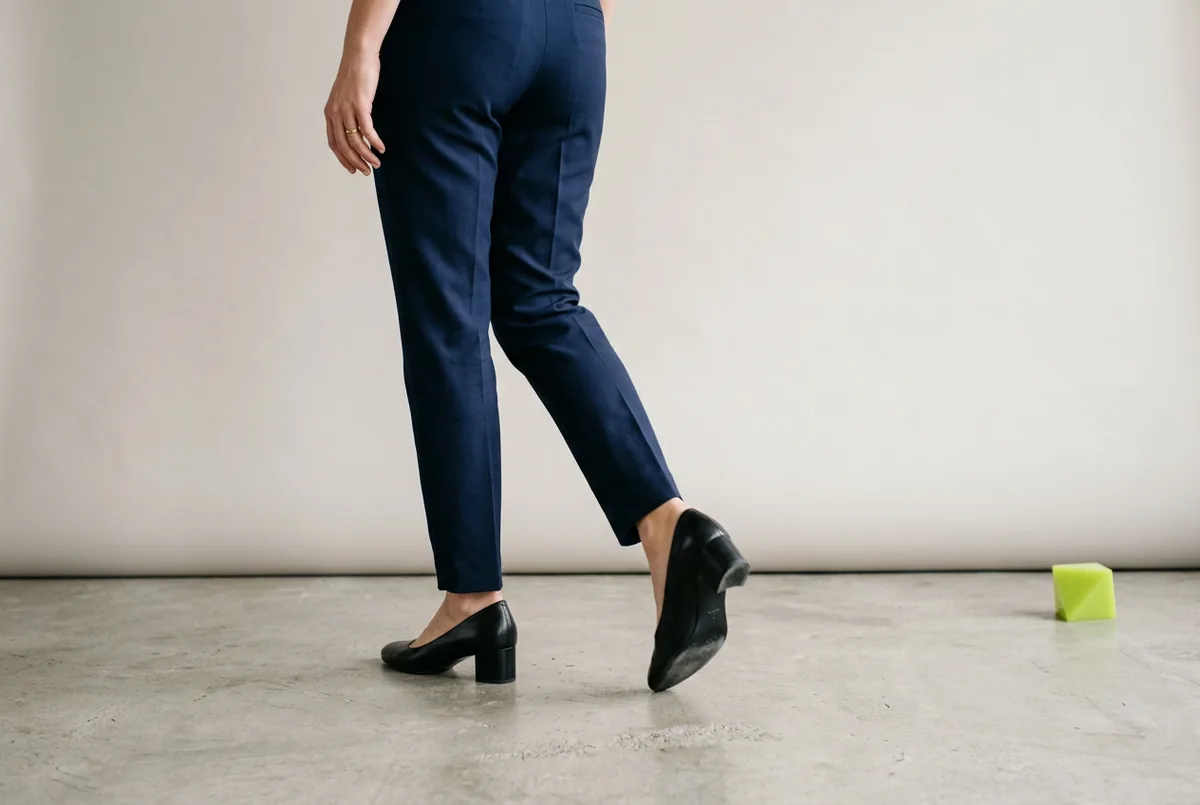
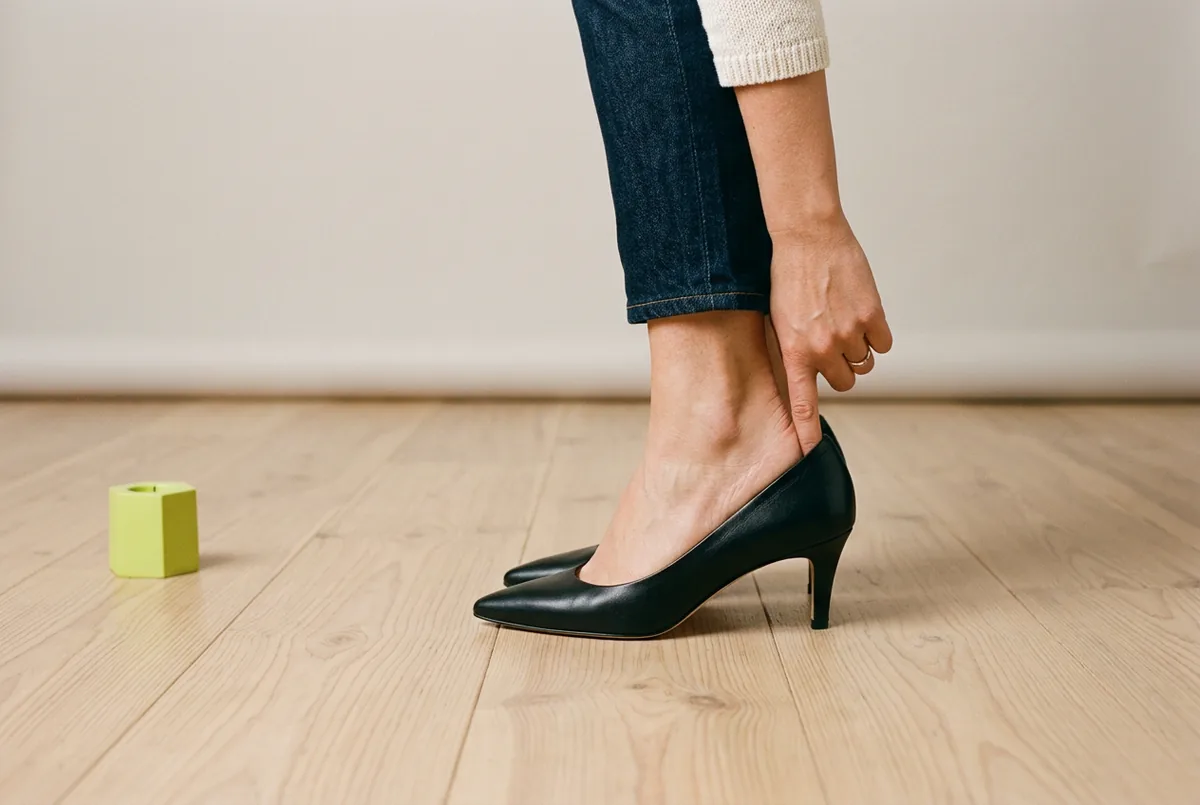
An ill-fitting pump creates pressure points and instability, but the right one holds your foot securely without pinching or slipping. To check for length, stand with your full weight on your foot and slide it forward; you should have just enough space to slip a finger between your heel and the back of the shoe. When you walk, your heel should stay put with little to no slippage. The widest part of the shoe must align with the ball of your foot, giving you support without squeezing your toes or the sides.
The definitive checklist for a perfect fit
Finding the right fit is a hands-on process. A number on a box is only a starting point, as sizing is not standardized between brands. Use these tests in the store or at home with a new pair to decide if the fit is right for you. It is better to assess the shoe on a hard, non-carpeted floor, which mimics sidewalks and office hallways, to get a true sense of the shoe’s support and feel underfoot.
When to shop for the most accurate fit
Your feet naturally swell and expand throughout the day, becoming slightly larger in the evening than they are in the morning. For this reason, the best time to try on and purchase shoes is in the late afternoon or evening. This ensures the fit will still be comfortable when your feet are at their largest, preventing tightness and pain after a long day of wear.
Always try on shoes with the same type of hosiery, thin socks, or bare feet as you intend to wear them. A pair of sheer pantyhose takes up much less room than a thicker trouser sock, and the difference can be enough to turn a perfect fit into a painfully tight one. Trying on shoes barefoot when you plan to wear them with socks will lead to a fit that is too small.
How fabric changes the fit: leather vs. synthetics
The material of a pump directly influences its fit and how it will wear over time. Different materials have different properties, and understanding them helps you make a better choice.
Full-grain leather will stretch and soften with wear, molding to the unique shape of your foot. A new leather pump should fit snugly, as it will give slightly over time. This is the “breaking-in” period, where the leather adapts to you.
Suede is a type of leather that is softer and has more initial flexibility than standard smooth leather. It requires less of a breaking-in period but is more susceptible to water damage and stains.
Patent leather has a high-gloss finish that gives it a rigid structure. It stretches very little, if at all. With patent leather pumps, the fit you feel in the store is the fit you will have for the life of the shoe. There is no significant breaking-in period, so comfort from the first step is essential.
Synthetic materials, like polyester or polyurethane (often labeled as “man-made materials”), do not stretch or conform to your foot. Much like patent leather, the fit must be correct at the time of purchase. While often less expensive, these materials are also less breathable than leather, which can lead to discomfort in warm weather.
Choosing a heel for all-day wear
The height and shape of the heel determine a pump’s stability and how it distributes your weight. The higher the heel, the more pressure is placed on the ball of your foot. For long periods of standing or walking, a heel height of three inches or less is a widely accepted threshold for manageable comfort.
The shape of the heel also matters. A block heel offers a wider, more stable base than a thin stiletto, providing better balance and reducing strain on your ankles. A tapered or cone heel can offer a visual delicacy similar to a stiletto but with slightly more support. The choice depends on the occasion and your personal comfort level, but for a day at the office, stability often wins.
A formula for a polished, comfortable outfit
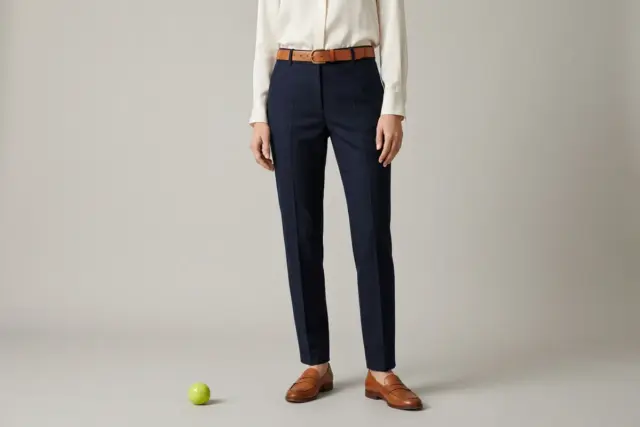
A well-fitting pump is a foundation piece that can anchor a professional or dressy outfit. When your shoes are comfortable, you move with more confidence, which affects your entire presence. The right pump completes an outfit by creating a clean, continuous line from the hem of your pants or skirt to the floor. For guidance on getting the other half of the equation right, see our article on how pants should fit.
Common fit problems that can’t be fixed
Some fit issues are deal-breakers. If you experience them, it is best to walk away rather than hope the shoe will improve with time. The idea of “breaking in” a shoe should refer to the material softening, not you enduring pain until your foot adapts to a poor fit.
- Gapping at the sides: When you stand, if the sides of the pump bulge out or flare away from your foot, it means the shoe’s shape (its last) is not right for your foot’s shape. This is common for people with narrower feet and is not something that can be fixed.
- A cramped toe box: Even if the shoe’s length is correct, a toe box that is too pointed or narrow for your foot will squeeze your toes. This can cause long-term pain and foot problems. Your toes should be able to lie flat and straight.
- Major heel slippage: Minor slipping can sometimes be addressed with a heel grip insert, but if your entire heel lifts out of the shoe with every step, the shoe is too long or too wide for you.
A comfortable pair of shoes is particularly important for high-stakes situations like a job interview, where you need to focus on your performance, not your aching feet. You can find more advice in our guide on what to wear to a job interview.
What a cobbler can (and cannot) fix
While some fit issues can be adjusted by a professional, many fundamental problems cannot. Knowing the difference can save you from buying a shoe that will never feel right. A good cobbler can make minor adjustments, but they cannot remake the shoe.
What a cobbler can typically fix:
- Minor stretching: A shoe stretcher can widen a leather or suede pump by a small amount, usually up to a quarter of a size, to relieve tightness across the ball of the foot. This will not work on patent leather or synthetic materials.
- Adding traction: If the soles are slippery, a cobbler can add a thin rubber sole to provide grip and also extend the life of the shoe.
- Heel adjustments: Heel taps can be replaced when they wear down. In some cases, a cobbler might be able to slightly shorten a heel, but this can affect the shoe’s balance and is not always possible.
- Cushioning and grip: A cobbler can add permanent, professional-grade inserts like heel grips to reduce minor slipping or ball-of-foot pads for extra cushioning.
What a cobbler cannot fix:
- Length: A shoe that is too long or too short cannot be fixed. Stretching a shoe adds width, not length.
- Significant width issues: If a shoe is much too narrow or wide, or if it gaps at the sides, stretching or padding will not solve the structural mismatch between the shoe and your foot.
- Toe box shape: A cobbler cannot change a pointed toe into a round one. If the toe box is cramping your toes, it is the wrong shoe for your foot shape.
Consider these fixes as ways to fine-tune an already good fit, not as a rescue for a fundamentally ill-fitting shoe. A professional adjustment can perfect a shoe for your specific needs, but it cannot change the shoe’s basic size and shape.
Read next