In this guide (5)
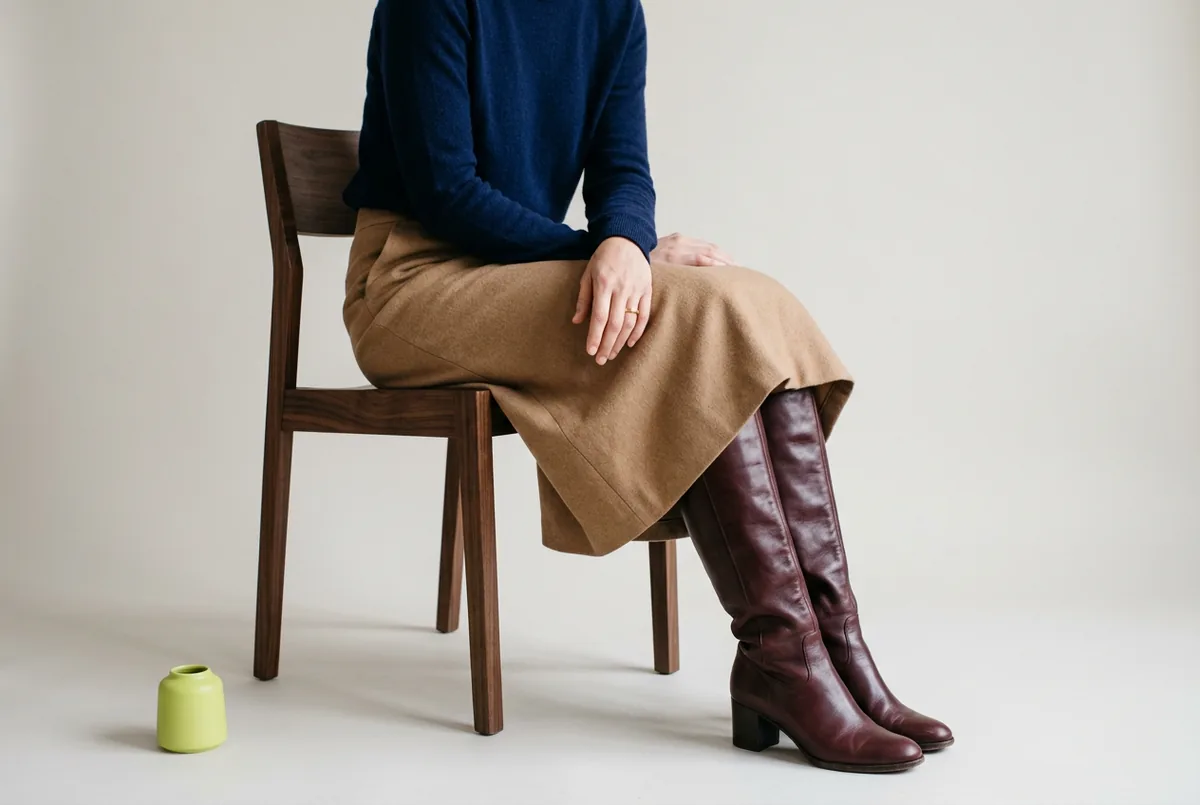
A knee-high boot fits correctly when the top collar sits just below the kneecap, leaves one to two fingers of space around the calf, and grips the heel without bunching heavily over the ankle bone. While standing upright, the shaft should follow the natural curve of your leg without pinching skin or creating an overhanging shelf of flesh at the rim. When you sit down and bend your knees at a ninety-degree angle, the top edge must not dig into the tendon behind your knee or force the boot downward into accordion folds.
The two-finger calf test and shaft circumference
The widest point of your lower leg determines whether a boot shaft works or fails. When you pull the boot on over bare legs or thin tights, slide two flat fingers into the top opening between the leather and your skin. If your fingers slide in smoothly and feel comfortable resistance, the circumference matches your leg. You have enough breathing room for natural blood flow and for normal leg swelling that occurs across hours of walking.
If you cannot slide two fingers inside without forcing them, the boot is too tight. A tight shaft acts like a tourniquet. It presses directly against the peroneal nerve and calf muscles, causing aching, numbness, and red indentations after an hour of wear. Conversely, if you can slide your entire hand into the shaft alongside your calf, the boot is too wide. Excessive space causes the shaft to sag downward throughout the day, creating awkward bulk around the lower leg unless the piece was intentionally constructed as an unstructured slouch boot.
Boot shafts sold in the United States generally list calf circumference measured at the widest interior point of the shaft. To find your match before trying pairs on, sit in a chair with your feet flat on the floor. Wrap a flexible tailor tape snugly around the fullest curve of your bare calf. If you plan to wear thick knit socks or tuck straight-leg denim into your boots, measure your calf while wearing those exact garments. Denim adds fabric bulk that turns a comfortable bare-leg fit into an unyielding clamp.
Where the collar should land relative to your kneecap
Height is the fit factor shoppers overlook most frequently. A standard knee-high boot is drafted for an average lower-leg length. The collar should stop approximately one finger width below the base of your patella. If the boot edge covers the bottom half of your kneecap while standing straight, the shaft is too long for your anatomy.
To check the height properly, do not simply inspect your legs in a full-length mirror while standing locked at the knees. Sit down on a firm bench or chair. Bend your knees so your thighs and shins form a ninety-degree angle. This bend shortens the usable distance between your ankle and the back of your knee. If the upper edge of the boot cuts sharply into the back tendons or pushes the entire shaft down into deep folds, you cannot comfortably wear that boot. You will find yourself walking with stiff, locked knees all day to prevent the stiff leather from biting your skin.
Taller shoppers encounter the reverse problem: a boot shaft that cuts across the widest swell of the calf rather than rising to the knee. This creates a horizontal visual break across the thickest part of the lower leg. If you have a longer shin, seek out extended shaft heights so the collar finishes cleanly just below the joint.
The ankle crease versus boot collapse
Every genuine leather boot will crease across the front of the ankle as you walk. Leather flexes where your foot flexes. A soft, supple fold across the front instep is a sign of normal leather break-in, not poor fit. What you must guard against is total shaft collapse.
Collapse happens when the ankle opening is cut too wide for your lower leg and the shaft leather lacks sufficient internal structure. Instead of staying upright, the calf portion drops down, piling into heavy, horizontal leather rolls that swallow the ankle bone. This destroys the vertical line of your outfit and makes your stride feel heavy. If you plan to wear tall boots beneath skirts or dresses, excess ankle bulk ruins the drape of the fabric. In our guide on how to wear boots with dresses, proportion relies entirely on clean lines from the hem to the floor.
The opposite issue occurs when the ankle throat is cut too narrow. If the leather grips the sides of your ankle bone tightly while standing, friction will cause blisters within minutes. The ankle zone requires enough volume to let the foot articulate forward through each step without binding your joint.
Testing the zipper and seam tension
Never force a stubborn zipper. When trying on tall boots, stand up straight with your foot flat on the floor before pulling the pull-tab. The two rows of metal or nylon teeth should meet easily without requiring you to pull both sides of the leather together with white-knuckle force.
If the zipper strains, bulges outward, or pulls the surrounding leather into an uneven wave, the circumference is insufficient. Wearing boots with high zipper tension strains the stitching along the shaft seam and risks splitting the slider mid-stride. A zipper should close with smooth, steady resistance. If you feel sudden resistance right at the ankle bone or across the widest point of the muscle, stop pulling.
Examine the construction for hidden comfort features. Many well-designed leather boots incorporate a small elastic gore: a concealed triangular elastic panel set beside the top zipper or down the inner shaft seam. This hidden insert expands as you sit, walk upstairs, or flex your calves, giving you mobility without loosening the clean silhouette of the shaft.
What to do when off-the-rack boots do not fit
Shoe sizing assumes a fixed relationship between foot length and calf width, but human legs vary widely. If your foot fits a standard size but the boot shaft will not zip, look for retailers that offer wide-calf options. Wide-calf boots offer identical footbed dimensions while increasing the shaft circumference. Conversely, if shafts gap awkwardly around your legs, look for narrow-calf or slim-shaft designations.
If you already own genuine leather boots that feel slightly snug around the calf, a professional cobbler can often stretch the shaft across the muscle. Cobblers use heated wooden or metal shaft spreaders with specialized stretching liquids to gain ease around the calf. However, this alteration works only on natural leather and suede. Synthetic leather, polyurethane, and bonded vinyl lack the elasticity to stretch and will simply split or tear at the seams.
For wide shafts that gap at the knee, a cobbler can take in the rear or side seam if the boot does not feature complicated exterior hardware or stiff internal counters. Alternatively, if you plan to wear tall boots under wide hems, a slightly wider shaft will not show; our guide on how to wear boots with wide-leg jeans explores how pant legs drape over various shaft volumes.
Do
- Leave two fingers of ease at the top collar for circulation
- Sit down to confirm the shaft edge clears the back of your knee
- Test the fit with the thickest socks or jeans you plan to wear
- Choose genuine leather if you anticipate needing professional stretching
Avoid
- Forcing a zipper closed when the leather pulls tight across the calf
- Buying boots that hit the center of your kneecap when standing
- Ignoring ankle collapse where excess leather pools over the foot
- Expecting synthetic polyurethane boots to stretch with wear
Read next