In this guide (5)
To wear a blazer with jeans correctly, the key is balance. Pair a textured, less structured blazer, such as a sport coat in tweed or corduroy, with dark, well-fitting jeans that have no rips or heavy fading. A suit jacket is not a blazer; its fine fabric and sharp construction will clash with the casual nature of denim, making the outfit look like you lost your matching trousers.
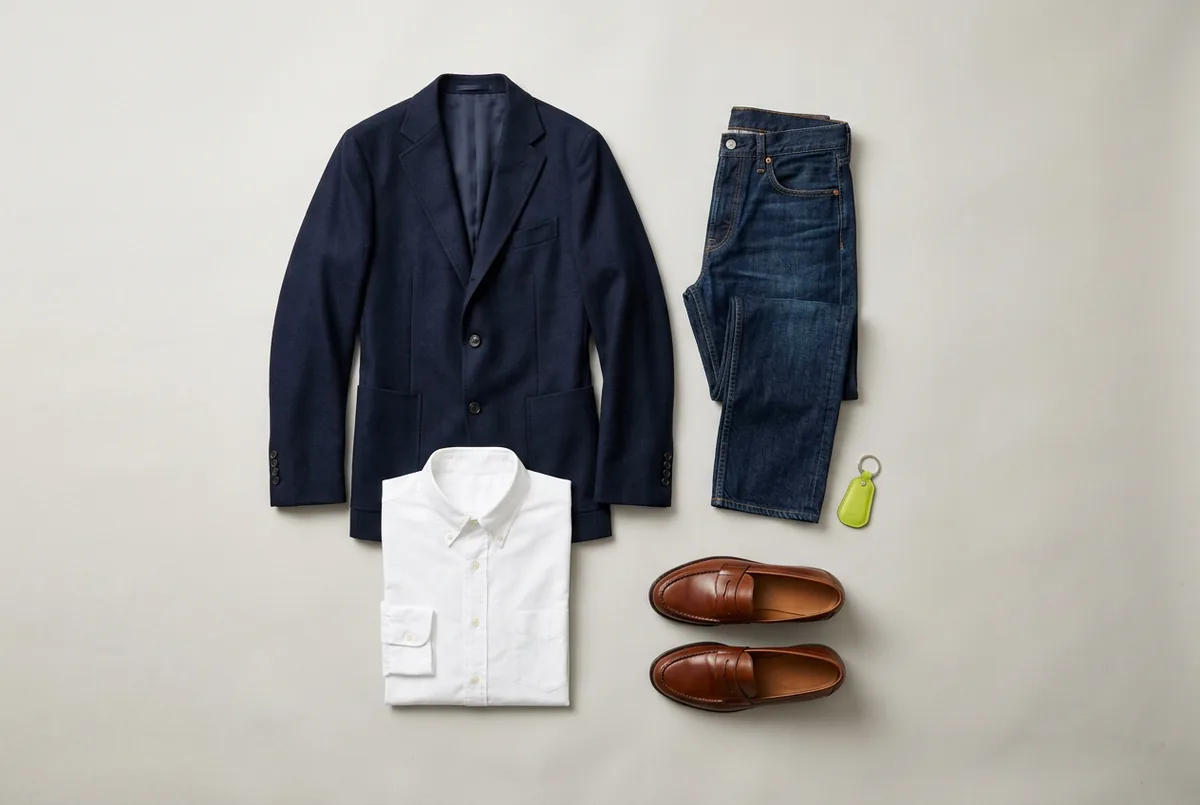
The right blazer is never a suit jacket
The most common mistake when combining a blazer and jeans is pulling a jacket from a suit. A suit jacket is made to be worn with its specific matching pants. It is typically cut from fine worsted wool with a smooth finish and has more structured shoulders and a sleeker silhouette. When worn with jeans, it looks orphaned and out of place.
A blazer or sport coat, on the other hand, is a standalone jacket designed for exactly this kind of pairing. Look for these features:
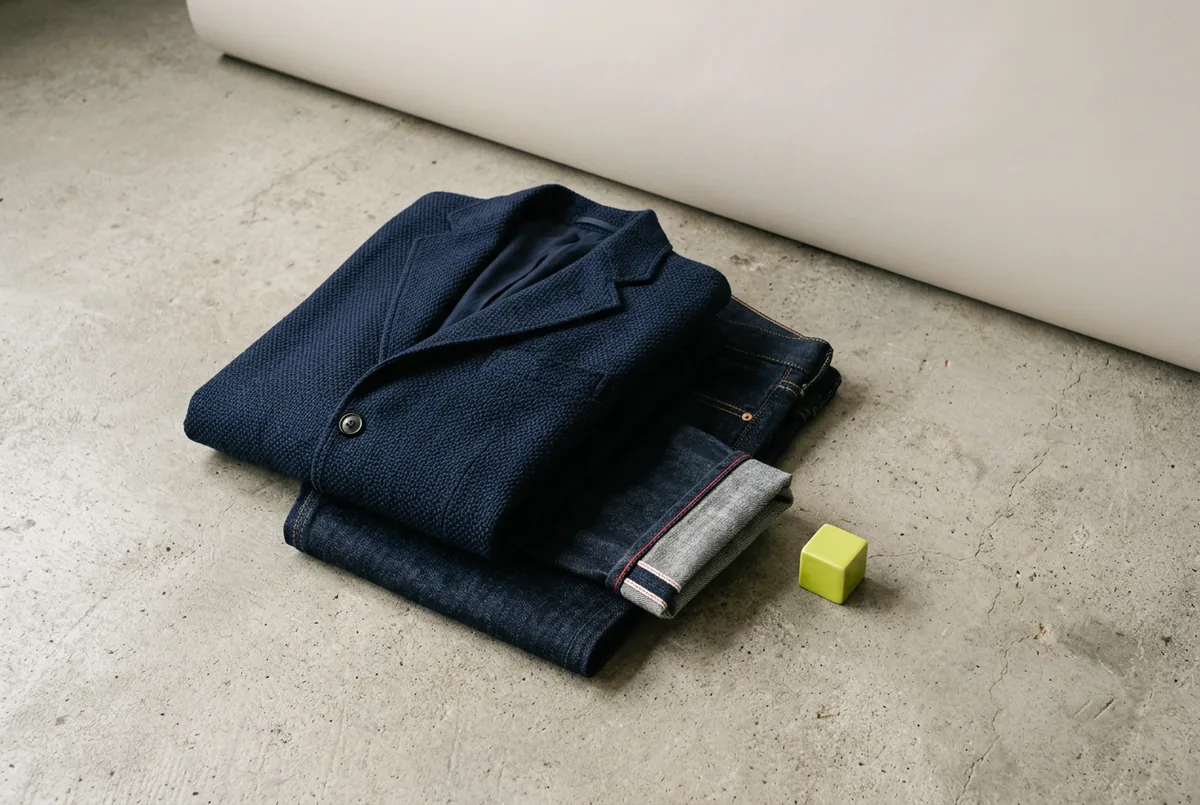
- Texture: The fabric should have a visible weave or texture that contrasts with the denim’s twill. For fall and winter, fabrics like tweed, flannel, and corduroy provide warmth and a rustic feel. For warmer weather in spring and summer, look to linen, cotton, or open-weave wools like hopsack, which are more breathable. This textural difference is key to a deliberate, well-considered outfit.
- Softer Construction: Unlike a suit jacket’s sharp, padded shoulders, a sport coat often has a more natural or unpadded shoulder line. This creates a more relaxed profile that aligns with the casualness of jeans.
- Casual Details: Blazers and sport coats often feature details that distinguish them from suit jackets. Patch pockets (sewn onto the outside of the jacket) are inherently more casual than the flap or jetted pockets found on most suits. Contrasting buttons, elbow patches, or a more noticeable pattern are other signs that a jacket is meant to be worn on its own.
Choose the right jeans
The jeans must be sharp enough to meet the blazer halfway. This is not the place for your weekend yard work denim. The goal is a clean foundation that complements the tailored jacket, rather than competes with it or dresses it down too much.
First, consider the fit. A straight or slim fit works best. The jeans should follow the line of your leg without being tight or baggy. An overly skinny jean creates an unbalanced proportion with the broader top half, while baggy jeans look sloppy and defeat the purpose of the sharp jacket. Ensure the length is right: the hem should end at the top of your shoe with a slight break or no break at all, not bunching up around the ankles.
Second, focus on the wash. A dark, uniform wash in deep indigo or black is the most reliable choice. Darker denim reads as more formal and creates a clean vertical line. Avoid any jeans with heavy fading, aggressive whiskering, or any form of distressing like rips, holes, or frayed hems. The cleaner the jean, the better it pairs with a blazer.
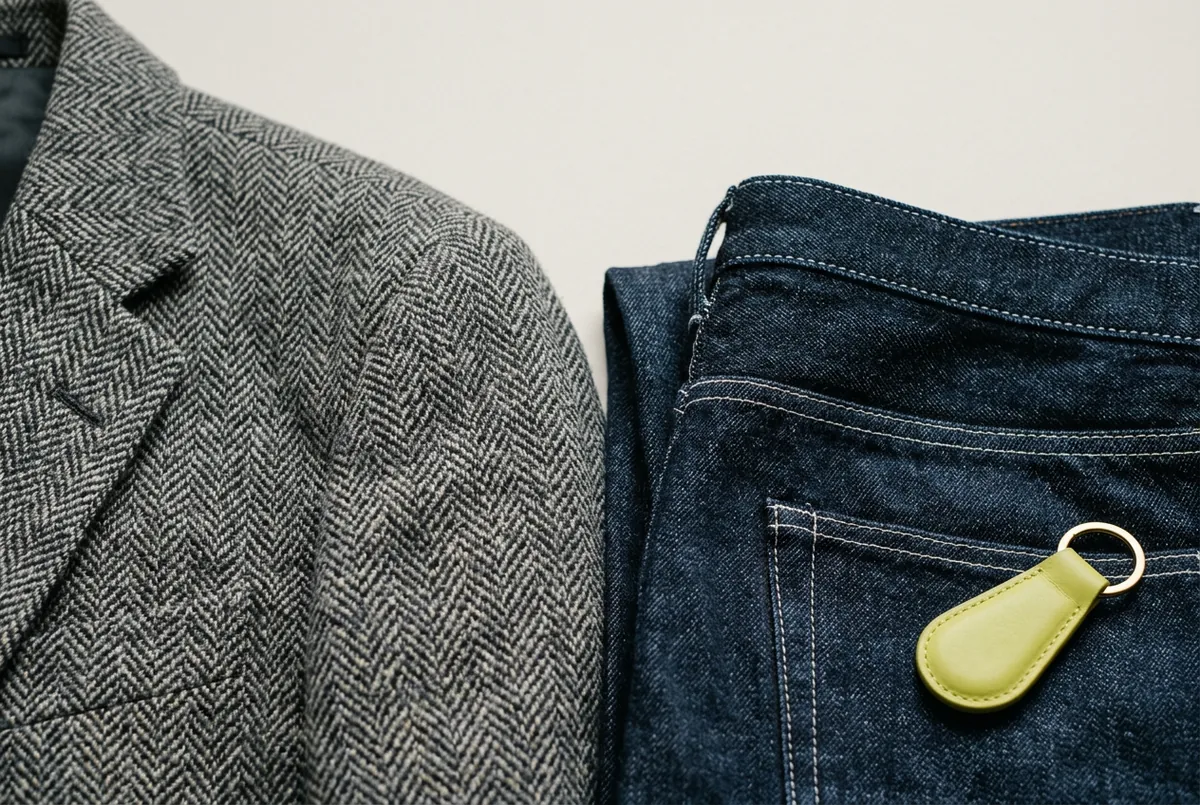
Building the outfit: a classic formula
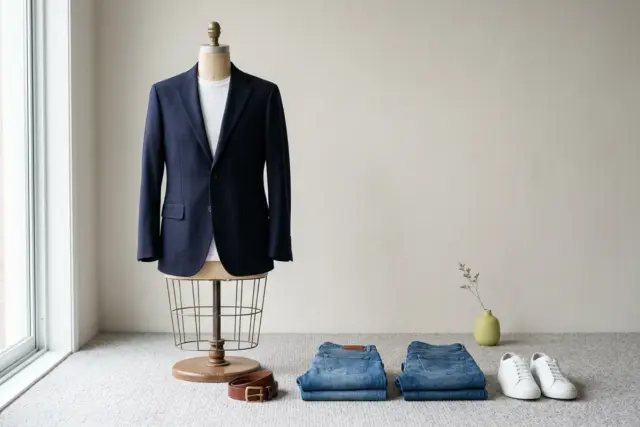
With the right blazer and jeans, the rest of the outfit comes together around them. The goal is to maintain the smart casual balance. You can dress the combination up or down depending on what you wear underneath the jacket and on your feet. For a foolproof starting point, use a classic, reliable formula.
Under the blazer, a crisp collared shirt is a classic choice. A white or light blue button-down shirt keeps the look sharp and is appropriate for a business casual setting. For a slightly more relaxed feel, a fine-gauge knit sweater in a solid, neutral color like merino wool works well. In a more casual context, a plain, high-quality t-shirt in white, grey, or navy can also work, as long as it is clean and fits well.
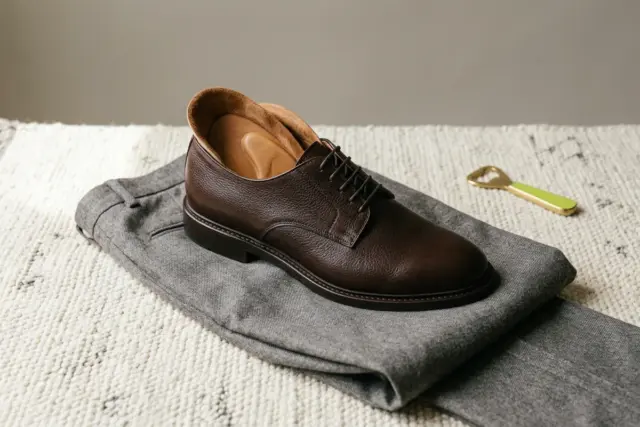
For shoes, think about the overall level of formality. Leather loafers or dress shoes will make the outfit dressier. Suede chukka boots or Chelsea boots add another layer of texture that works well with the blazer and denim. For a modern, more casual interpretation, a pair of clean, minimalist leather sneakers in white or black can be a great option, but avoid athletic running shoes.
Common mistakes and how to avoid them
Getting the blazer-and-jeans combination right is about avoiding a few specific pitfalls that can make the outfit look unintentional. The difference between looking sharp and looking like you got dressed in the dark often comes down to one or two key elements. The most important rule remains: a suit jacket is not a blazer. If you need more guidance on how a jacket should fit across the shoulders and chest, our guide to suit fit and alterations can help.
Do
- Choose a blazer with texture (tweed, corduroy)
- Pair with dark, evenly washed jeans
- Ensure both pieces fit well
- Match your shoes to the occasion's formality
Avoid
- Using an orphaned suit jacket
- Wearing ripped or heavily faded jeans
- Pairing with a graphic t-shirt or wrinkled shirt
- Choosing bulky running shoes or worn-out sneakers
Beyond the jacket itself, pay attention to the supporting pieces. A wrinkled shirt, a loud graphic t-shirt, or scuffed and inappropriate shoes can instantly undermine the look. Every piece in the outfit should feel intentional and well-maintained.
When this outfit works (and when it doesn’t)
The blazer and jeans combination is the definition of smart casual. It is a reliable choice for many occasions that fall between relaxed and formal. Think of events like a first date, a weekend dinner at a nice restaurant, a creative workplace’s daily dress code, or a gallery opening. It signals that you made an effort without appearing rigid or overdressed.
However, the outfit is not right for every situation. For any event with a business formal, cocktail, black tie, or white tie dress code, a suit is required. Wearing jeans, no matter how dark or well-fitting, would be inappropriate. Conversely, for very casual events like a backyard barbecue or watching a game at a sports bar, a blazer can feel out of place and overdone. In those cases, a more casual piece of outerwear, like a field jacket or bomber, is a better fit. You can find more options in our guide to light jackets.
Also consider the climate. A heavy wool tweed blazer is an excellent choice for a crisp fall day in the Northeast or Midwest, but it would be impractical and uncomfortable during a humid summer in the South. For hot weather, a blazer made from linen or an open-weave cotton will provide the same sharp silhouette while being much more breathable.
Read next