A properly fitting men’s dress shoe leaves about a thumb’s width of space between your longest toe and the front of the shoe. The shoe should feel snug around the sides and heel without pinching or rubbing, and its arch should align with your own. When you walk, it should bend with your foot at the ball, not further back or forward. Trying shoes on late in the day, when your feet are at their largest, ensures comfort from morning to night and is the single best step toward finding a pair that fits.
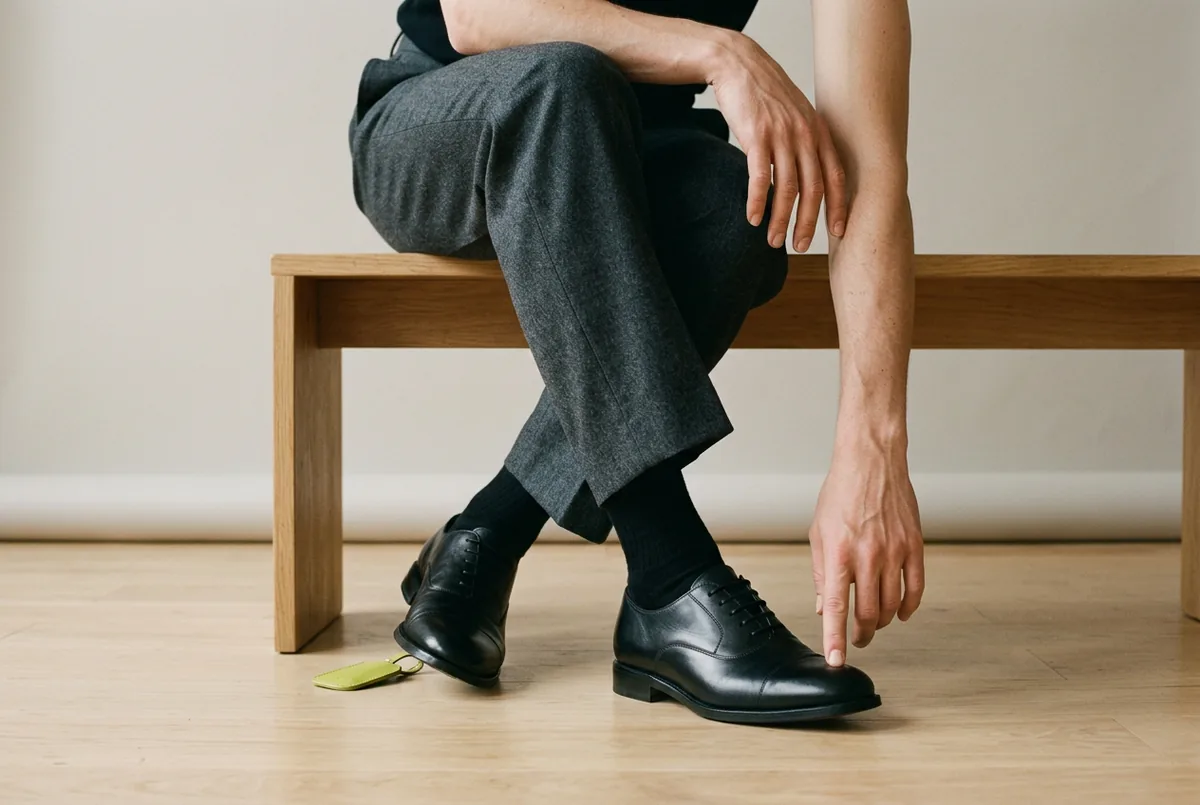
The in-store fit checklist
When you’re at the store, it’s easy to get distracted by style or a sale. Use this checklist to systematically test a shoe’s fit before you commit. A shoe that is the wrong size or shape will not become comfortable over time, and pain is a sign of a bad fit, not a shoe that needs breaking in.
Why the time of day and your socks matter
Your feet are not the same size in the morning as they are in the evening. Over the course of the day, gravity and activity cause your feet to swell slightly. Shopping for shoes in the afternoon or evening gives you a more accurate measurement for a shoe you plan to wear all day. Trying them on in the morning can lead to buying a pair that feels painfully tight by closing time.
Always wear the same type of socks you plan to use with the shoes. Dress socks are typically thinner than athletic socks, and the difference in thickness can change how a shoe fits. Bringing your own socks to the store removes one more variable from the equation, ensuring the fit you feel is the fit you will get.
Understanding shoe materials and how they break in
The material of a dress shoe’s upper dramatically affects its fit, comfort, and longevity. Most quality dress shoes are made from leather, but not all leather is the same. Full-grain or calfskin leather is breathable and has enough give to mold to the shape of your foot over time. This creates a personalized fit, but it requires that the shoe be snug and comfortable, not painful, at the time of purchase. A shoe that is too short will never stretch in length. Using cedar shoe trees after each wear helps absorb moisture, deodorize the leather, and maintain the shoe’s shape as it dries.
Suede is another leather option with a softer, more flexible feel from the start, making its break-in period shorter. In contrast, patent leather, with its glossy plastic coating, has very little stretch and is less breathable. Corrected-grain leather has been sanded and treated to hide imperfections, which can make it stiffer and less pliable than full-grain leather. A shoe should fit well out of the box; do not rely on a stiff material “breaking in” to become comfortable.
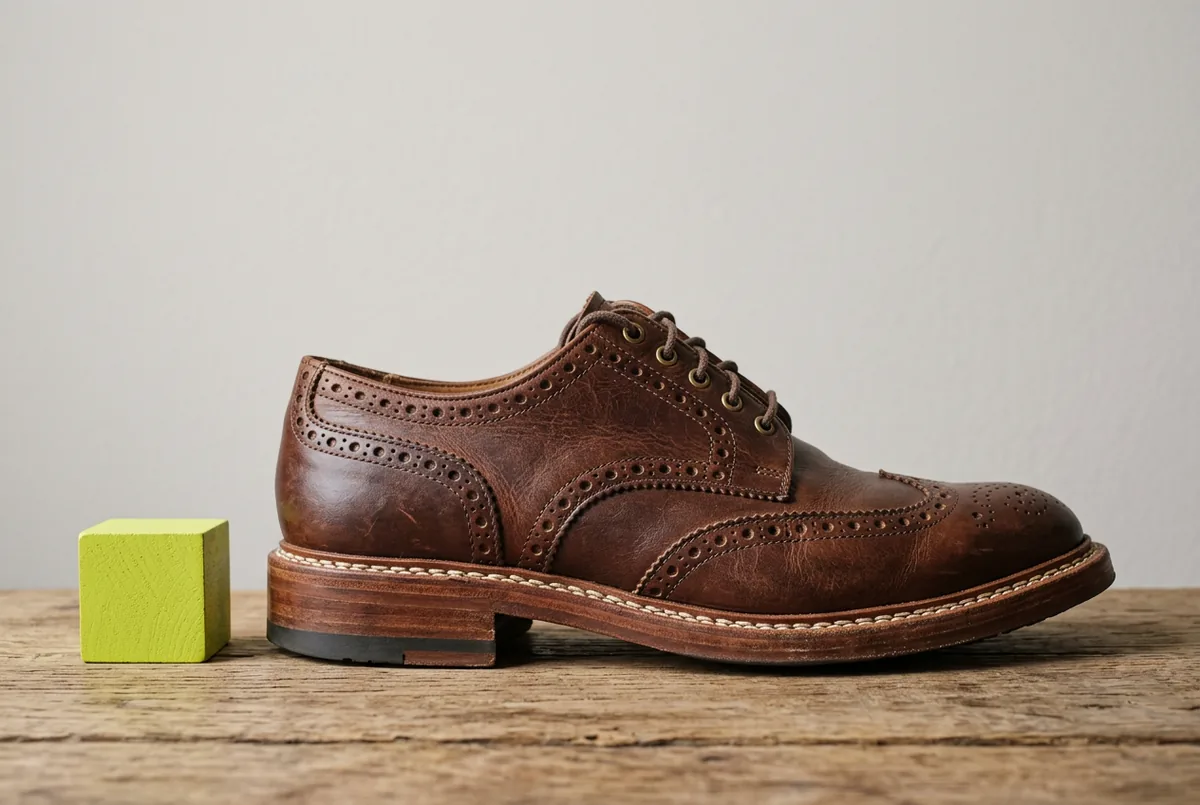
Decoding shoe construction and soles
Beyond the leather of the upper, the way a shoe is constructed and the material of its sole have a major impact on comfort, durability, and how it feels to walk in. Two common construction methods for quality dress shoes are the Goodyear welt and the Blake stitch.
- Goodyear welt: A strip of leather (the welt) is stitched to the upper and the insole, and then a separate stitch attaches the outsole to the welt. This creates a sturdy, water-resistant shoe that can be resoled multiple times, extending its life significantly. The trade-off is a slightly stiffer feel out of the box and a bulkier profile.
- Blake stitch: The upper is stitched directly to the outsole from the inside. This results in a more flexible shoe with a sleeker, closer-cut sole. Blake-stitched shoes are less water-resistant and, while they can be resoled, the process is more complex and can be done fewer times than with a Goodyear welt.
The sole itself is just as important. Leather soles are the traditional choice for dress shoes. They are breathable and mold to your foot over time, but offer less traction and wear more quickly, especially on wet pavement. Rubber soles provide superior traction and durability in all weather conditions, making them a practical choice for daily wear or commuting. They are generally seen as less formal than leather soles, but high-quality, low-profile rubber options are common on business casual shoes.
Common mistakes to avoid
Choosing the right size is about more than the number printed inside the shoe. Because there is no mandatory sizing standard in the US, a size 10 from one brand can fit very differently from another’s. Always judge a shoe by how it fits your foot, not what the label says. The following guide can help you steer clear of common pitfalls.
Do
- Shop in the afternoon when your feet are largest
- Try on both the left and right shoe
- Wear the socks you'll actually wear with the shoes
- Walk on a hard surface to test the sole
- Check the store's return policy before buying
Avoid
- Assuming your size is the same across all brands
- Buying a shoe that feels tight, hoping it will stretch
- Letting your toes touch the end of the shoe
- Testing the fit while sitting down only
- Ignoring a slipping heel
One of the most frequent errors is buying a shoe that is too narrow, causing pinching at the ball of the foot. Many manufacturers offer the same shoe in different widths (often marked with letters like D for medium, E or EE for wide), so if the length is right but the sides are tight, always ask if other widths are available.
Putting the right shoe in the right outfit
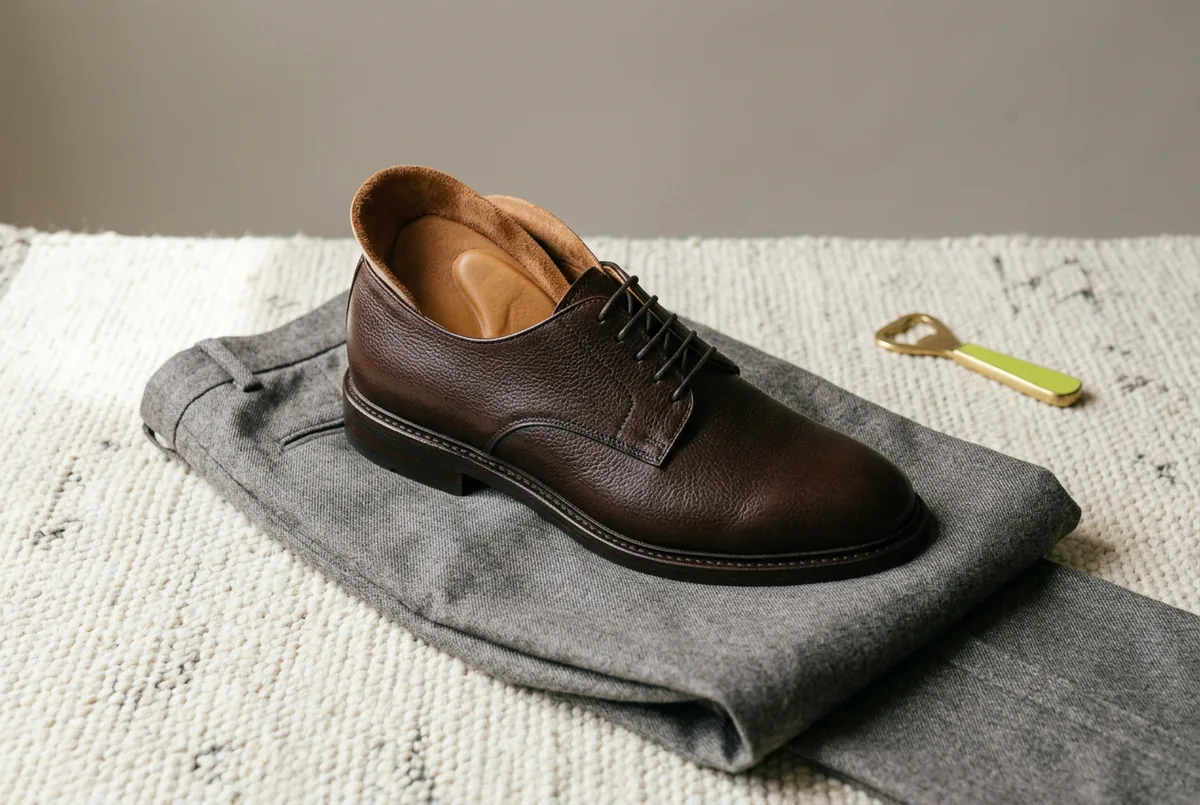
Once you have a comfortable, well-fitting shoe, the final step is pairing it correctly. The formality of a dress shoe depends on its color, material, and design. A black leather oxford, for example, is the standard for business formal attire and black tie optional events. A brown or cognac derby or brogue is more versatile, working well for business casual settings like the one below.
A simple rule for a cohesive look is to match the color of your leather shoes to your belt. It creates a clean, intentional line. While not a rigid rule, it is a reliable guideline for pulling an outfit together, especially for more formal or professional occasions. For guidance on assembling a complete look for professional settings, from a job interview to a day at the office, see our guide on what to wear to a job interview. If you are pairing your shoes with a suit, our guide on how a suit should fit can help you get the rest of the outfit right.
A quick guide to dress shoe styles
The term “dress shoe” covers several distinct styles, each with its own level of formality. Understanding the differences helps you choose the right shoe for the occasion.
- Oxfords: Identified by their “closed” lacing system, where the pieces of leather with the eyelets are sewn under the front part of the shoe (the vamp). This creates a clean, sleek look, making the Oxford the most formal style of dress shoe. A black cap-toe oxford is the standard for business suits and formal events.
- Derbies (or Bluchers): These have an “open” lacing system, with the eyelet tabs sewn on top of the vamp. This construction allows for a wider opening and a more adjustable fit. Derbies are considered less formal than Oxfords and are highly versatile, pairing well with everything from suits to chinos and jeans.
- Monk Straps: Instead of laces, these shoes are closed with one or two buckles and straps. They sit somewhere between Oxfords and Derbies in formality. A single monk strap is cleaner and more formal, while a double monk strap is a bit more assertive.
- Loafers: Laceless, slip-on shoes. While some formal versions exist (like velvet slippers for black tie), most loafers, such as penny or tassel loafers, fall into the smart casual or business casual categories. They are a comfortable option but are generally not worn with formal business suits.
Details like broguing (the decorative perforations on the leather) also reduce a shoe’s formality. A full-brogue shoe (or wingtip) is less formal than a plain or cap-toe version of the same style.
Read next