In this guide (5)
Navy blue’s versatility comes from its role as a core neutral, pairing well with nearly any color. For classic, reliable outfits, combine navy with other neutrals like white, cream, beige, and gray. For a look with more contrast and personality, pair it with saturated colors such as mustard yellow, olive green, or burgundy. The long-debated combination of navy and black is a modern option that works when you make the pairing look intentional, using pieces with distinct textures or shades.
Classic combinations: Pairing navy with neutrals
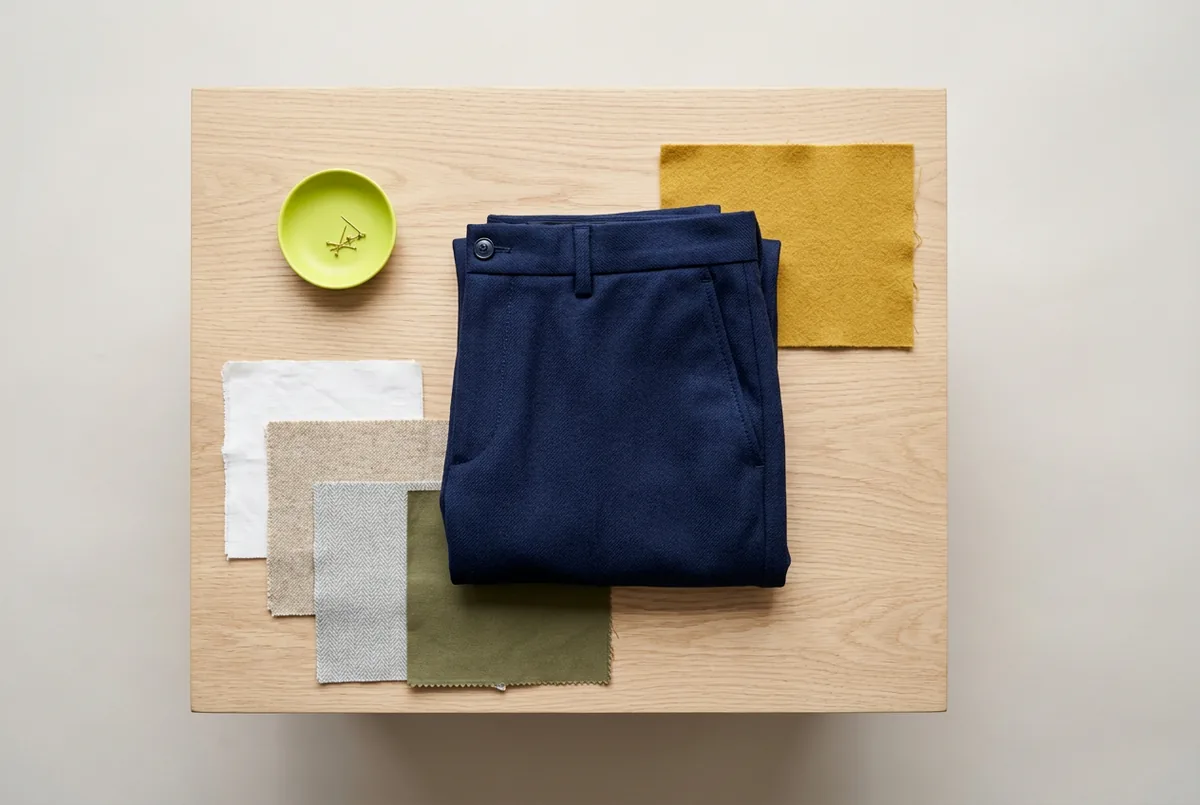
Pairing navy with other neutrals is the foundation of a versatile wardrobe. These combinations are low-contrast and understated, creating polished outfits for almost any occasion, from the office to the weekend. Because the colors are subtle, the focus shifts to the silhouette and texture of the garments.
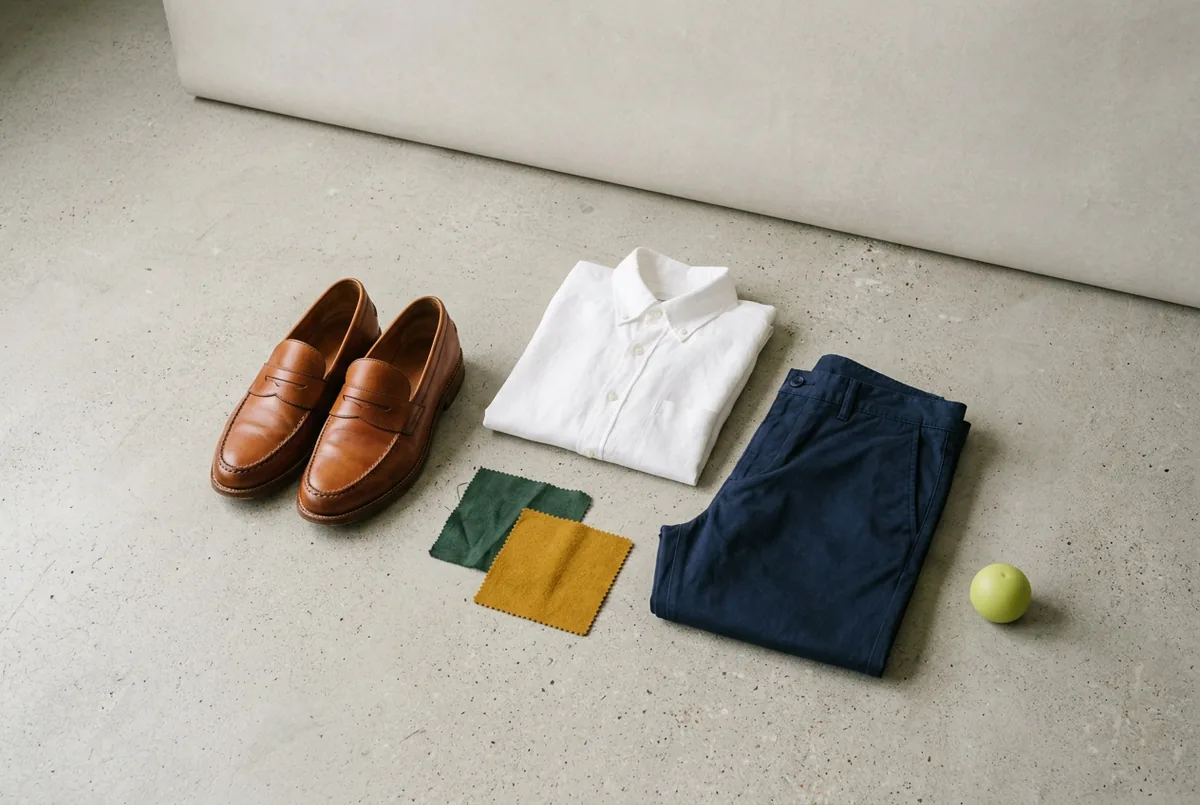
The contrast between navy and a crisp white is sharp and classic. This pairing is clean and fresh, evoking a nautical feel in the summer and looking sharp in a professional context year-round. A navy blazer with a white t-shirt or a navy dress with white sneakers are simple, effective formulas. For a softer effect, cream or ivory offers a warmer alternative to bright white, lending a more relaxed and gentle feel to the combination.
Earthy tones like beige and khaki soften navy’s formality. A navy sweater with khaki chinos is a fixture of smart-casual style because the warmth of the khaki balances the coolness of the navy blue. This combination feels relaxed yet put-together. Similarly, gray is a sophisticated, often corporate-friendly partner for navy. A light gray trouser with a navy jacket creates a clear, energetic contrast, while a charcoal gray creates a more subtle, sober effect. The key is ensuring the two colors are distinct enough to not blend together.
Can you wear navy and black together?
Yes. The old rule forbidding navy and black is outdated. Worn deliberately, the combination is modern and sophisticated. The goal is to make it clear you are not getting dressed in the dark; the pairing should feel purposeful, not accidental. Success depends on two factors: texture and shade.
Texture is the most effective tool. When you pair two different materials, like a navy wool blazer with a black silk shirt, or navy corduroy pants with black leather boots, the way each fabric reflects light provides natural separation. The difference in surface (matte versus sheen, ribbed versus smooth) makes each color read distinctly.
The shade of navy also matters. The combination works best when the navy is clearly blue and not a midnight shade that is almost indistinguishable from black. If the colors are too close in value and have similar smooth textures, the outfit can look mismatched. Adding a third, brighter color as a small accent, or using metallic hardware on a belt or bag, can also help break up the two dark tones.
Do
- Varying textures (like a navy wool blazer and a black silk shirt)
- Choosing a navy that is clearly blue, not almost-black
- Using black as an accent (belt, shoes)
Avoid
- Two smooth, similar-weight fabrics (like cotton trousers and a cotton shirt)
- A navy so dark it looks like a mistaken black
- Wearing it to a very traditional business formal office
Modern pairings: Adding accent colors
Navy’s deep, cool tone makes it an excellent canvas for brighter or more saturated colors. Because it functions as a neutral, it anchors bolder hues, allowing them to stand out without overwhelming an outfit. This is where you can inject more personality into a look.
Earthy greens like olive and forest create a grounded, utilitarian feel when paired with navy, ideal for fall outfits like a navy chore coat over an olive sweater. Brighter greens, such as kelly or emerald, produce a vibrant, preppy look that works well in spring and summer, for instance in a navy skirt paired with an emerald green top.
Mustard yellow, ochre, and terracotta create a warm, high-contrast pairing with navy that feels particularly right for autumn. Think of a navy dress accented with a mustard scarf. For a bolder summer look, a brighter orange can create a complementary color scheme that is energetic and confident, even in small doses like a pocket square in a navy blazer.
Deep reds like burgundy or wine create a rich, jewel-toned palette that feels luxurious and is well-suited for evening or formal events. A navy suit with a burgundy tie is a classic example. For a softer, more contemporary look, dusty pink or blush provides a gentle contrast that subverts navy’s traditional seriousness. A bright, true red offers a bold, nautical feel that is perpetually in style.
How to pair navy for different dress codes
The right color combination depends on the occasion. Navy is a versatile foundation, but your choice of pairing signals the level of formality.
For business casual and business formal settings, navy is a cornerstone. Stick to classic pairings with neutrals. A navy blazer with light gray or beige trousers is a standard business casual uniform. For a more formal office, a navy suit is the focus, with color introduced through a white or light blue shirt and a conservative tie in a color like burgundy or silver. In these traditional environments, it is best to avoid the navy and black combination.
In smart casual contexts, you have more freedom. This is where navy’s versatility shines. The navy and khaki chino formula is a reliable starting point, but modern pairings also work well. A navy sweater with olive green corduroys or a navy jacket over a mustard yellow dress can create a stylish, considered look that is perfect for a weekend outing or a creative workplace.
For cocktail attire or other evening events, navy can be a sophisticated alternative to black. A navy dress in a luxe fabric like silk or velvet pairs well with metallic accessories in gold or silver. For men, a well-fitted navy suit is an appropriate alternative to a tuxedo for a “black tie optional” wedding. To meet the dress code, it must be paired with a crisp white dress shirt, a conservative tie, and polished black leather shoes.
A monochromatic approach: Layering shades of blue
A monochromatic outfit uses different tones, tints, and shades of a single color to create a cohesive look. For navy, this means pairing it with other blues. This method is effective because it can create an uninterrupted vertical line of color, which draws the eye upward.
The key to a successful monochromatic blue outfit is varying texture and shade. If the fabrics and colors are too similar, the result can look flat or like a mismatched suit. Instead, combine distinct materials: a navy wool blazer, a light blue oxford shirt, and a pair of mid-wash denim jeans, for example. The different weaves and weights of the wool, cotton, and denim provide the depth needed to make the outfit interesting.
This approach is particularly effective when styling a navy blazer with jeans. The classic pairing of a dark, structured jacket with more casual denim is a perfect example of a monochromatic look that balances different shades and textures of blue. For more ideas on this specific combination, see our guide on how to wear a blazer with jeans. Whether with jeans or tailored trousers, combining blues of different weights and washes is a reliable way to build a cohesive and considered outfit.
Read next