In this guide (5)
A practical work bag is one that fits your daily essentials, feels comfortable on your commute, and looks appropriate in your office. The best choice balances three factors: the capacity you need, the construction that ensures comfort and durability, and the context of your workplace. Before considering style, assess what the bag must carry and how it will fit into your daily routine. A bag that holds everything but causes shoulder strain or looks out of place with your work clothes is not a functional tool.
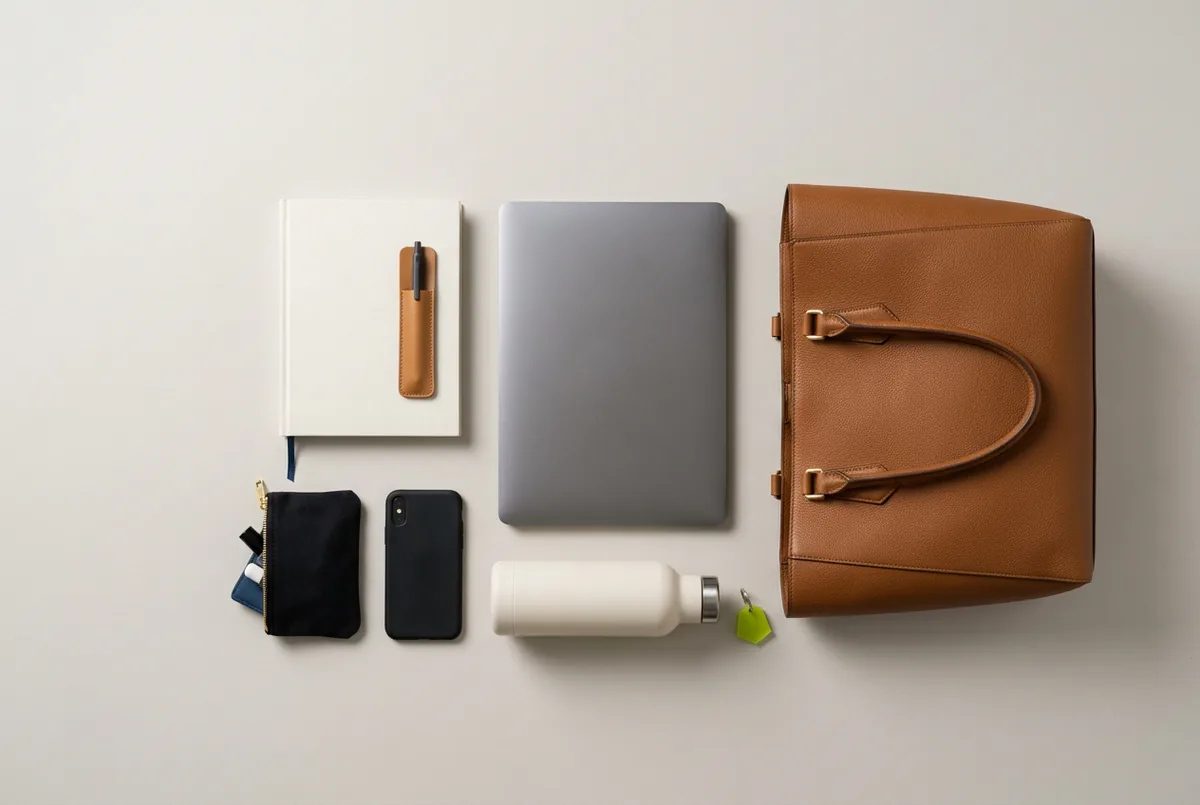
Assess your capacity: what do you actually carry?
The first step is to take inventory of your daily load. Before you start shopping, lay out everything you carry to and from work on a typical day. This list often includes a laptop, its charger, a notebook, a water bottle, maybe lunch, a wallet, keys, and a phone. You might also need space for a book, a pair of headphones, an umbrella, or even a change of shoes for after work. Measure your laptop to ensure you look for a bag with a correctly sized compartment.
A bag’s utility is not just about its total volume but its organization. A single, large open compartment can become a jumble of items, forcing you to dig for your keys or wallet. Look for bags with built-in organization, such as a padded laptop sleeve, smaller interior pockets for pens and a phone, and an external pocket for quick access to a transit pass or ID. This structure prevents your gear from turning into a disorganized pile and protects electronics from scratches.
At the same time, avoid choosing a bag that is much larger than you need. An oversized bag is not only heavier to carry but can also encourage you to pack more than necessary, adding extra weight to your commute. The goal is a bag that fits your essentials snugly, with a little room to spare for the occasional extra item.
Construction and comfort: the materials and straps that last
A work bag is an everyday item that needs to withstand daily use. Its material, straps, and hardware determine its longevity and how comfortable it is to carry. An empty bag should feel light; if it’s heavy before you even put anything in it, it will be a burden once loaded.
The material sets the tone for formality and durability. Leather is a classic choice that works well in formal and business casual settings. It is durable and can develop character over time, but it can also be heavy and requires care. Lighter options like nylon or canvas are practical for long commutes, especially on foot or public transit, and often offer better water resistance. Their appearance is generally more casual. So-called vegan leather, typically a polyurethane fabric, is lighter than genuine leather but can be less durable, with a risk of peeling or cracking over its lifespan.
Pay close attention to the straps. They bear all the weight. Wide straps distribute pressure more evenly across your shoulder. Check that they are securely attached to the bag’s body with reinforced stitching. Thin, decorative straps may dig in and are more likely to fail with a heavy load. Finally, consider the closure. A full zipper across the top offers the most security, which is important for crowded commutes. An open-top tote offers easy access, but your belongings are less protected from weather and theft. A magnetic snap is a compromise between the two.
Do
- Reinforced stitching at strap bases
- A padded sleeve for your laptop
- An empty weight that feels light on your arm
- A secure top closure for commutes
Avoid
- Thin, unpadded straps
- Unlined, raw interior
- Heavy hardware that adds weight
- An open top if you use public transport
Context is key: match the bag to your workplace
A work bag is part of your professional attire, and it should align with your office’s dress code. A bag that works for a creative agency might not be appropriate for a law firm. The most versatile choice is a structured bag in a neutral color like black, navy, brown, or gray, as it can adapt to different levels of formality.
For business formal environments that require a suit, the bag should be equally polished. A structured leather tote, a modern briefcase, or a minimalist, architectural backpack are all suitable. The focus is on clean lines and high-quality materials.
In a business casual office, you have more flexibility. The bag can have a softer silhouette, and you can explore more colors. In addition to leather totes, a refined canvas bag or a professional messenger bag can work well. This is the territory where a well-chosen backpack, in leather or a sleek technical fabric, is also appropriate. A bag choice is a key part of the first impression you make, just like the rest of your outfit. For more on what to wear to an interview, see our guide on what to wear to a job interview.
In a casual workplace, function and personal style are the primary considerations. Nearly any style of backpack, tote, or messenger bag is acceptable as long as it is clean and in good repair.
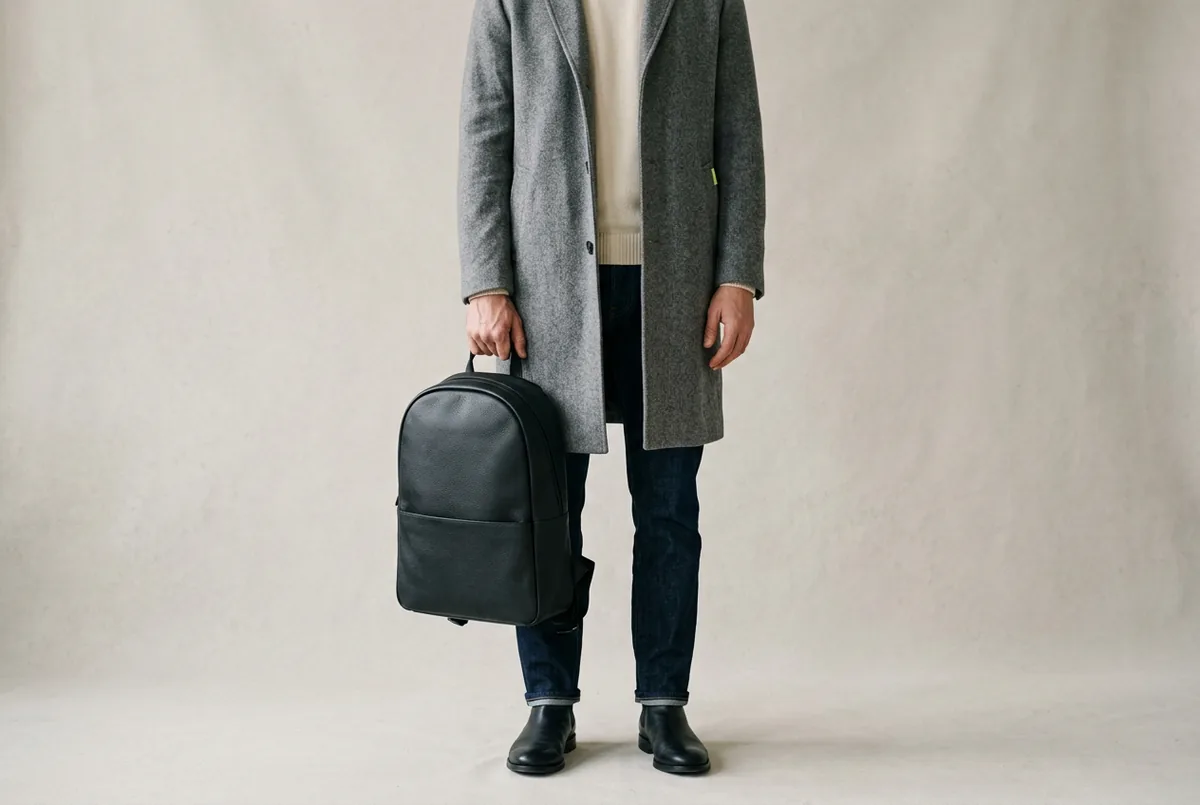
The hands-on checklist for choosing your bag
When you are in a store, the best way to know if a bag will work is to test it. Use the items you have with you, such as your phone, wallet, and water bottle, to simulate your daily load. A few simple, practical tests in the store can save you from the frustration of a bag that fails in daily use. This checklist walks you through what to look for.
The outerwear test is especially important if you live in a region with cold winters. A bag’s straps might feel fine over a shirt but can become too tight and constricting over a bulky coat. For more on ensuring your cold-weather gear fits properly, see our checklist on how a winter coat should fit.
The main styles: tote, backpack, or messenger?
Most work bags fall into one of three categories, each with its own advantages and disadvantages for a daily commute.
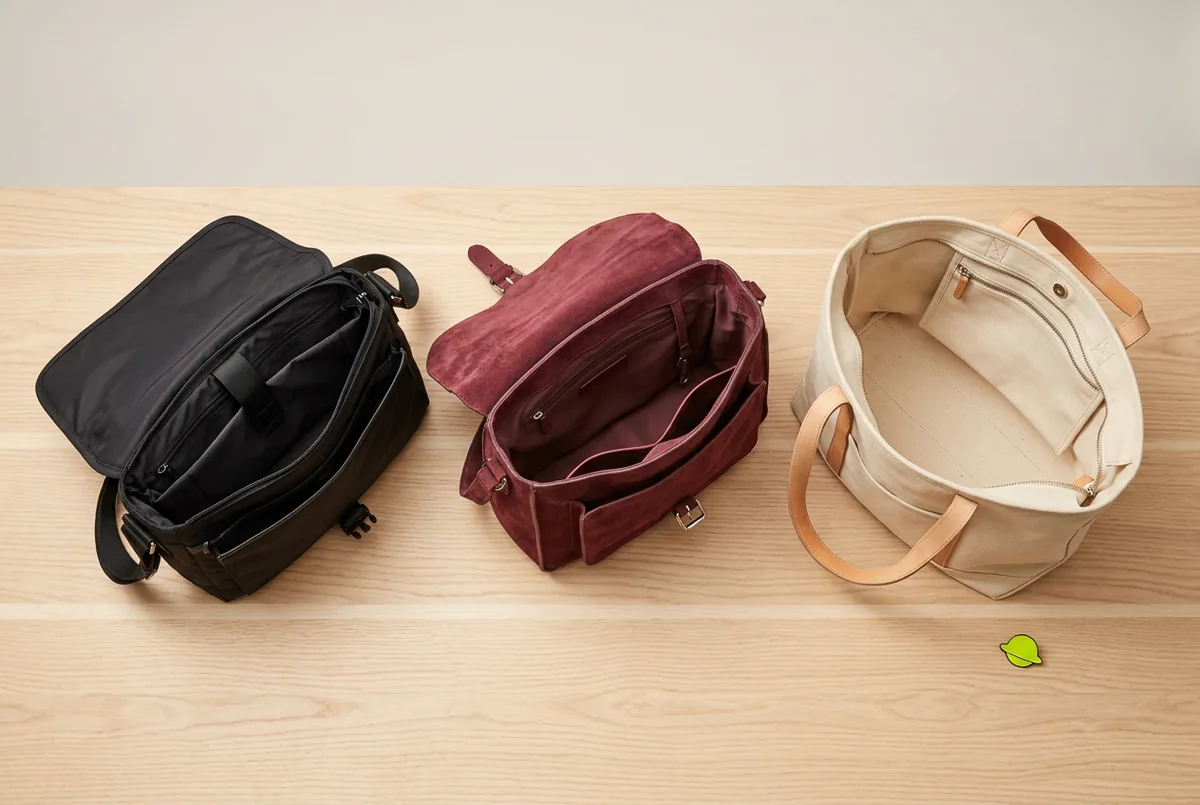
The Tote Bag is a classic for a reason. Its large, open compartment offers easy access to your belongings, and its two handles can be worn over the shoulder or carried by hand. A structured tote in leather or durable canvas presents a polished and professional image. The primary downsides are the concentration of weight on one shoulder and a potential lack of organization and security, especially in models without a top zipper.
The Backpack is the most ergonomic choice, distributing weight evenly across both shoulders. This makes it ideal for anyone with a long commute or who carries a heavy load. Modern backpacks designed for professionals often come in refined materials like leather or water-resistant twill, with excellent internal organization. The main drawbacks are that they can appear too casual if not chosen carefully, feel bulky on crowded public transport, and must be removed to access your things.
The Messenger or Crossbody Bag offers a hands-free experience while keeping your belongings accessible at your side. You can easily swing the bag to your front to grab something without taking it off. It is more secure than a tote but still places weight on one shoulder, which can cause strain if the bag is consistently heavy.
If you find a bag that is perfect in every way except for its lack of internal pockets, consider a bag-in-bag organizer. These inserts have multiple compartments to hold small items and can be lifted out in one piece. This allows you to transfer your essentials from a work tote to a gym bag or a weekend carryall instantly, adding function to any simple, open design.
Read next