In this guide (5)
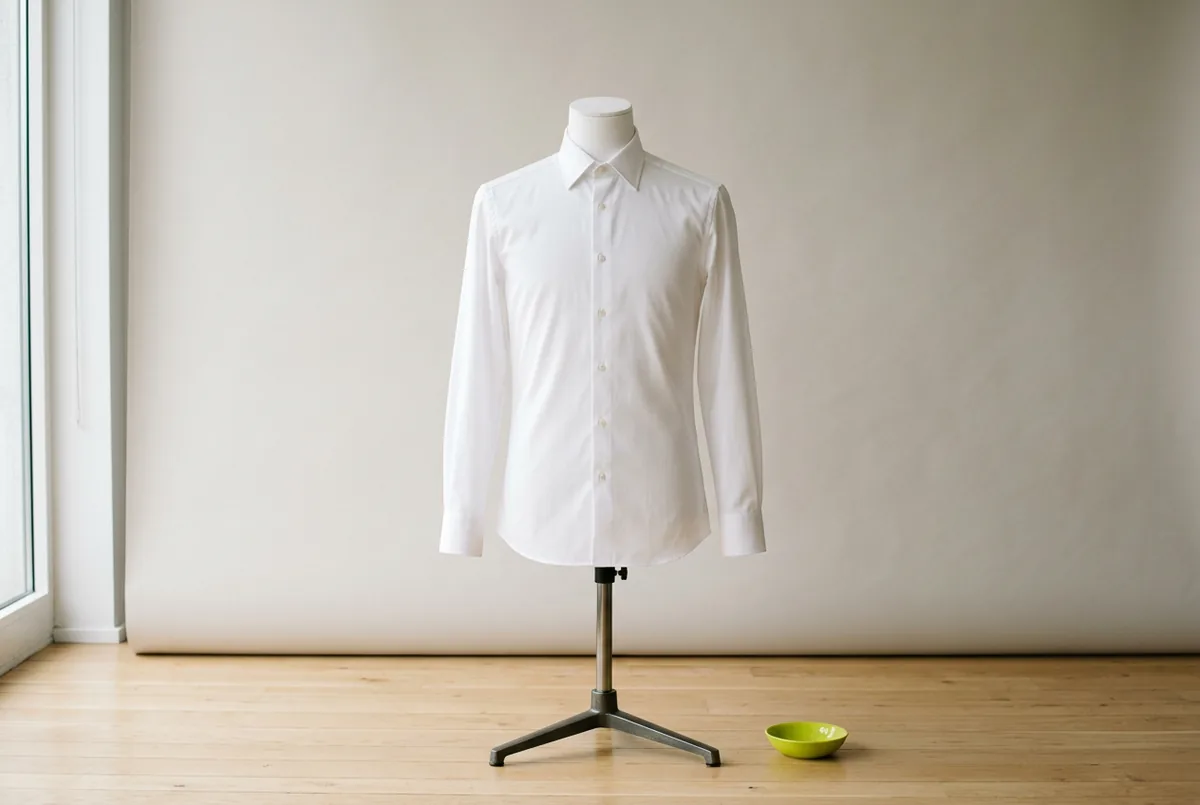
A dress shirt fits correctly when you can slide one finger, and no more, between your neck and the fastened top button. The shoulder seams must sit squarely at the edge of your shoulder bones, and the fabric across your chest should lie flat, without pulling the buttons into an X-shape. Sleeves should be long enough to cover your wrist bone and show a small amount of the shirt cuff when you wear a jacket. Getting these key points right is the foundation of a sharp, comfortable look for any formal or professional setting.

How dress shirt sizes work
Unlike casual shirts sold in letter sizes (S, M, L), men’s dress shirts are most often sized by two numbers in inches: the neck circumference and the sleeve length. A tag that reads “15.5 / 34-35” means the shirt has a 15.5-inch neck and a sleeve length suitable for someone needing a 34 or 35-inch measurement. These two numbers are the starting point for finding a good fit off the rack.
To find your size, use a soft tape measure. For the neck, wrap the tape around the base of your neck, where the collar would sit. Add one finger of room for comfort: this prevents the collar from feeling tight when buttoned. For the sleeve, start at the center of the back of your neck, run the tape over the top of your shoulder, and down to your wrist bone. It is often easier to have someone help you with this measurement.
Because there is no mandatory sizing standard in the United States, these numbers will vary between brands. Always check your measurements against a store’s specific size chart. Once you have a shirt that fits well, you can also measure it directly to compare with other brands.
The definitive fit checklist
When you try on a dress shirt, go through each point of fit in order. The shoulders are the most critical, as they are the most difficult part to alter. A shirt that fits in the shoulders and collar can usually be adjusted elsewhere. Use this checklist in the fitting room to test each point before you buy.
The torso fit depends on the shirt’s cut (often labeled classic, regular, slim, or extra-slim). A classic fit allows more room, while a slim fit has higher armholes and is cut closer to the body. Choose the cut that allows comfortable movement without creating a lot of bunched-up fabric around your waist when tucked in. A good fitting-room test is to sit down and raise your arms; if the shirt pulls uncomfortably or the tails come untucked, it is likely too small or too short.

What a tailor can (and cannot) fix
Tailoring can make a good off-the-rack shirt fit perfectly, but some parts of a shirt are much harder to alter than others. Prioritize buying a shirt that fits your collar and shoulders, as most other adjustments are straightforward and relatively inexpensive. A tailor can easily slim the torso by adding darts (vertical seams in the back) or taking in the side seams. Shortening sleeves or the overall length are also routine alterations.
However, major structural changes are often not worth the cost, if they are possible at all. The shoulder construction is complex, so widening or narrowing the shoulders is a difficult job. The collar size is essentially fixed. And while sleeves can be shortened, they generally cannot be lengthened, as there is no extra fabric to let out. Knowing what is a simple fix versus a major reconstruction will help you decide whether a shirt is worth buying. For more on tailoring, see our guide on how a suit should fit.
Do
- Slim the torso with darts
- Shorten the sleeves from the cuff
- Shorten the shirt's overall length
- Replace cracked or missing buttons
Avoid
- Widen the shoulders
- Enlarge the collar
- Lengthen the sleeves
- Change a slim fit into a classic fit
Choosing the right fabric
The fabric of a dress shirt affects its formality, breathability, and feel. Most dress shirts are made of cotton, but the weave changes the character of the shirt.
- Broadcloth (or Poplin): This is a tightly woven, smooth, and lightweight fabric. It has a crisp appearance, making it a standard choice for business and formal shirts.
- Oxford: Oxford cloth has a basketweave structure that makes it thicker and more durable than broadcloth. It has a softer, more casual texture, making it a staple for business casual settings. It also wrinkles less than finer cottons.
- Twill: Recognizable by its subtle diagonal pattern, twill fabric drapes well and is softer and more wrinkle-resistant than broadcloth. Herringbone is a popular type of twill weave.
- Pinpoint: A weave that falls between broadcloth and Oxford in weight and formality. It uses a finer yarn than Oxford cloth, giving it a smoother finish that is still durable.
You may also find shirts made from cotton blended with synthetic fibers. A small amount of elastane (spandex) adds stretch and comfort, while polyester increases durability and wrinkle resistance but reduces breathability. For hot and humid weather, a 100% cotton shirt is generally more comfortable.
The tuck: keeping the shirt neat all day
Even a perfectly fitted shirt can look messy if it doesn’t stay tucked in. The most important factor is shirt length: it must be long enough that the tails don’t pull out when you move. When trying on a shirt, raise your arms above your head. If the tails come out of your pants, the shirt is too short.
For a particularly clean line at the waist, especially with a more classic-fit shirt that has extra fabric, you can use a military tuck. After tucking your shirt in, pinch the excess fabric at the side seams, fold it into a sharp pleat pointing toward your back, and secure it with your belt. This simple technique removes any billowing at the waist, creating a tailored silhouette that holds throughout the day. It completes the look that starts with a well-fitted dress shoe and a properly tailored suit or trousers.
Read next