In this guide (5)
To choose the right Uniqlo Heattech base layer, base your selection on where you spend the majority of your day rather than the outdoor temperature during your commute. Regular Heattech serves best for heated indoor environments and mild cold, while Extra Warm and Ultra Warm belong in prolonged outdoor cold where your body will not sit next to indoor office radiators.
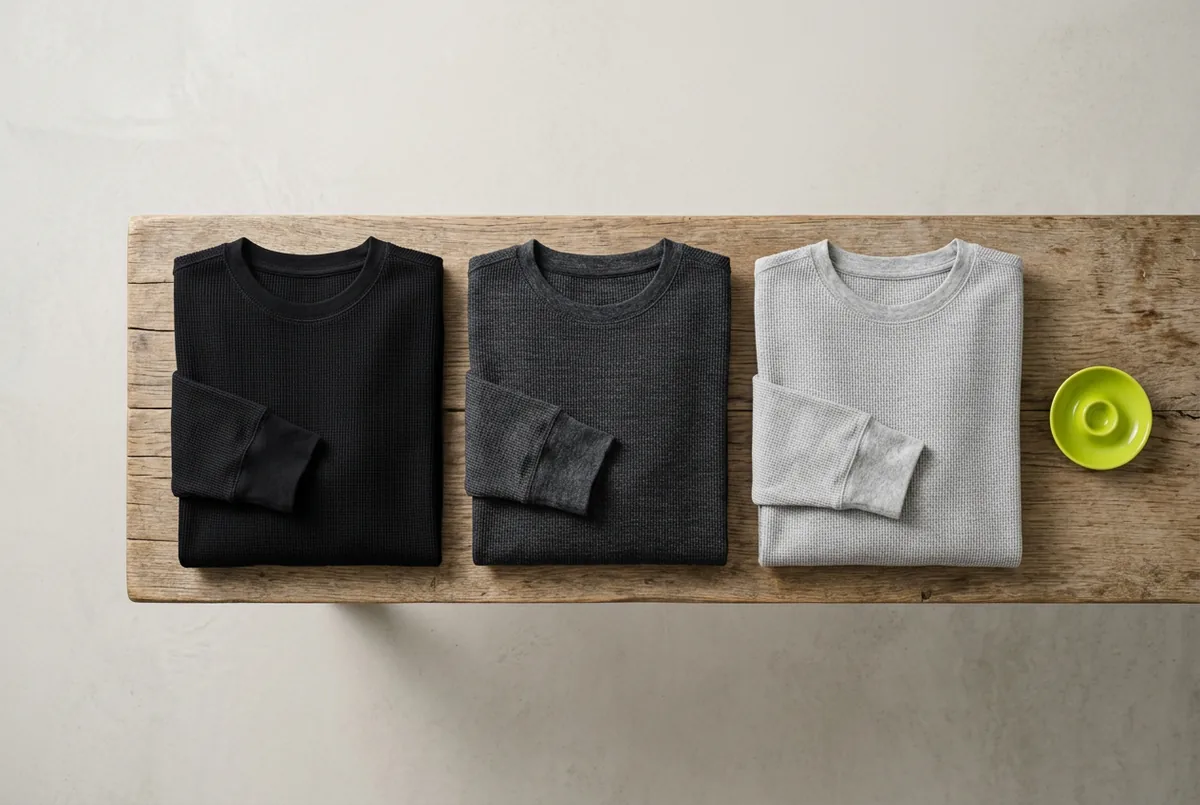
Understanding the three warmth tiers and temperature ranges
According to Uniqlo’s website, as of November 2026, the brand rates regular Heattech for temperatures between 41°F and 68°F (5°C to 20°C), classifying it under the light cold bracket of 40°F to 50°F. The fabric is light, smooth, and knit from a fine blend of synthetic fibers that sit flat against the body. Uniqlo suggests pairing it as a base layer under a thicker button-down shirt or a light knit, combined with a packable PUFFTECH jacket, parka, or light outerwear.
The middle tier, Heattech Extra Warm, is approximately 1.5 times warmer than regular Heattech based on its CLO value, which measures textile thermal insulation. Uniqlo recommends this weight for temperatures between 23°F and 59°F (-5°C to 15°C), categorized as brisk cold between 32°F and 40°F. The interior features a soft, brushed finish that traps air pockets for higher thermal retention. The brand’s layering system combines this tier with a knit or fleece mid-layer and a down jacket or coat.
At the top of the spectrum, Heattech Ultra Warm is approximately 2.25 times warmer than regular Heattech based on CLO value ratings. Uniqlo targets this heavyweight fabric for severe cold between -4°F and 50°F (-20°C to 10°C), specifically the freezing window of 23°F to 32°F. It features a heavy knit with a thick, napped fleece lining. Uniqlo recommends layering Ultra Warm under a fleece mid-layer, accompanied by a down jacket or parka alongside cold-weather accessories like a beanie and scarf.
The indoor commute trap and how to avoid overheating
The most frequent error with thermal underwear happens during the morning commute. When the outdoor thermometer drops below freezing in Chicago or Boston, shoppers instinctively reach for Ultra Warm. Thirty minutes later, they step into a subway car heated to 72°F or an office building where the radiator runs continuously. Because a base layer sits directly against the skin, you cannot discreetly remove it in a conference room.
Your base layer must correspond to your final indoor destination. When working indoors, choose regular Heattech even if outside conditions drop below freezing. You handle the external freeze by adjusting your outer pieces, such as a heavy wool coat or down parka, and an insulating mid-layer that you can peel off at your desk. For a deeper breakdown of structural layering pieces, review how to layer for fall. Reserve Extra Warm for drafty workplaces, poorly insulated warehouses, or outdoor evening events. Save Ultra Warm for prolonged exposure, such as watching winter sports, snow shoveling, or hiking in sub-freezing weather.
Sleeve clearance and avoiding bulk under tailored clothes
Layering creates friction between fabrics. When sleeves fight for space around your upper arms and armpits, your movement becomes restricted, fabric bunches up at the elbows, and shirts pull awkwardly across the chest.
Regular Heattech has a sheer, slick profile comparable to lightweight hosiery or smooth activewear. It slides cleanly under fitted tailored shirts, fine-gauge merino crewnecks, and slim trousers without altering the drape of the outer garment. The cuffs remain flat against the wrist bone, preventing an unsightly ridge under shirt cuffs.
Extra Warm adds noticeable bulk due to its raised inner fleece nap. Under a relaxed flannel shirt, a heavy cable-knit sweater, or straight-leg denim, it performs admirably. However, slide it under a tailored dress shirt or a structured suit jacket, and you will notice tightness across the bicep and bunching in the armscye. Ultra Warm is practically a lightweight sweatshirt. Attempting to fit Ultra Warm leggings under slim-fit chinos or an Ultra Warm crewneck under a tailored blazer will cause fabric drag, visible pocket outlines, and awkward creasing along the sleeves. When checking how your outer layers drape over mid-layers and thermals, verify how a winter coat should fit across the shoulders.
Why direct skin contact dictates your thermal size
Heattech fibers generate and retain warmth by absorbing trace moisture evaporated from the skin. According to Uniqlo’s guidelines, contact with the skin is required for the base layer to absorb this moisture and retain heat properly. When shoppers size up to achieve a relaxed cut, air gaps form between the textile and the torso. Without direct skin contact, the moisture-wicking mechanism loses efficiency, and cool air circulates inside the excess fabric.
Your base layer should fit like a second skin, snug across the torso and arms without pinching or restricting circulation. Consult the official size chart on Uniqlo’s product page to match your exact chest and waist measurements rather than guessing based on your regular sweater size. If you fall between sizes, choose the smaller size for your thermal base layer, provided the armholes and neckline do not pull.
Do
- Pick regular Heattech for days spent primarily in heated indoor spaces
- Match your chest and waist measurements directly to Uniqlo's size chart
- Select scoop neck or deep V-neck cuts to remain invisible under unbuttoned collars
- Reserve Ultra Warm for extended outdoor activities in sub-freezing weather
Avoid
- Size up to a loose cut that creates dead air gaps between fabric and skin
- Wear Extra Warm or Ultra Warm under narrow tailored dress shirts
- Rely on heavy thermals while wearing wind-permeable unlined outer coats
- Put Heattech garments in a tumble dryer, which degrades elastane stretch and synthetic microfibers
Care steps to preserve elasticity and warmth
Heattech garments rely on synthetic fiber blends, including acrylic, polyester, rayon, and elastane for stretch. Heat is the primary enemy of these synthetic materials. Exposing elastane and rayon to hot water or clothes dryers causes the microscopic fibers to snap and relax, resulting in a loose, wavy collar and bagging at the elbows.
- Turn the thermal shirt or leggings inside out before washing to reduce surface friction and pilling on the smooth exterior.
- Machine wash on a gentle cycle using cold water with a mild liquid detergent.
- Avoid using chlorine bleach, which weakens synthetic filaments and discolors fabric.
- Line dry on a drying rack or hanger away from direct sunlight without wringing the fabric, and never use a tumble dryer.
- Do not iron with high heat, as synthetic fibers melt and develop an irreversible shine under hot metal plates.
Read next