In this guide (6)
The most effective way to transition your wardrobe for fall is a four-step process: sort your summer clothes, clean everything you plan to store, choose the right containers, and finally, unpack and refresh your fall garments. This rotation prevents pests and set-in stains on the clothes you pack away and ensures the clothes you unpack are ready to wear, extending the life of your entire wardrobe.
First, sort your summer wardrobe
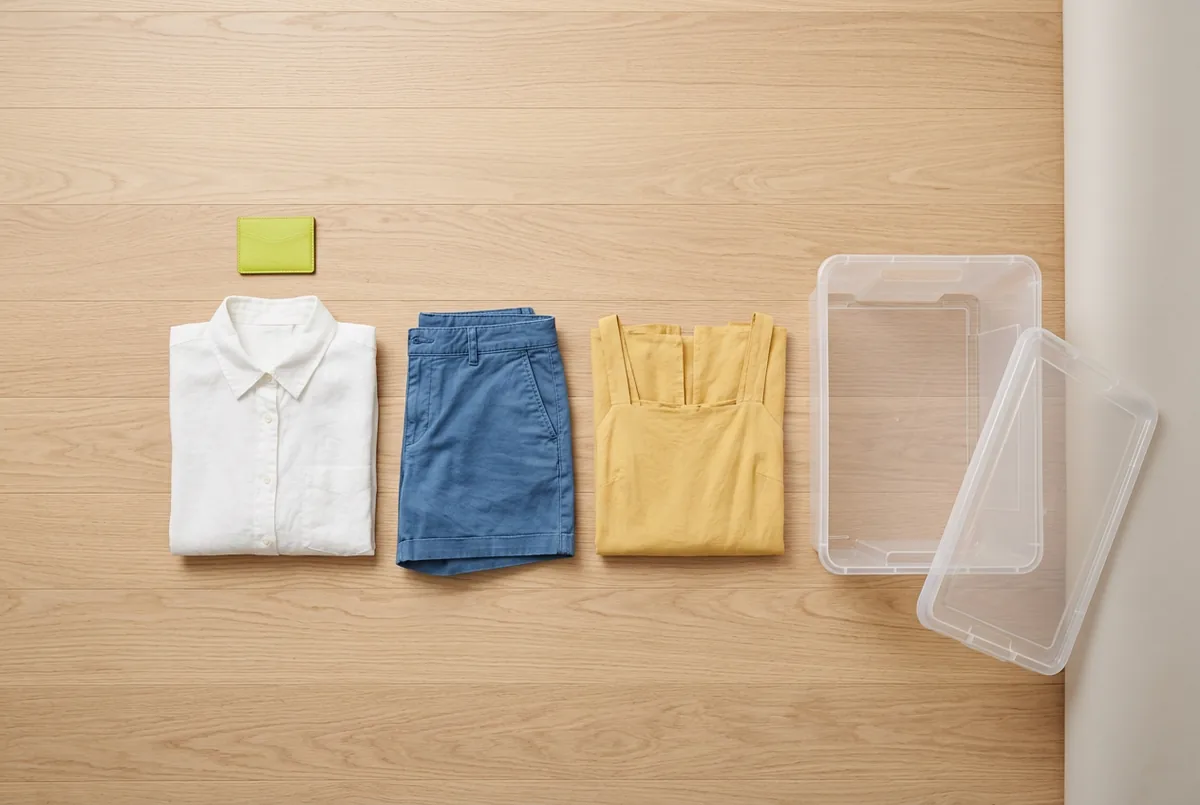
Before you can pack anything away, you need to decide what stays and what goes. Go through every piece of your summer clothing and divide it into three piles: store, keep out, and donate or discard. This step brings order to your closet and prevents you from storing items you no longer need.
The store pile is for warm-weather items you love but will not wear again until next year, like swimsuits, linen trousers, and sleeveless dresses. The keep out pile is for transitional pieces that work for layering in the milder days of early fall. Think of items made from cotton, merino wool, or denim: long-sleeved t-shirts, button-down shirts, lightweight cardigans, and denim jackets. The third pile is for anything that is worn out, no longer fits, or you simply did not wear at all this past summer. If an item needs a small repair, like a new button, decide now if you will realistically fix it. If not, it may be time to let it go.
What to do with the ‘maybe’ pile
Deciding what to discard can be difficult. For items you are hesitant to part with but rarely wear, create a ‘maybe’ box. Place these garments in a separate container and store it out of sight. Set a reminder on your calendar for six months or a year from now. When the time comes, if you have not missed or even thought about any of the items in the box, you can donate them with confidence. This method removes the immediate pressure of making a permanent decision while still helping you clear your main closet of clutter. It gives you a trial period to see if an item truly has a place in your wardrobe.
Clean every item before storing it
This is the single most important step for protecting your clothes in storage. Even garments that look clean carry invisible sweat, body oils, and microscopic food spills. These residues attract pests like clothes moths and silverfish. Clothes moths lay their eggs on natural fibers like wool and silk; the larvae then feed on the fabric, creating small, irregular holes. Silverfish are drawn to starches and can damage cotton and linen, often leaving yellowish stains. Over time, unseen spills can also oxidize and turn into noticeable yellow or brown marks that are difficult to remove.
Always follow the garment’s care label. A label is required by the FTC’s Care Labeling Rule to provide at least one safe cleaning method. For items you plan to wash, pay close attention to water temperature and drying instructions, as heat can shrink or damage fabrics like rayon and linen. For delicate pieces, hand washing may be the best option. You can find detailed instructions in our guide on how to hand-wash clothes.
| Care | Cotton | Linen | Rayon (viscose) |
|---|---|---|---|
| Washing | Machine wash, cold or warm; dark colors inside out | Gentle cycle, cold water | Hand wash or gentle cycle, cold water |
| Drying | Line dry, or tumble dry on low | On a hanger, out of direct sun | On a hanger; do not wring |
| Ironing | High heat | High heat while still damp, or steam | Low to medium heat, inside out |
| Watch out | 100% cotton can shrink in a hot first wash | Wrinkles easily and can shrink in the first wash | Shrinks and loses shape with heat and twisting |
The table above shows standard care for common summer fabrics. Remember to empty pockets, zip zippers, and wash dark colors separately to prevent dye transfer. For leather or suede items like sandals or jackets, wipe them down with a cloth. Our guide on how to clean a leather jacket has detailed steps. Ensure every item is completely dry before storing.
Choose the right storage containers and location
How you store your clothes is as important as cleaning them. The goal is to protect them from light, pests, and moisture. The best storage containers are opaque plastic bins with airtight lids or breathable fabric bags. Opaque containers block light that can fade colors, while fabric bags allow air to circulate, which is ideal for natural fibers like wool and cotton.
Avoid storing clothes in cardboard boxes, which attract pests and contain acids that can discolor fabric over time. You should also discard the thin plastic bags from the dry cleaner. They are intended only for transport and are not suitable for long-term storage, as they can trap moisture and residual cleaning chemicals, leading to mildew or yellowing of the fabric.
Do
- Opaque plastic bins
- Breathable fabric bags
- Under-bed containers
Avoid
- Cardboard boxes
- Dry cleaner bags
- Damp basements or hot attics
Store your containers in a cool, dark, and dry environment. A closet shelf, a guest room, or under a bed are all good options. Avoid areas with extreme temperature and humidity fluctuations, such as basements, garages, or attics, which can damage fibers and encourage mildew growth.
Refresh your fall clothes as you unpack them
After months in storage, your fall and winter clothes will need some attention before they are ready to wear. They may have a stale scent or be deeply wrinkled from being folded. Taking the time to refresh them properly makes them feel new again.
Start by unpacking everything and giving each item a quick inspection. This is your chance to catch any issues you might have missed last year. Then, follow a simple process to get them ready for the season.
This checklist ensures every piece is in its best condition. For sweaters that have developed pills, a fabric shaver or sweater comb can remove them. For any lingering musty smells, airing out the garment is often enough. This is especially effective for natural fibers like wool. Hang items outdoors on a dry, overcast day (direct sunlight can fade colors) or indoors in a well-ventilated room for a few hours. If odors persist, a gentle wash may be necessary.
Build a transitional outfit for early fall
The pieces you kept out of storage are the foundation of your early fall wardrobe. They allow you to create layered outfits that can adapt to cool mornings and warmer afternoons. An outfit formula combines these transitional items into a reliable look that works without much thought.
A classic combination for a weekend day involves a simple t-shirt, a pair of straight-leg jeans, and a cardigan. The layers provide warmth and visual interest, and you can remove the cardigan if the temperature rises. The choice of natural fibers like cotton and wool ensures breathability and comfort.
This formula is a template, not a strict rule. You can change the colors to match your own wardrobe or swap the sneakers for ankle boots for a slightly more structured look. The principle remains the same: combining a simple base with a versatile layer creates an outfit that is both practical and polished for the changing season.
Read next