In this guide (6)
An item of clothing made from natural fibers like wool or cotton can often be returned to its original size after shrinking. The method involves soaking the garment in cool water mixed with hair conditioner to relax the fabric’s fibers, which allows you to gently stretch the item back into shape. This process is effective for animal- and plant-based textiles but will not work on synthetics like polyester, where shrinkage caused by high heat is permanent.
Why clothes shrink (and which ones you can save)
Shrinking occurs when the fibers in a fabric tighten, usually because of heat and moisture from a washing machine or dryer. Whether you can reverse this process depends entirely on the fiber content of the garment.
Natural animal fibers, such as wool and cashmere, have a structure of overlapping scales similar to human hair. Heat and agitation cause these scales to interlock, which tightens the fabric. Because these are protein fibers, you can use a method similar to hair care: a conditioner can smooth the scales and relax the fibers, making them pliable again.
Natural plant fibers, including cotton and linen, are composed of cellulose. Their fibers swell when they absorb water and can contract as they dry, especially under high heat. This type of shrinkage is also frequently reversible because the fibers can be relaxed and stretched while they are damp.
Synthetic fibers, like polyester and nylon, are plastics made from petroleum. When exposed to high heat, their fibers melt and deform. This change is permanent, so you cannot unshrink a polyester garment that has shrunk in a hot dryer.
Rayon (viscose) presents a unique case. It is a manufactured fiber produced from natural wood pulp, but it becomes notoriously weak when wet and is prone to shrinking. While you can try the unshrinking method on rayon, you must handle it with extreme gentleness to avoid stretching it out of shape or tearing the fabric.
The step-by-step method to unshrink natural fibers
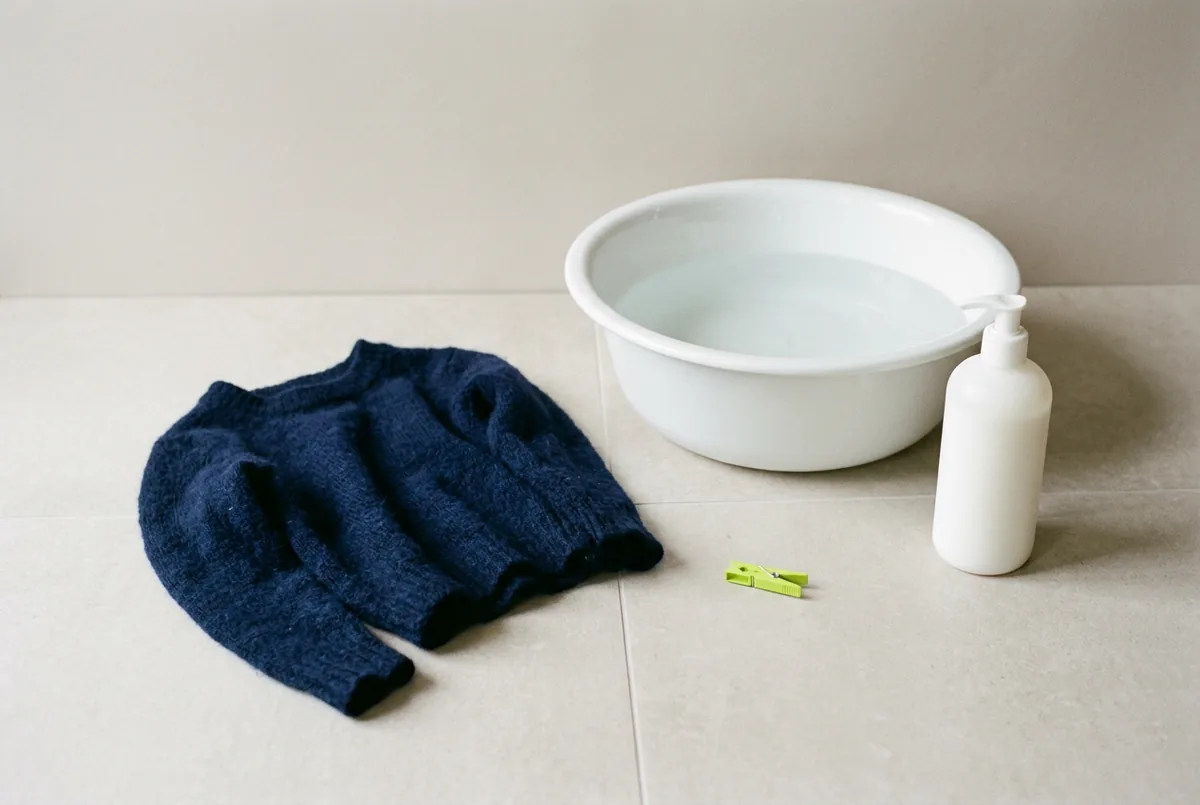
This process is suitable for sweaters, t-shirts, and other items made from wool, cotton, or blends of these fibers. You will need a basin, hair conditioner or baby shampoo, and a couple of large towels. The conditioner acts as a lubricant for the fabric’s fibers, allowing them to slide past one another so they can be gently coaxed back into their original position.
- Prepare the soak. Fill a clean basin or sink with enough cool or lukewarm water to completely submerge the garment. For wool, always use cooler water to prevent any further shrinking or felting.
- Add conditioner. Add a generous amount of hair conditioner or baby shampoo to the water and stir until it dissolves. The water should feel slightly slippery. A basic, inexpensive conditioner works just as well as a premium one.
- Soak the garment. Place the shrunken item in the water, ensuring it is fully saturated. Let it soak for at least 30 minutes to allow the conditioner to penetrate and relax the fibers thoroughly.
- Remove excess water. Lift the garment from the water, but do not rinse it. Gently squeeze out the water without wringing or twisting the fabric. Lay the garment flat on a thick towel, roll the towel and garment up together, and press down firmly to absorb more moisture. This will leave the item damp, not dripping, and ready for reshaping.
How to reshape and dry the garment
Once the fibers are relaxed and the excess water has been removed, the next step is to carefully stretch the garment back to its original dimensions. This is the most critical part of the process and requires patience.
Unroll the towel and place the damp garment on a new, dry towel on a flat surface, such as the floor or a countertop, away from direct sunlight or heat. Begin at the top, gently stretching the fabric. Pull the neckline into shape, then move to the shoulders and sleeves, working your way down the body of the garment. For a sweater, you might gently pull the cuffs and hem away from the center. For a t-shirt, you can stretch the length and width at the same time.
If you are not sure of the target size, you can lay a similar garment that fits well on another towel and use it as a template. Stretch the shrunken item to match its measurements. Once you have reshaped the garment, leave it to air dry flat on the towel. You can check on it periodically and perform some additional light stretching as it dries. Do not hang it, as the weight of the water can pull it out of shape and distort it.
What about jeans and denim?
Denim is made from cotton, so you can unshrink jeans that have become too tight in the wash. The method is similar but often requires more force. After soaking your jeans in the conditioner solution, you can try putting them on while they are still damp. The fabric will be more pliable, and moving around in them by squatting, sitting, and walking can help stretch the fibers to conform to your body. It might not feel comfortable, but it is an effective technique.
If they are too tight to put on, lay them on the floor. While standing on the hem of one leg, use your hands to pull the waistband upwards, physically stretching the fabric. Work in sections around the waist, thighs, and inseam until you have gained some room. For more tips on how pants and jeans should fit, see our guides for men and women.
Do
- Soak in cool or lukewarm water with conditioner
- Gently squeeze out excess water
- Roll in a towel to absorb moisture
- Stretch gently and reshape while damp
- Air dry flat
Avoid
- Use hot water
- Wring or twist the fabric
- Rinse the conditioner out before stretching
- Put the garment in the dryer
- Hang it to dry
When to accept the loss: irreversible shrinking
Sometimes, a garment cannot be saved. The most common case is felted wool. Felting happens when wool fibers are exposed to a combination of heat, moisture, and intense agitation, causing their scales to lock together into a dense, matted fabric. A felted sweater will feel thick and stiff, and it will have shrunk dramatically. This process is irreversible.
Likewise, as noted earlier, high-heat shrinkage in synthetic fabrics like polyester is permanent. If your polyester blouse went through a hot dryer cycle and came out smaller, you will not be able to stretch it back. Always check the fiber content label before you try to unshrink an item.
How to prevent shrinking in the first place
The best way to deal with shrunken clothes is to prevent it from happening. This starts with reading the care label. According to the FTC’s Care Labeling Rule, manufacturers must provide at least one safe cleaning method. A label must warn you if a standard cleaning process, like washing in hot water or using a hot iron, would damage the garment. If no temperature is mentioned, it means any setting is generally safe.
For delicate fabrics like wool and rayon, hand-washing in cold water is always the safest option. For machine-washable cotton and denim, using a cold cycle and line drying or tumble drying on low will minimize the risk of shrinkage. High heat is the primary cause of shrinking, so avoiding the hot dryer is the single most effective step you can take.
| Care | Wool | Cotton | Denim |
|---|---|---|---|
| Washing | Hand wash cold with wool detergent, or the wool cycle | Machine wash, cold or warm; dark colors inside out | Inside out, cold water, as rarely as you can |
| Drying | Flat, never hanging | Line dry, or tumble dry on low | Line dry, out of direct sun |
| Ironing | Steam, or medium heat with a damp press cloth | High heat | Medium to high heat, inside out |
| Watch out | Heat plus agitation shrinks it for good (felting) | 100% cotton can shrink in a hot first wash | Dark washes bleed dye at first; wash them separately |
If the garment is still slightly small after it dries, you can repeat the process for another round of gentle stretching. Once you are satisfied with the size and shape, you can wash the garment according to its care label to remove any conditioner residue.
Read next